Wanitphakdeedecha Rungsima, Kantaviro Watsachon, Suphatsathienkul Panittra, Tantrapornpong Ploypailin, Yan Chadakan, Apinumtham Chalermkwan, Srinoulprasert Yuttana
Department of Dermatology, Faculty of Medicine Siriraj Hospital, Mahidol University, Bangkok, Thailand.
Department of Immunology, Faculty of Medicine Siriraj Hospital, Mahidol University, Bangkok, Thailand.
Dermatol Ther (Heidelb). 2020 Aug;10(4):707-720. doi: 10.1007/s13555-020-00397-5. Epub 2020 May 22.
Botulinum toxin A (BoT/A) treatment failure (BTF) affects patients subjected to repeated BoT/A exposure for cosmetic indications. BoT/A's general formulation contains core BoT/A and complexing proteins. BTF may be caused by antibody-induced treatment failure. Antibodies against core BoT/A can occur; however, anti-complexing protein antibodies have never been demonstrated, and tools for anti-complexing protein antibody detection have not been developed. The aim of this study was to evaluate immune involvement in BoT/A-nonresponsive patients.
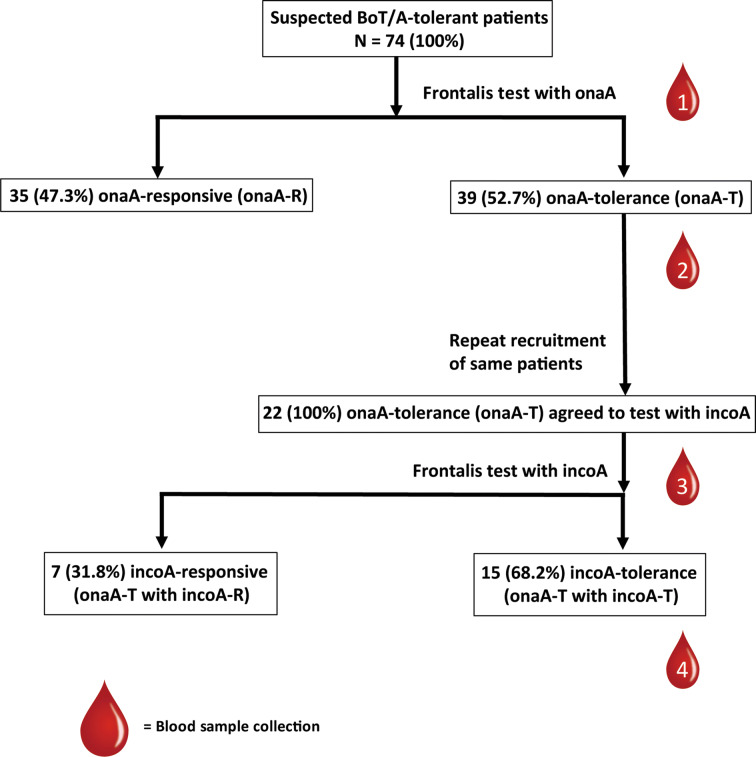
Patients suspected of nonresponsiveness to BoT/A for cosmetic indications were recruited. All volunteers were categorized as BoT/A-responsive or BoT/A-tolerant according to frontalis testing with onabotulinumtoxinA (onaA). Twenty-two BoT/A-tolerant volunteers were recruited separately for frontalis testing with incobotulinumtoxinA (incoA). Anti-BoT/A and anti-complexing protein antibodies were quantified by special ELISA using sera from blood sampled before and after frontalis testing.
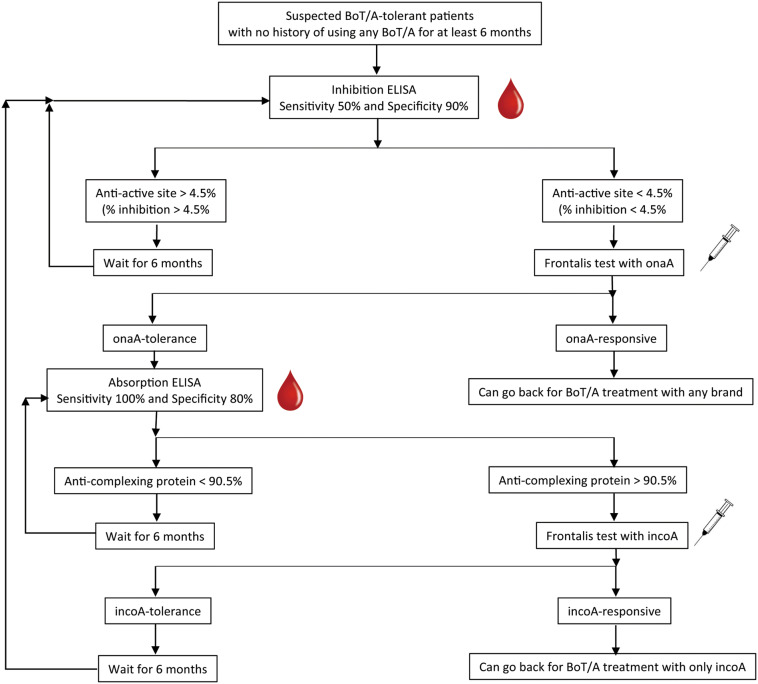
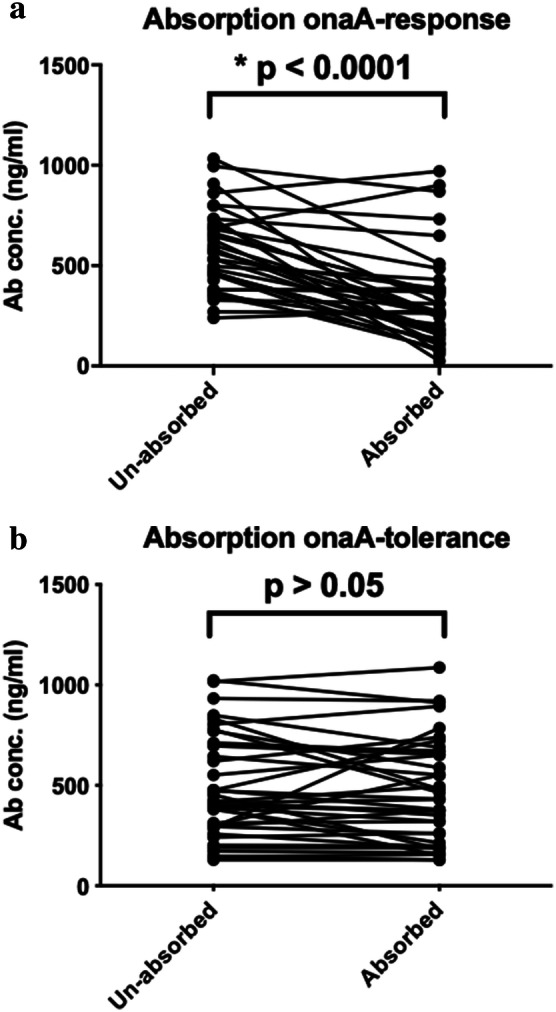
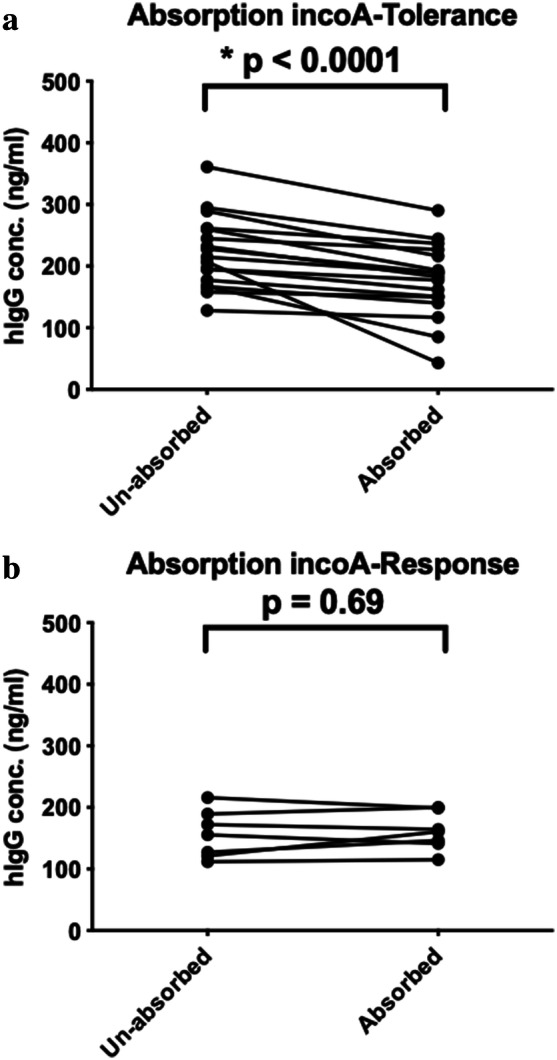
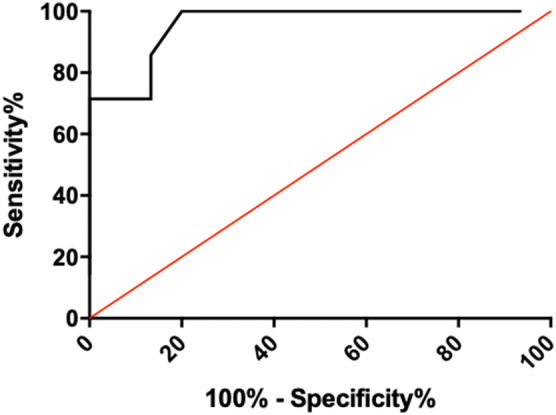
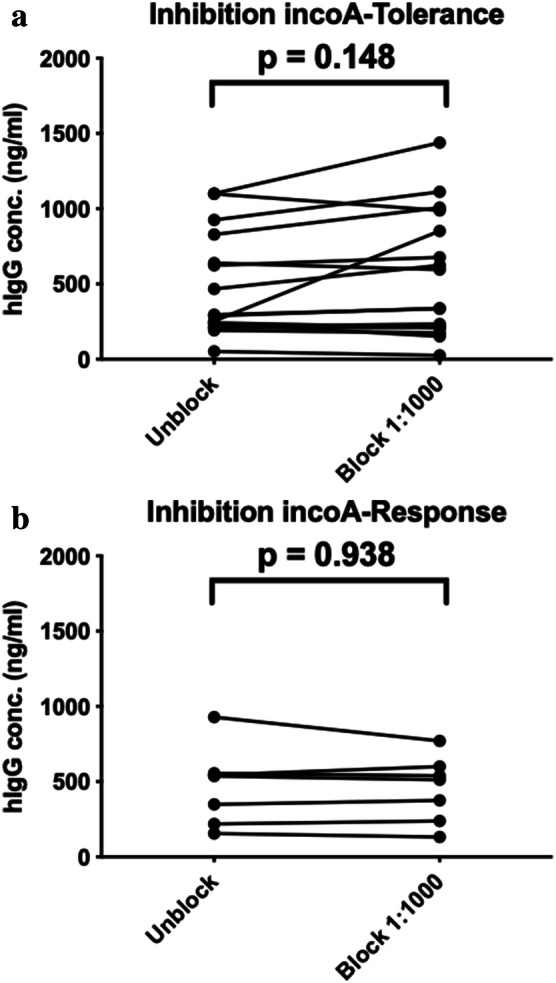
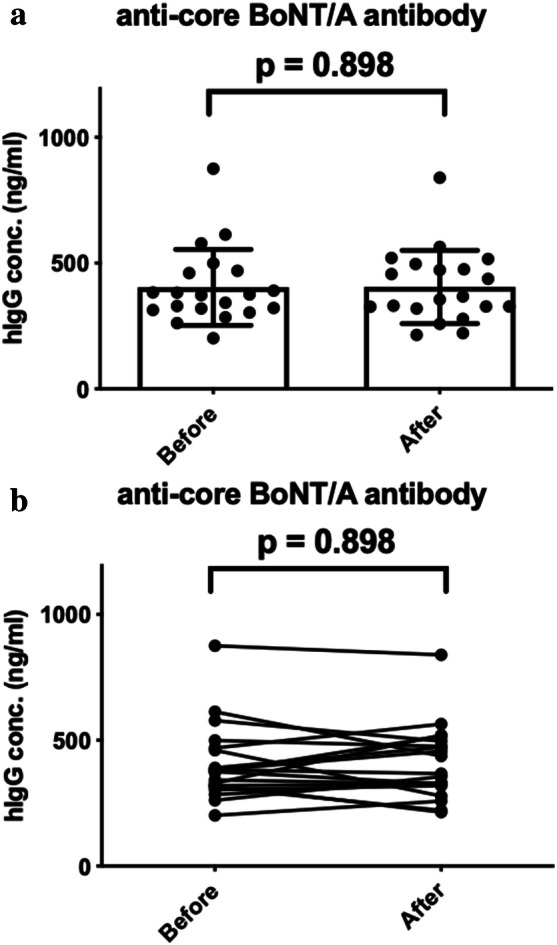
Significantly higher levels of IgG against complexing protein were detected in onaA-tolerant sera but not in onaA-responders, leading to proposals that anti-complexing protein antibodies could cause onaA unresponsiveness. Some onaA-tolerant patients according to frontalis test with incoA were responsive to incoA. Newly developed absorption ELISA confirmed that incoA-responsive sera predominantly contained IgG against complexing proteins, whereas incoA-tolerant sera contained significant levels of IgG against core BoT/A. The presence of anti-complexing protein antibodies higher than 90.75% in sera of onaA-tolerant patients could respond to incoA. The ELISA technique might be employed as a tool to predict incoA responsiveness. Our frontalis testing after incoA treatment showed that anti-incoA IgG levels were not increased by incoA.
BoT/A-exposed patients may develop antibodies against core botulinum toxin and complexing proteins. Our study is the first to demonstrate that anti-complexing protein antibodies cause BTF. High levels of antibodies against complexing proteins can cause onaA unresponsiveness, although some patients were still incoA-responsive. Our developed ELISA to detect anti-complexing protein antibodies can determine whether onaA-tolerant patients respond to incoA without incoA frontalis testing.
肉毒杆菌毒素A(BoT/A)治疗失败(BTF)影响因美容适应症而反复接受BoT/A治疗的患者。BoT/A的一般制剂包含核心BoT/A和复合蛋白。BTF可能由抗体诱导的治疗失败引起。可出现针对核心BoT/A的抗体;然而,抗复合蛋白抗体从未得到证实,且尚未开发出检测抗复合蛋白抗体的工具。本研究的目的是评估BoT/A无反应患者的免疫参与情况。
招募怀疑对美容适应症的BoT/A无反应的患者。根据使用A型肉毒毒素(onaA)进行的额肌测试,将所有志愿者分为对BoT/A有反应或对BoT/A耐受。另外招募22名对BoT/A耐受的志愿者,使用A型肉毒杆菌素(incoA)进行额肌测试。使用额肌测试前后采集的血液血清,通过特殊酶联免疫吸附测定(ELISA)对抗BoT/A和抗复合蛋白抗体进行定量。
在对onaA耐受的血清中检测到针对复合蛋白的IgG水平显著更高,而在对onaA有反应者中未检测到,这表明抗复合蛋白抗体可能导致对onaA无反应。根据使用incoA进行的额肌测试,一些对onaA耐受的患者对incoA有反应。新开发的吸收ELISA证实,对incoA有反应的血清主要含有针对复合蛋白的IgG,而对incoA耐受的血清含有显著水平的针对核心BoT/A的IgG。在对onaA耐受的患者血清中,抗复合蛋白抗体含量高于90.75%的患者可能对incoA有反应。ELISA技术可作为预测对incoA反应性的工具。我们在incoA治疗后进行的额肌测试表明,incoA不会增加抗incoA IgG水平。
接触BoT/A的患者可能产生针对核心肉毒杆菌毒素和复合蛋白的抗体。我们的研究首次证明抗复合蛋白抗体导致BTF。高水平的抗复合蛋白抗体可导致对onaA无反应,尽管一些患者对incoA仍有反应。我们开发的用于检测抗复合蛋白抗体的ELISA可在不进行incoA额肌测试的情况下确定对onaA耐受的患者是否对incoA有反应。