Department of Psychological and Brain Sciences, University of California, Santa Barbara, CA, 93106, USA.
Department of Child and Adolescent Psychiatry, Psychotherapy and Psychosomatics, University of Freiburg, 79104, Freiburg, Germany.
Cogn Affect Behav Neurosci. 2020 Aug;20(4):730-745. doi: 10.3758/s13415-020-00799-0.
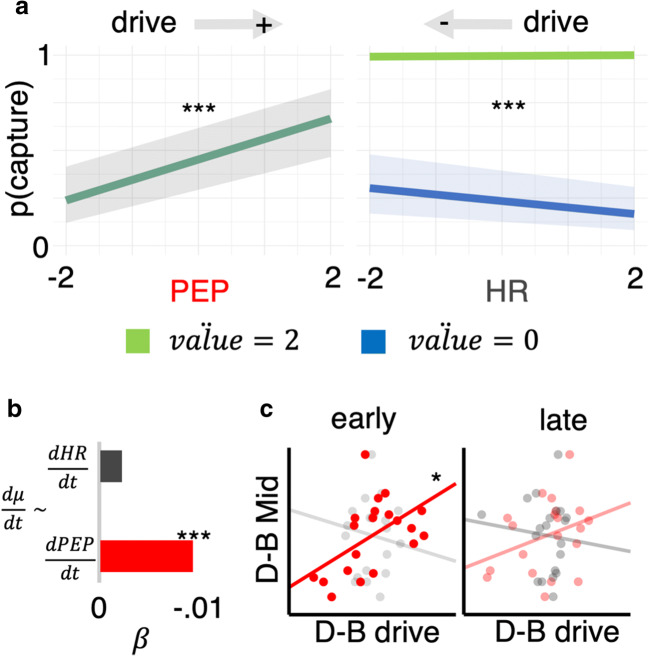
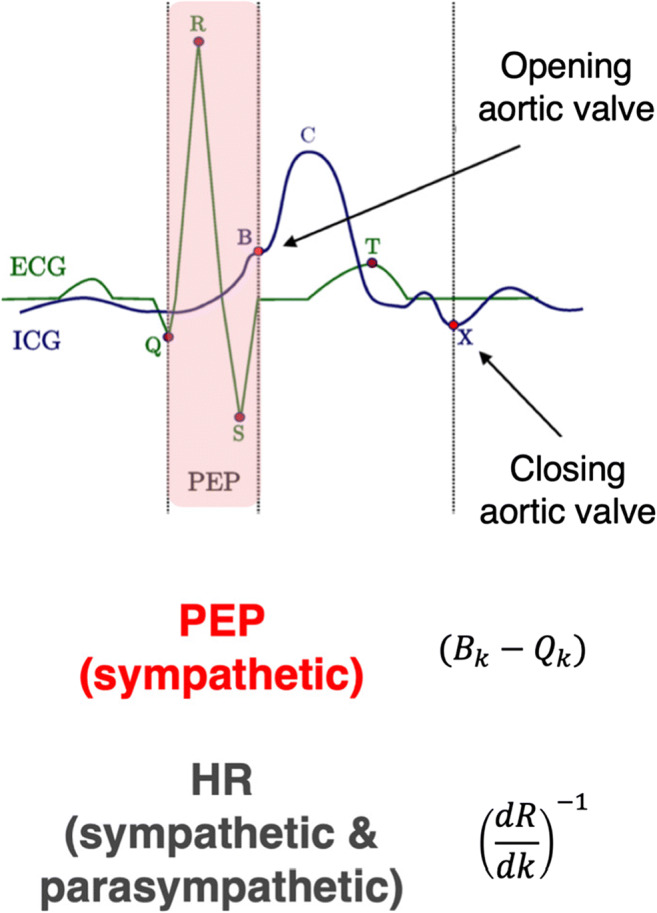
Appraising sequential offers relative to an unknown future opportunity and a time cost requires an optimization policy that draws on a learned estimate of an environment's richness. Converging evidence points to a learning asymmetry, whereby estimates of this richness update with a bias toward integrating positive information. We replicate this bias in a sequential foraging (prey selection) task and probe associated activation within the sympathetic branch of the autonomic system, using trial-by-trial measures of simultaneously recorded cardiac autonomic physiology. We reveal a unique adaptive role for the sympathetic branch in learning. It was specifically associated with adaptation to a deteriorating environment: it correlated with both the rate of negative information integration in belief estimates and downward changes in moment-to-moment environmental richness, and was predictive of optimal performance on the task. The findings are consistent with a framework whereby autonomic function supports the learning demands of prey selection.
评估相对于未知未来机会和时间成本的连续报价需要一种优化策略,该策略需要利用对环境丰富度的学习估计。越来越多的证据表明存在学习不对称性,即对这种丰富度的估计会偏向于整合积极信息。我们在一个连续的觅食(猎物选择)任务中复制了这种偏差,并在自主神经系统的交感分支中探测到了相关的激活,使用同时记录的心脏自主生理的逐次试验测量。我们揭示了交感分支在学习中的独特适应性作用。它与对恶化环境的适应特别相关:它与信念估计中负面信息整合的速度以及环境丰富度的瞬间下降相关,并且可以预测任务的最佳表现。这些发现与一个框架一致,即自主功能支持猎物选择的学习需求。