HepatoGastro Lab, Servicio de Ap. Digestivo del HGU Gregorio Marañón, Instituto de Investigación Sanitaria Gregorio Marañón (IiSGM), Madrid, Spain.
Servicio de Digestivo, Hospital Universitario Marqués de Valdecilla, Santander, Spain.
PLoS One. 2020 May 29;15(5):e0233778. doi: 10.1371/journal.pone.0233778. eCollection 2020.
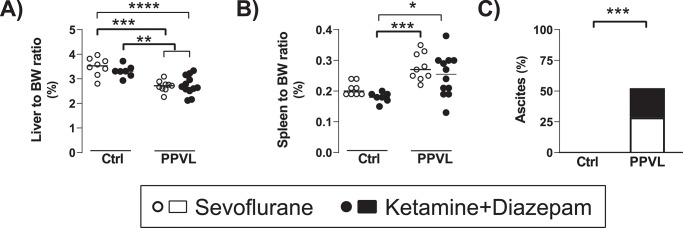
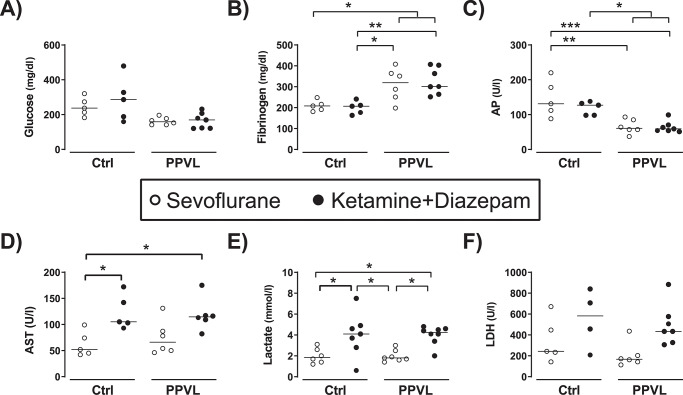
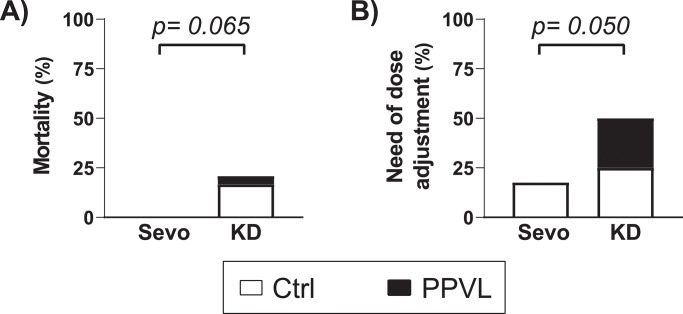
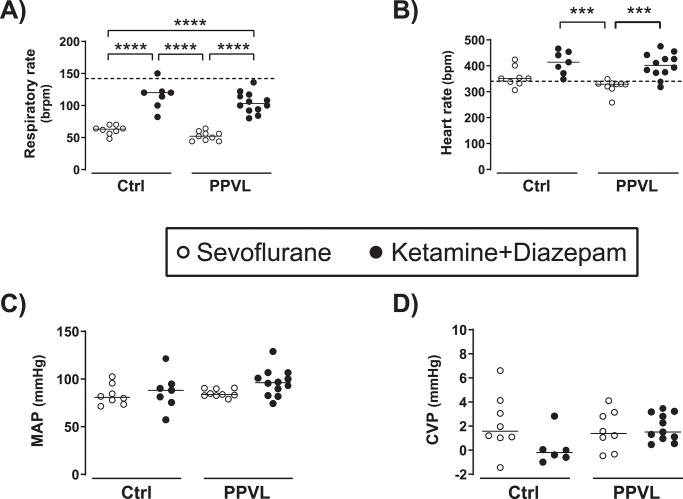
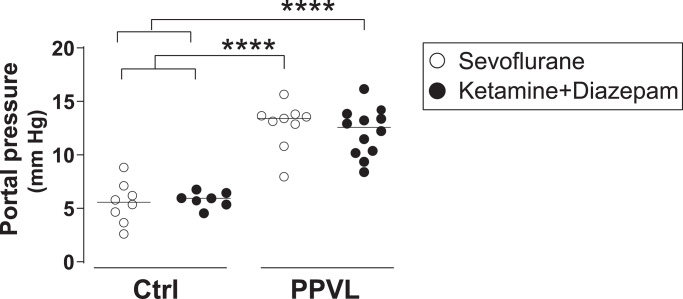
The selection of the anesthetic regime is a crucial component in many experimental animal studies. In rodent models of liver disease, the combination of ketamine and diazepam (KD), generally by the intramuscular (i.m.) route, has traditionally been the anesthesia of choice for the evaluation of systemic and hepatic hemodynamics but it presents several problems. Here, we compared the performance of inhalational sevoflurane (Sevo) against the KD combination as the anesthesia used for hemodynamic studies involving the measurement of portal pressure in normal rats (Ctrl) and rats with non-cirrhotic portal hypertension induced by partial portal vein ligation (PPVL). Compared with Ctrl rats, rats with PPVL presented characteristic alterations that were not influenced by the anesthetic regime, which included liver atrophy, splenomegaly, increased plasma fibrinogen, decreased alkaline phosphatase and glycemia, and frequent ascites. The use of the KD combination presented several disadvantages compared with the inhalational anesthesia with sevoflurane, including considerable mortality, a higher need of dose adjustments to maintain an optimal depth of anesthesia, increases of heart rate, and alteration of blood biochemical parameters such as the concentration of aspartate aminotransferase, lactate, and lactic dehydrogenase. Rats anesthetized with sevoflurane, on the other hand, presented lower respiratory rates. Importantly, the anesthetic regime did not influence the measurement of portal pressure either in Ctrl or PPVL rats, with the increase of portal pressure being similar in Sevo- and KD- anesthetized groups of PPVL rats compared with their respective control groups. Overall, our results suggest that anesthesia with sevoflurane is preferable to the combination of KD for performing systemic and hepatic hemodynamic studies in rats with non-cirrhotic portal hypertension.
麻醉方案的选择是许多实验动物研究的关键组成部分。在肝脏疾病的啮齿动物模型中,通常通过肌肉内(i.m.)途径联合使用氯胺酮和地西泮(KD)一直是评估全身和肝脏血液动力学的首选麻醉方法,但它存在一些问题。在这里,我们比较了吸入性七氟醚(Sevo)与 KD 联合麻醉在正常大鼠(Ctrl)和部分门静脉结扎(PPVL)诱导非肝硬化门脉高压大鼠的门脉压力测量等血流动力学研究中的表现。与 Ctrl 大鼠相比,PPVL 大鼠表现出一些不受麻醉方案影响的特征性改变,包括肝萎缩、脾肿大、血浆纤维蛋白原增加、碱性磷酸酶和血糖降低以及频繁腹水。与吸入性麻醉相比,KD 联合麻醉的使用存在几个缺点,包括死亡率较高、需要更多剂量调整以维持最佳麻醉深度、心率增加以及血液生化参数如天冬氨酸转氨酶、乳酸和乳酸脱氢酶浓度的改变。另一方面,用七氟醚麻醉的大鼠呼吸频率较低。重要的是,麻醉方案无论是在 Ctrl 大鼠还是 PPVL 大鼠中都不影响门脉压力的测量,与各自的对照组相比,PPVL 大鼠的 Sevo 和 KD 麻醉组的门脉压力增加相似。总的来说,我们的结果表明,在非肝硬化门脉高压大鼠中进行全身和肝脏血液动力学研究时,七氟醚麻醉优于 KD 联合麻醉。