Yang Luyu, Liu Lu, Zhang Rui, Hong Jun, Wang Yaping, Wang Jian, Zuo Jieliang, Zhang Jubo, Chen Jinhong, Hao Hankun
Department of General Surgery, Huashan Hospital, Fudan University, Shanghai, China.
Caner Metastasis Institute, Fudan University, Shanghai, China.
J Cancer. 2020 May 18;11(15):4384-4396. doi: 10.7150/jca.44215. eCollection 2020.
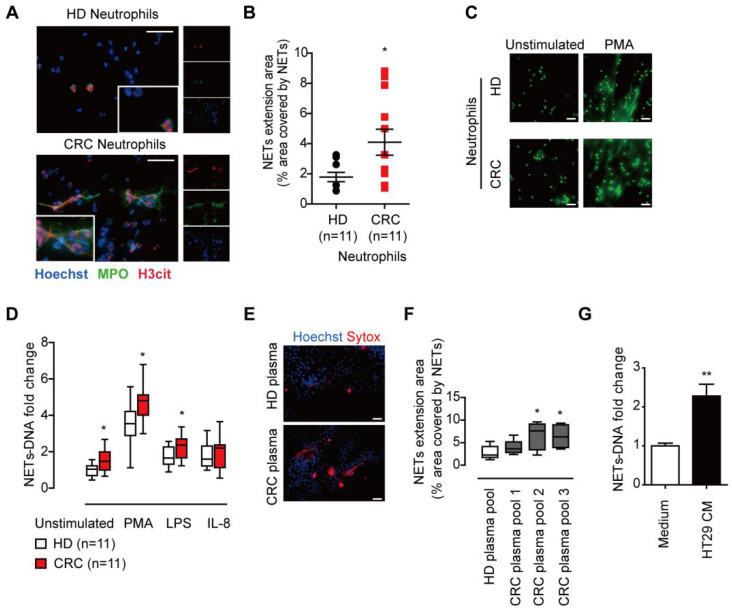
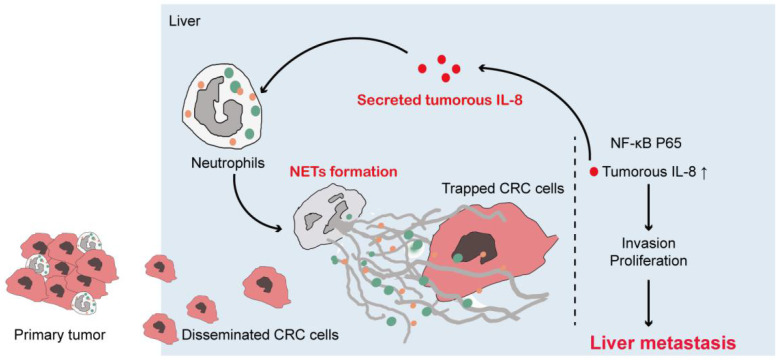
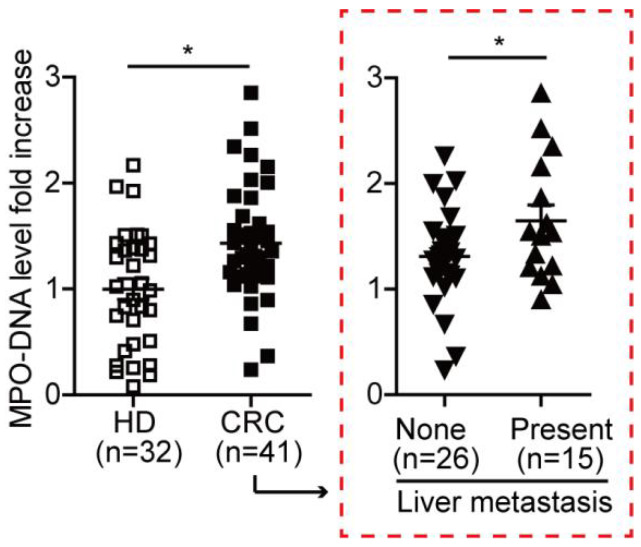
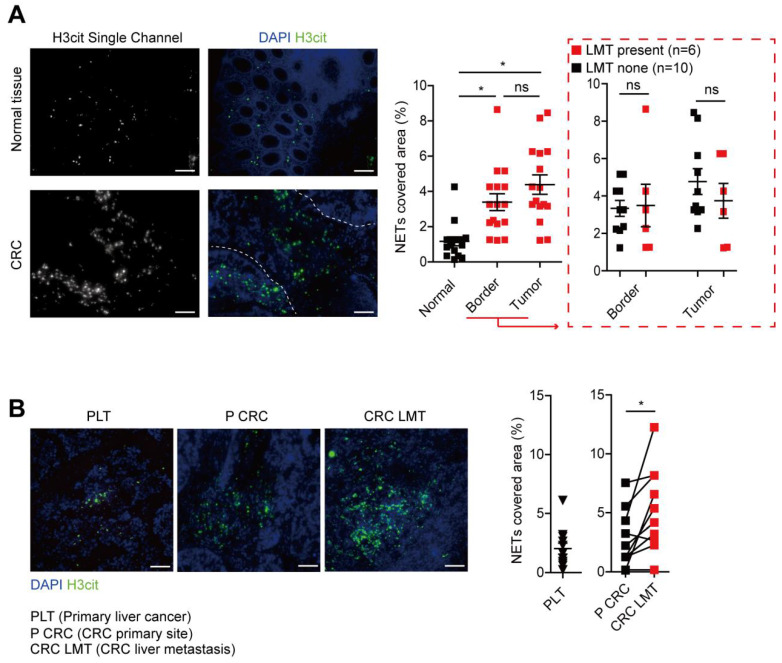
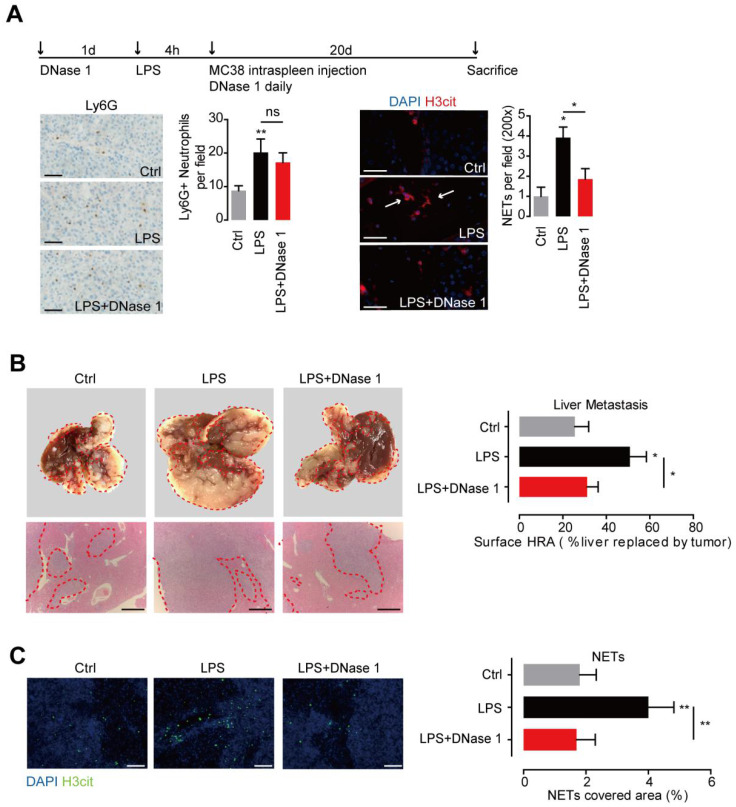
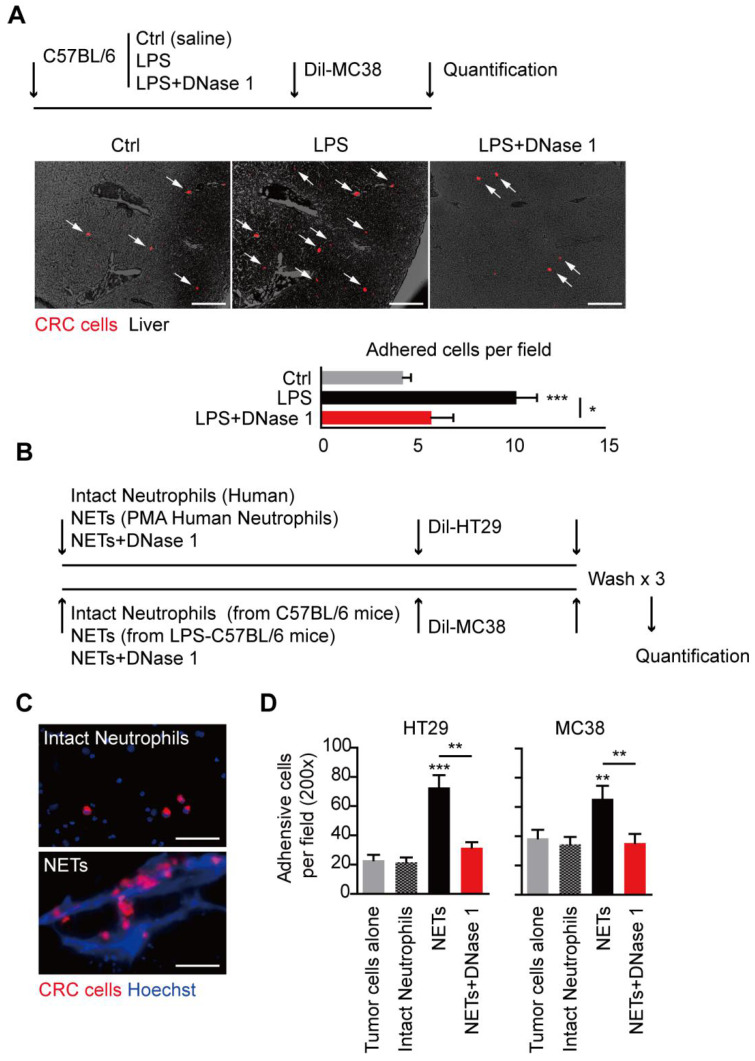
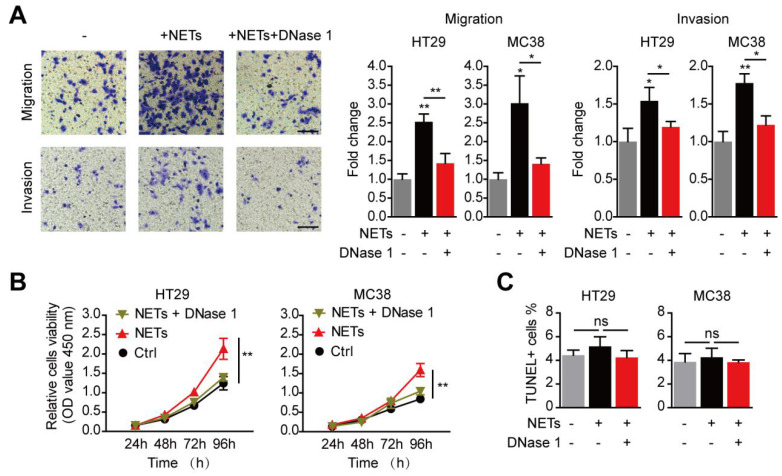
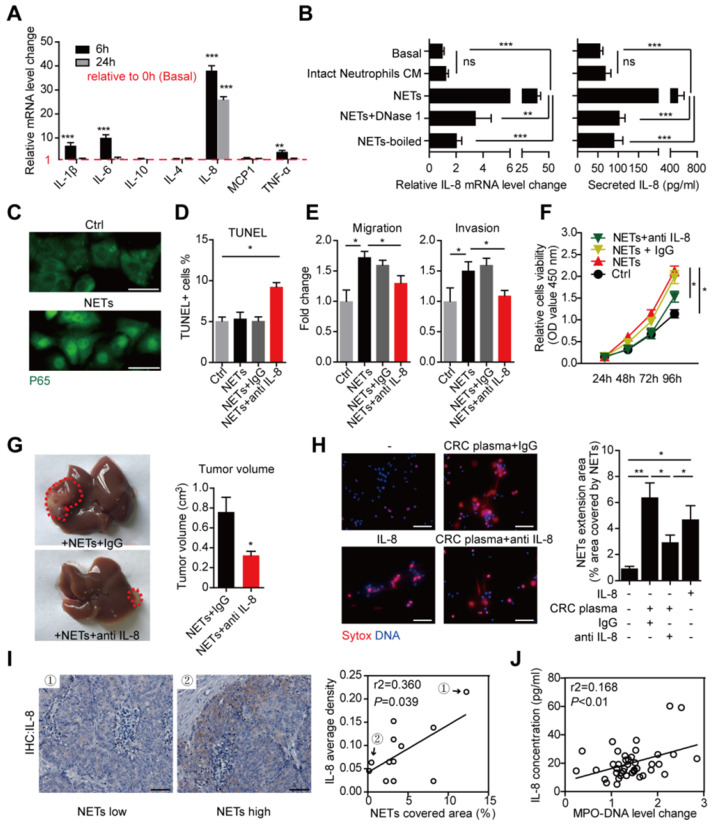
Host and tumorous inflammation actively affect liver metastasis of colorectal cancer (CRC). Neutrophils have been recognized as one active participant in metastasis procedure, with controversial roles however. Activated neutrophils release extracellular traps (NETs) which are involved in infection and multiple pathological conditions. NETs on cancer metastasis is getting recognized but less elucidated in mechanism. How NETs interact with cancer cells is still largely unknown. In this study, we found that neutrophils from CRC patients, especially those with liver metastatic, underwent remarkably enhanced NETs. Clinically, sera and pathological NETs marker closely correlated with onset of liver metastasis. Through and studies, we proved that increased NETs positively contribute to onset of CRC liver metastasis. Digesting NETs with DNase 1 diminished the increased liver metastasis associated with NETs. In detail, NETs trapped CRC cells in liver and exerted no cytotoxicity on tumor cells, but boosted tumorous proliferation and invasion capacity. We further found this enhanced malignancy of trapped CRC cells was due to the elevated tumorous interleukin (IL)-8 expression triggered by NETs. Blocking IL-8 activity effectively abrogated the enhanced proliferation and invasion triggered by NETs. Moreover, overproduced IL-8 in turn activate neutrophils towards NETs formation, thus forming a positive loop optimizing CRC liver metastasis. Collectively, our study propose a novel positive feedback between elevated tumorous IL-8 and NETs to promote CRC liver metastasis, and identify potential strategy against liver metastasis.
宿主和肿瘤炎症对结直肠癌(CRC)肝转移有积极影响。中性粒细胞已被认为是转移过程中的一个活跃参与者,但其作用存在争议。活化的中性粒细胞释放细胞外陷阱(NETs),其参与感染和多种病理状况。NETs在癌症转移中的作用正逐渐被认识,但机制尚不清楚。NETs如何与癌细胞相互作用仍很大程度上未知。在本研究中,我们发现CRC患者,尤其是有肝转移的患者的中性粒细胞产生显著增强的NETs。临床上,血清和病理NETs标志物与肝转移的发生密切相关。通过……和……研究,我们证明NETs增加对CRC肝转移的发生有积极作用。用脱氧核糖核酸酶1消化NETs可减少与NETs相关的肝转移增加。具体而言,NETs在肝脏中捕获CRC细胞,对肿瘤细胞无细胞毒性,但增强肿瘤增殖和侵袭能力。我们进一步发现,被捕获的CRC细胞这种增强的恶性程度是由于NETs触发的肿瘤白细胞介素(IL)-8表达升高。阻断IL-8活性可有效消除NETs触发的增殖和侵袭增强。此外,过量产生的IL-8反过来激活中性粒细胞形成NETs,从而形成一个优化CRC肝转移的正反馈回路。总体而言,我们的研究提出肿瘤IL-8升高与NETs之间存在一种新的促进CRC肝转移的正反馈,并确定了对抗肝转移的潜在策略。