Jiang Liyuan, Cao Yong, Liu Zhen, Ni Shuangfei, Liu Jun, Ha Yoon, Luo Zixiang, Li Chengjun, Liu Shaohua, Li Jingsong, Yin Xianzhen, Wu Tianding, Lu Hongbin, Hu Jianzhong
1Department of Spine Surgery, Xiangya Hospital, Central South University, Changsha, China.
2Key Laboratory of Organ Injury, Aging and Regenerative Medicine of Hunan Province, Changsha, China.
Aging Dis. 2020 May 9;11(3):603-617. doi: 10.14336/AD.2019.0529. eCollection 2020 May.
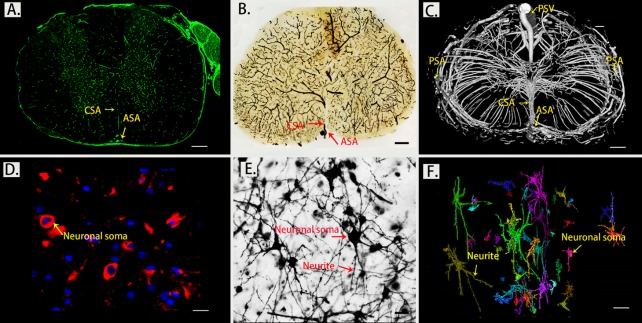
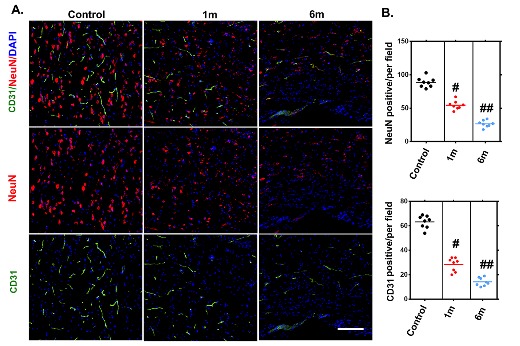
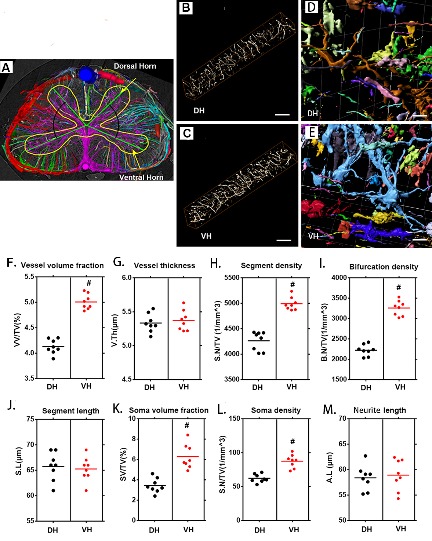
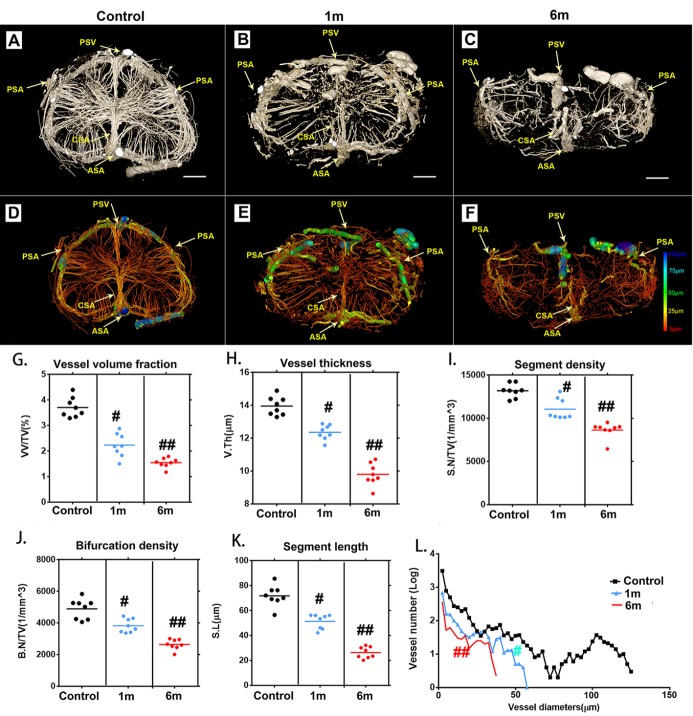
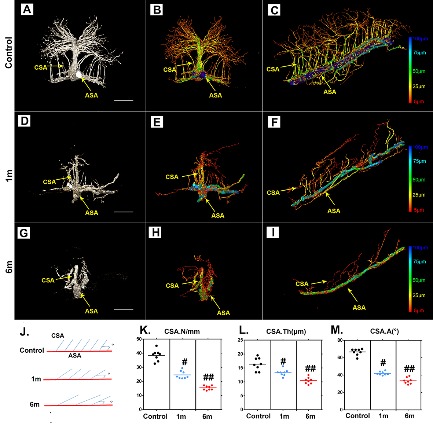
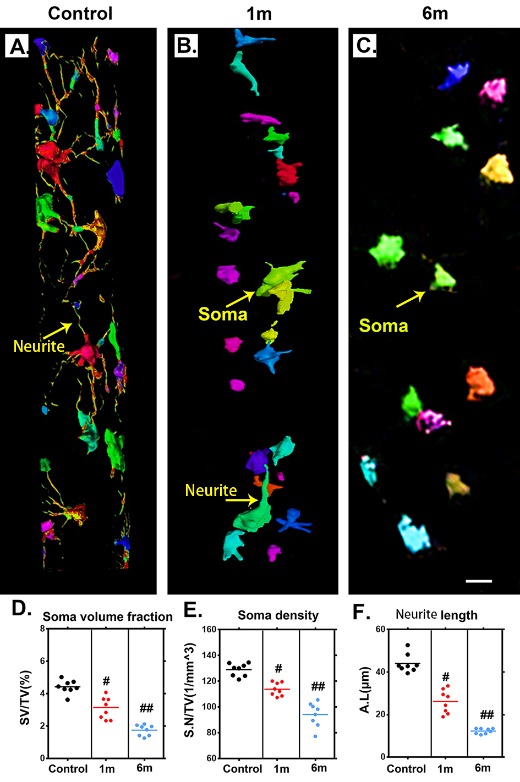
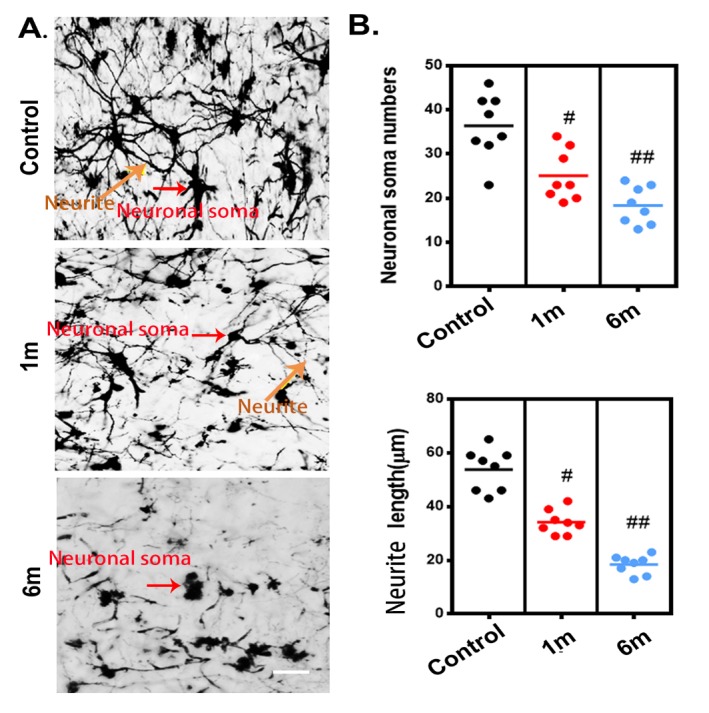
The complex pathology of chronic thoracic spinal cord compression involves vascular and neuroarchitectural repair processes that are still largely unknown. In this study, we used synchrotron radiation microtomography (SRμCT) to quantitatively characterize the 3D temporal-spatial changes in the vascular and neuronal network after chronic thoracic spinal cord compression in order to obtain further insights into the pathogenesis of this disease and to elucidate its underlying mechanisms. Direct 3D characterization of the spinal cord microvasculature and neural microstructure of the thoracic spinal cord was successfully reconstructed. The significant reduction in vasculature and degeneration of neurons in the thoracic spinal cord visualized via SRμCT after chronic compression were consistent with the changes detected by immunofluorescence staining. The 3D morphological measurements revealed significant reductions of neurovascular parameters in the thoracic spinal cord after 1 month of compression and became even worse after 6 months without relief of compression. In addition, the distinct 3D morphological twist and the decrease in branches of the central sulcal artery after chronic compression vividly displayed that these could be the potential triggers leading to blood flow reduction and neural deficits of the thoracic spinal cord. Our findings propose a novel methodology for the 3D analysis of neurovascular repair in chronic spinal cord compression, both qualitatively and quantitatively. The results indicated that compression simultaneously caused vascular dysfunction and neuronal network impairment, which should be acknowledged as concurrent events after chronic thoracic spinal cord injury. Combining neuroprotection with vasoprotection may provide promising therapeutic targets for chronic thoracic spinal cord compression.
慢性胸段脊髓压迫的复杂病理过程涉及血管和神经结构修复过程,而这些过程在很大程度上仍不为人知。在本研究中,我们使用同步辐射显微断层扫描(SRμCT)对慢性胸段脊髓压迫后血管和神经元网络的三维时空变化进行定量表征,以便进一步深入了解该疾病的发病机制并阐明其潜在机制。成功重建了胸段脊髓微血管和神经微结构的直接三维表征。慢性压迫后通过SRμCT可视化的胸段脊髓血管显著减少和神经元变性与免疫荧光染色检测到的变化一致。三维形态学测量显示,压迫1个月后胸段脊髓的神经血管参数显著降低,在6个月未解除压迫后情况变得更糟。此外,慢性压迫后中央沟动脉明显的三维形态扭曲和分支减少生动地表明,这些可能是导致胸段脊髓血流减少和神经功能缺损的潜在触发因素。我们的研究结果提出了一种用于慢性脊髓压迫中神经血管修复三维分析的新方法,包括定性和定量分析。结果表明,压迫同时导致血管功能障碍和神经元网络损伤,这应被视为慢性胸段脊髓损伤后的并发事件。将神经保护与血管保护相结合可能为慢性胸段脊髓压迫提供有前景的治疗靶点。