Li Chengjun, Qin Tian, Zhao Jinyun, He Rundong, Wen Haicheng, Duan Chunyue, Lu Hongbin, Cao Yong, Hu Jianzhong
Department of Spine Surgery and Orthopaedics, Xiangya Hospital, Central South University, Changsha, China.
National Clinical Research Center for Geriatric Disorders, Xiangya Hospital, Central South University, Changsha, China.
Front Cell Neurosci. 2021 Sep 28;15:725573. doi: 10.3389/fncel.2021.725573. eCollection 2021.
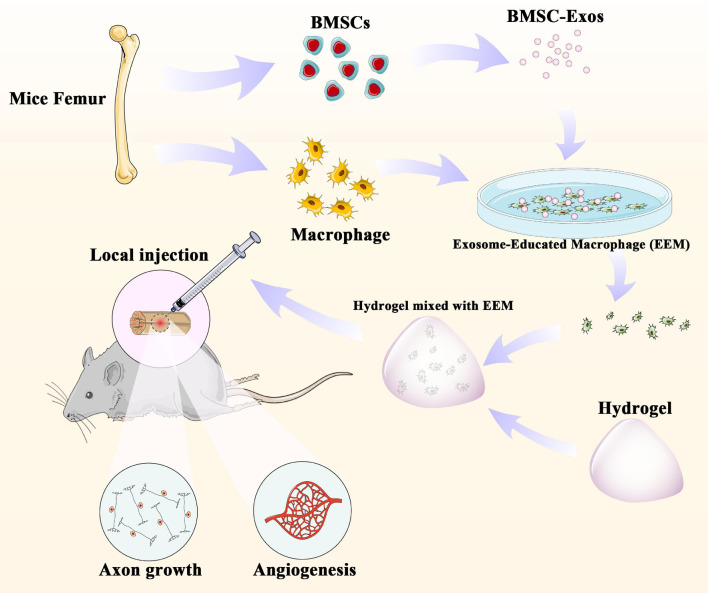
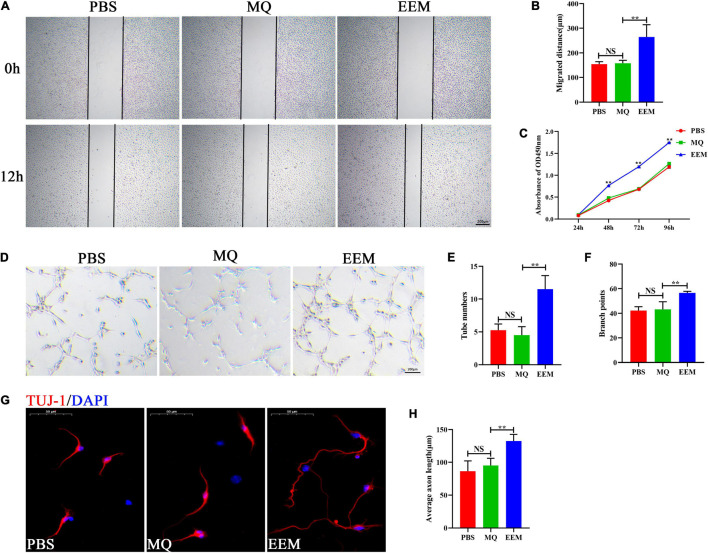
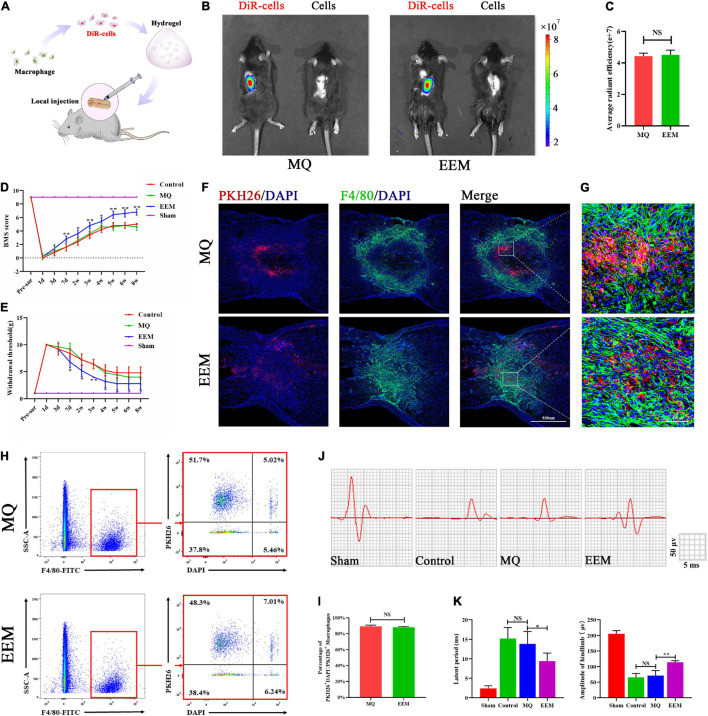
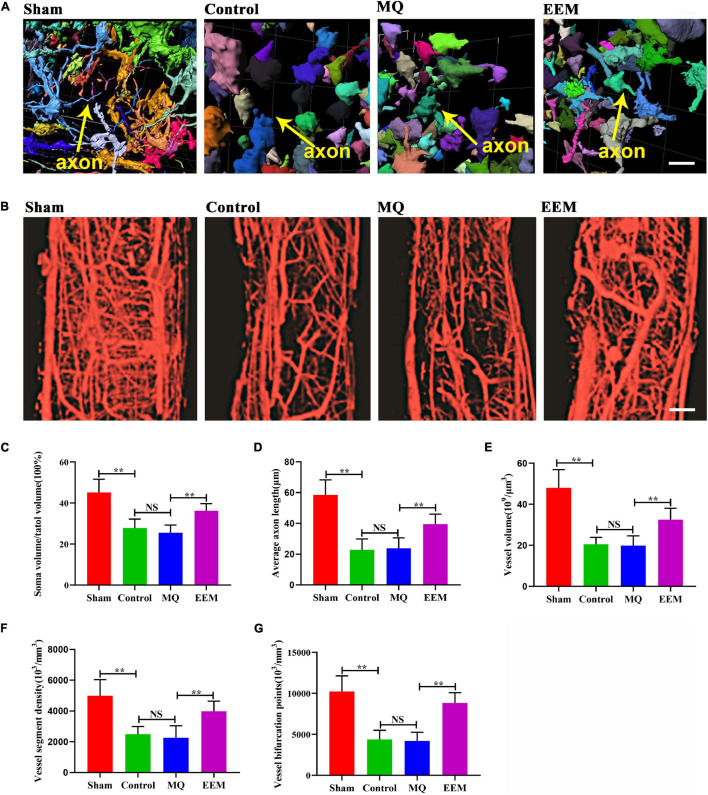
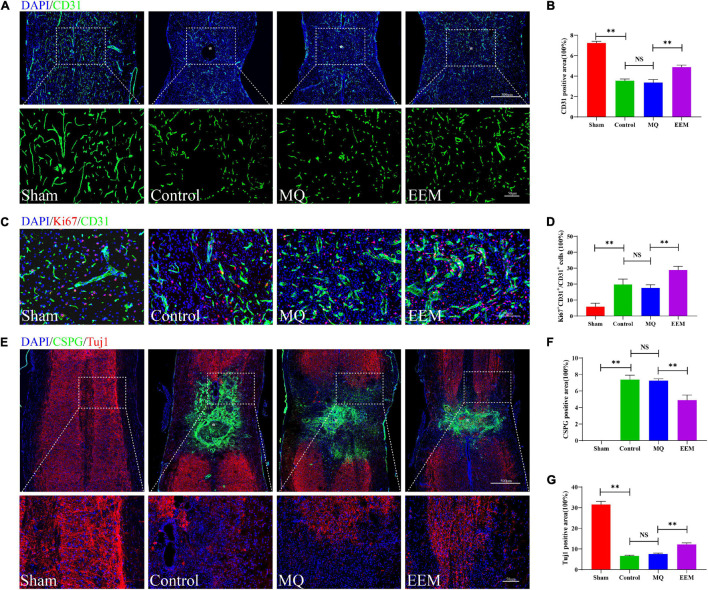
The spinal cord injury is a site of severe central nervous system (CNS) trauma and disease without an effective treatment strategy. Neurovascular injuries occur spontaneously following spinal cord injury (SCI), leading to irreversible loss of motor and sensory function. Bone marrow mesenchymal stem cell (BMSC)-derived exosome-educated macrophages (EEM) have great characteristics as therapeutic candidates for SCI treatment. It remains unknown whether EEM could promote functional healing after SCI. The effect of EEM on neurovascular regeneration after SCI needs to be further explored. We generated M2-like macrophages using exosomes isolated from BMSCs, which were known as EEM, and directly used these EEM for SCI treatment. We aimed to investigate the effects of EEM using a spinal cord contusive injury mouse model combined with an cell functional assay and compared the results to those of a normal spinal cord without any biological intervention, or PBS treatment or macrophage alone (MQ). Neurological function measurements and histochemical tests were performed to evaluate the effect of EEM on angiogenesis and axon regrowth. In the current study, we found that treatment with EEM effectively promoted the angiogenic activity of HUVECs and axonal growth in cortical neurons. Furthermore, exogenous administration of EEM directly into the injured spinal cord could promote neurological functional healing by modulating angiogenesis and axon growth. EEM treatment could provide a novel strategy to promote healing after SCI and various other neurovascular injury disorders.
脊髓损伤是严重的中枢神经系统(CNS)创伤和疾病的发病部位,目前尚无有效的治疗策略。脊髓损伤(SCI)后会自发发生神经血管损伤,导致运动和感觉功能不可逆转的丧失。骨髓间充质干细胞(BMSC)衍生的外泌体诱导的巨噬细胞(EEM)作为SCI治疗的候选疗法具有很大的优势。EEM是否能促进SCI后的功能恢复尚不清楚。EEM对SCI后神经血管再生的影响有待进一步探索。我们使用从BMSC中分离的外泌体生成了M2样巨噬细胞,即EEM,并直接将这些EEM用于SCI治疗。我们旨在使用脊髓挫伤性损伤小鼠模型结合细胞功能测定来研究EEM的作用,并将结果与未进行任何生物干预的正常脊髓、PBS治疗或单独的巨噬细胞(MQ)进行比较。进行神经功能测量和组织化学测试以评估EEM对血管生成和轴突再生的影响。在本研究中,我们发现EEM治疗可有效促进人脐静脉内皮细胞(HUVEC)的血管生成活性和皮质神经元的轴突生长。此外,将EEM直接外源性注入受损脊髓可通过调节血管生成和轴突生长来促进神经功能恢复。EEM治疗可为促进SCI及其他各种神经血管损伤疾病后的恢复提供一种新策略。