Gedefaw Getnet, Alemnew Birhan, Demis Asmamaw
Department of Midwifery, College of health sciences, Woldia University, Woldia, Ethiopia.
Department of Medical laboratory science, College of health sciences, Woldia University, Woldia, Ethiopia.
BMC Pediatr. 2020 Jun 3;20(1):269. doi: 10.1186/s12887-020-02176-9.
Despite the reduction of neonatal morbidity and mortality, is one of the third Sustainable Development Goal to end the death of children, the burden of the problem still the major challenge in Ethiopia. Globally, the most common causes of neonatal morbidity and mortality are adverse fetal outcomes (low birth weight, stillbirth, prematurity, congenital defect). Therefore this systematic review and meta-analysis aimed to estimate the pooled prevalence of adverse fetal outcomes and its associated factors in Ethiopia.
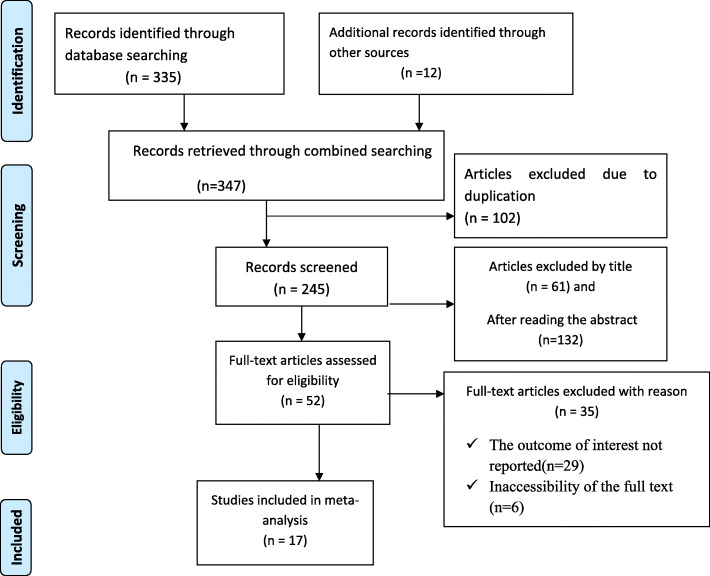
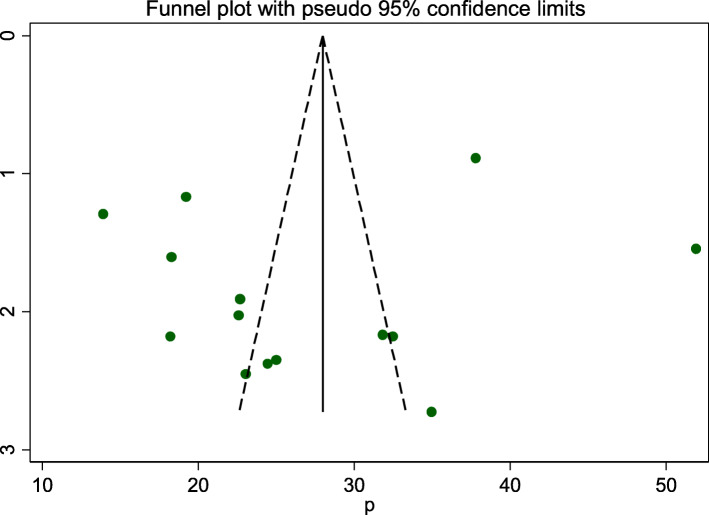
International databases (PubMed, Google scholar, web of science and science direct) were searched. Seventeen articles were included, among these, fourteen were cross-sectional and three of them were case-control studies. Publication bias was employed using a funnel plot and eggers test. The I statistic was computed to check the heterogeneity of studies. Subgroup analysis was performed for the evidence of heterogeneity.
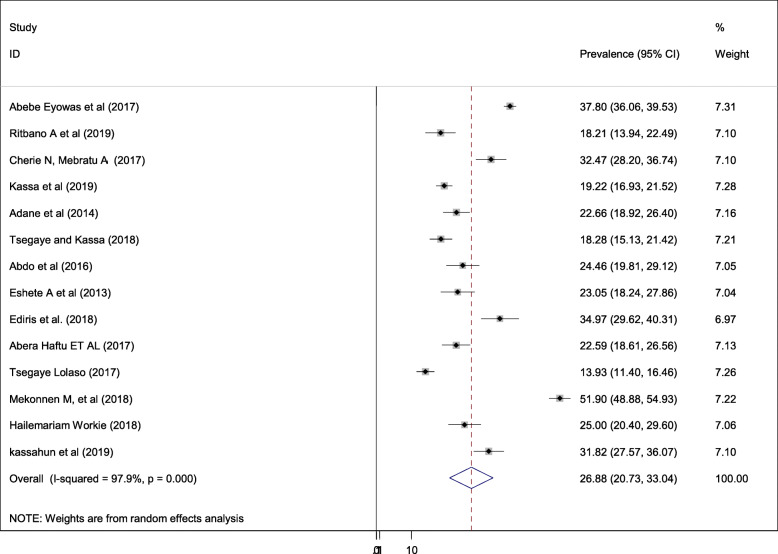
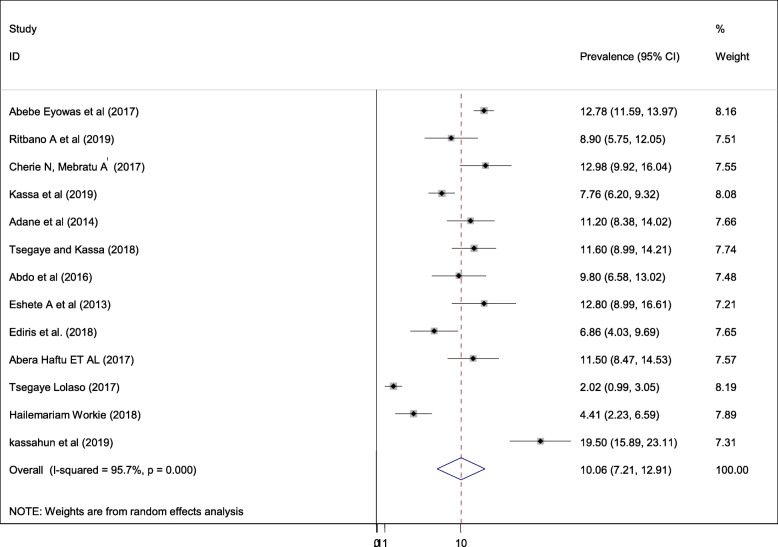
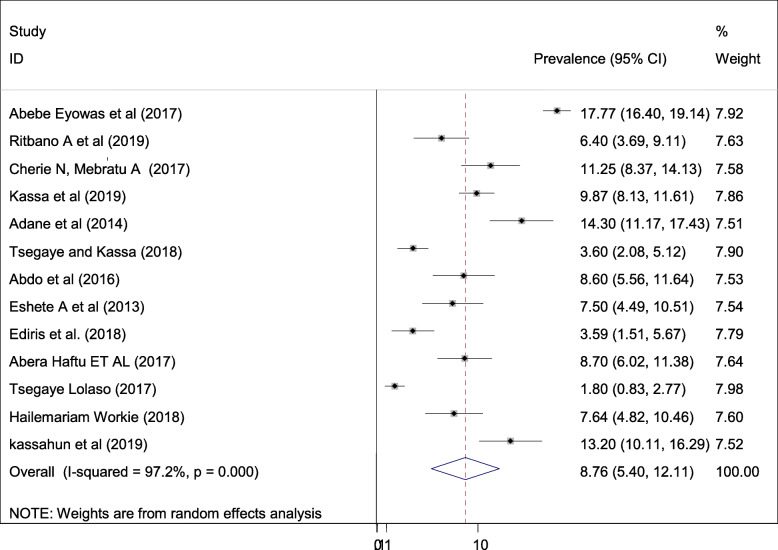
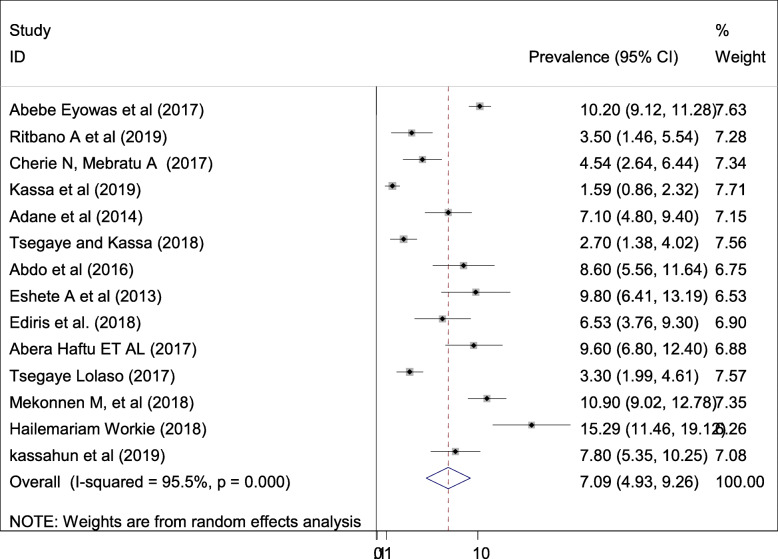
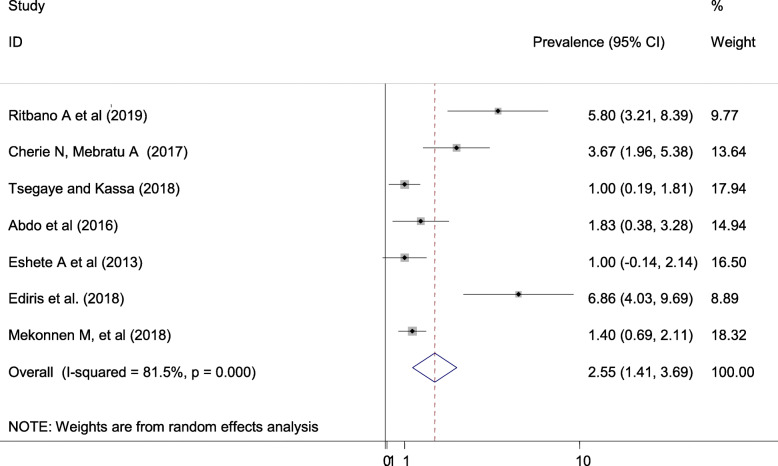
A total of 11,280 study participants were used to estimate the pooled prevalence of adverse fetal outcomes. The overall pooled prevalence of adverse fetal outcomes in Ethiopia was 26.88% (95% CI; 20.73-33.04). Low birth weight 10.06% (95% CI; 7.21-12.91) and prematurity 8.76% (95% CI; 5.4-12.11) were the most common adverse birth outcome at the national level. Rural in residency (AOR = 2.31; 95% CI: 1.64-3.24), lack of antenatal care follow up (AOR = 3.84; 95% CI: 2.76-5.35), pregnancy-induced hypertension (AOR = 7.27; 95% CI: 3.95-13.39), advanced maternal age ≥ 35(AOR = 2.72; 95% CI: 1.62-4.58, and having current complication of pregnancy (AOR = 4.98; 95% CI: 2.24-11.07) were the factors associated with adverse birth outcome.
The pooled prevalence of adverse fetal outcomes in Ethiopia was high. Rural in residency, lack of antenatal care follow up, pregnancy-induced hypertension, advanced maternal age ≥ 35, and having current complications of pregnancy were the factors associated with adverse fetal outcomes.
CRD42020149163.
尽管新生儿发病率和死亡率有所下降,这是第三个可持续发展目标(即终结儿童死亡)的一部分,但该问题的负担仍然是埃塞俄比亚面临的主要挑战。在全球范围内,新生儿发病和死亡的最常见原因是不良胎儿结局(低出生体重、死产、早产、先天性缺陷)。因此,本系统评价和荟萃分析旨在估计埃塞俄比亚不良胎儿结局及其相关因素的合并患病率。
检索了国际数据库(PubMed、谷歌学术、科学网和科学直投)。纳入了17篇文章,其中14篇为横断面研究,3篇为病例对照研究。采用漏斗图和埃格斯检验评估发表偏倚。计算I统计量以检查研究的异质性。针对异质性证据进行亚组分析。
共纳入11280名研究参与者来估计不良胎儿结局的合并患病率。埃塞俄比亚不良胎儿结局的总体合并患病率为26.88%(95%置信区间;20.73 - 33.04)。低出生体重为10.06%(95%置信区间;7.21 - 12.91),早产为8.76%(95%置信区间;5.4 - 12.11)是全国最常见的不良出生结局。居住在农村(比值比 = 2.31;95%置信区间:1.64 - 3.24)、缺乏产前检查随访(比值比 = 3.84;95%置信区间:2.76 - 5.35)、妊娠高血压(比值比 = 7.27;95%置信区间:3.95 - 13.39)、产妇年龄≥35岁(比值比 = 2.72;95%置信区间:1.62 - 4.58)以及目前患有妊娠并发症(比值比 = 4.98;95%置信区间:2.24 - 11.07)是与不良出生结局相关的因素。
埃塞俄比亚不良胎儿结局的合并患病率较高。居住在农村、缺乏产前检查随访、妊娠高血压、产妇年龄≥35岁以及目前患有妊娠并发症是与不良胎儿结局相关的因素。
PROSPERO方案注册号:CRD42020149163。