Department of Population Health Sciences, School of Public Health, Georgia State University, Atlanta, GA, 30303, USA.
F. I. Proctor Foundation, University of California, San Francisco, CA, USA.
BMC Med. 2020 Jun 3;18(1):166. doi: 10.1186/s12916-020-01615-9.
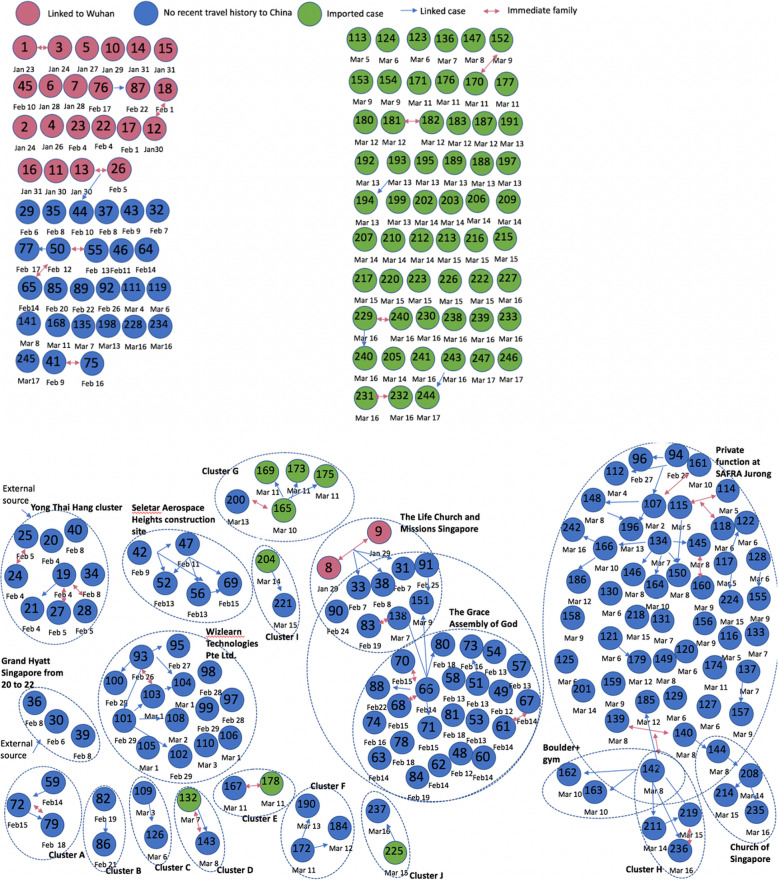
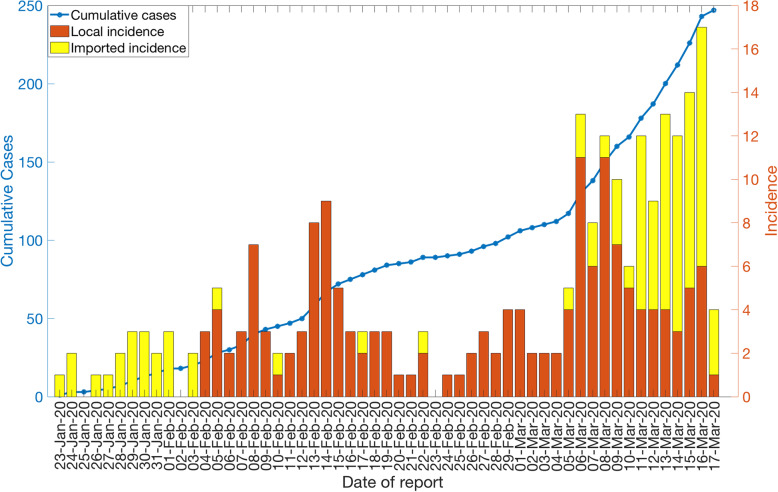
As of March 31, 2020, the ongoing COVID-19 epidemic that started in China in December 2019 is now generating local transmission around the world. The geographic heterogeneity and associated intervention strategies highlight the need to monitor in real time the transmission potential of COVID-19. Singapore provides a unique case example for monitoring transmission, as there have been multiple disease clusters, yet transmission remains relatively continued.
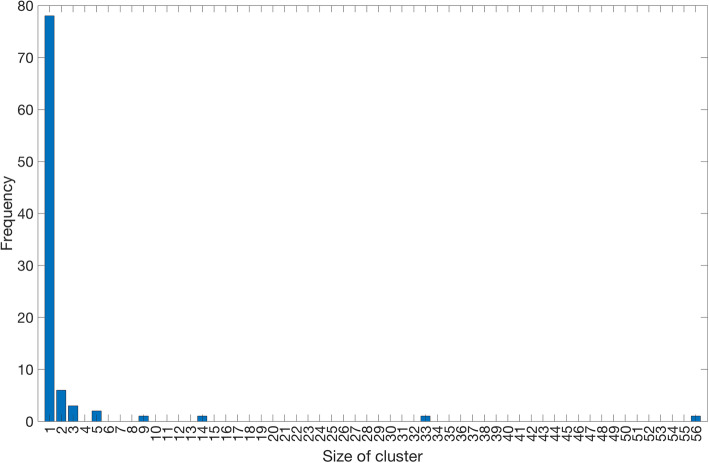
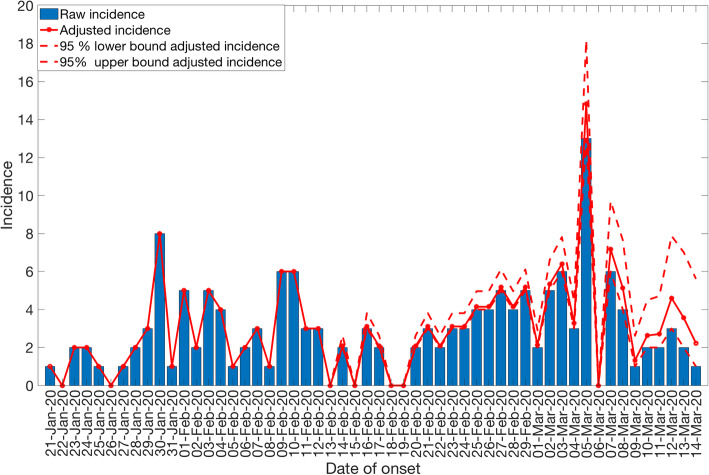
Here we estimate the effective reproduction number, R, of COVID-19 in Singapore from the publicly available daily case series of imported and autochthonous cases by date of symptoms onset, after adjusting the local cases for reporting delays as of March 17, 2020. We also derive the reproduction number from the distribution of cluster sizes using a branching process analysis that accounts for truncation of case counts.
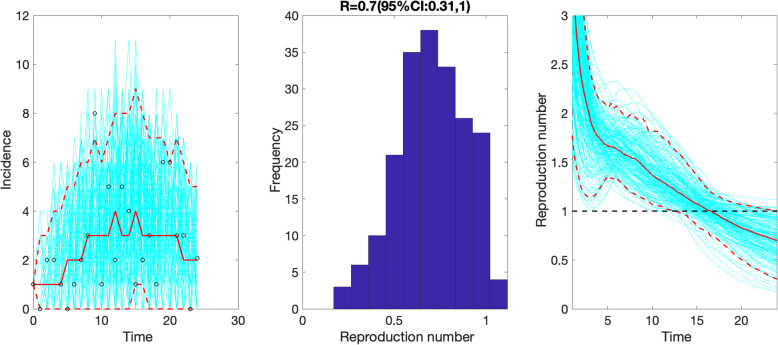
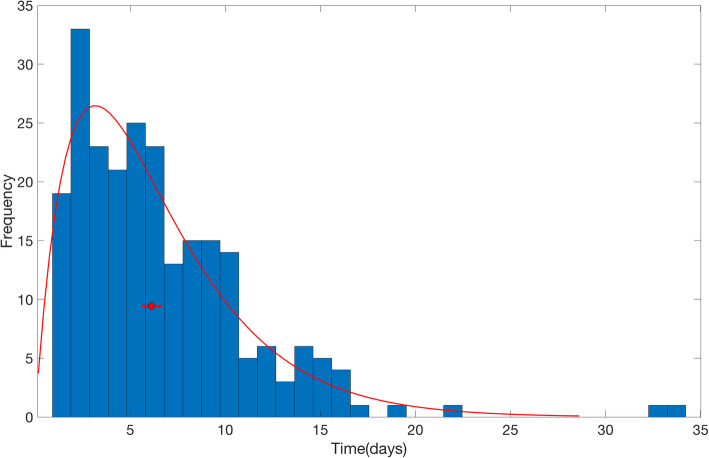
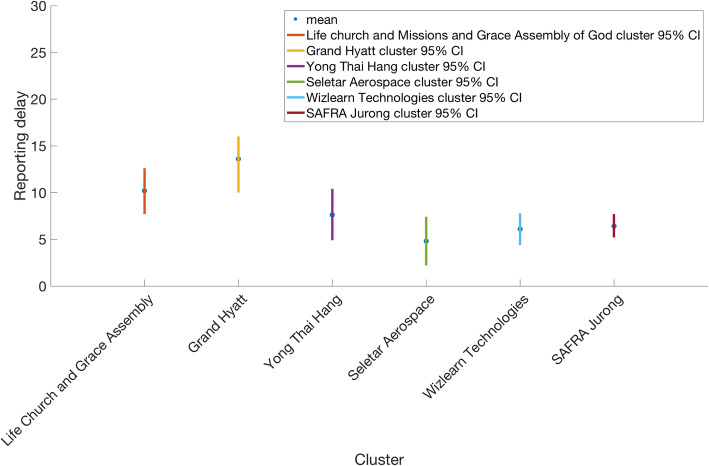
The local incidence curve displays sub-exponential growth dynamics, with the reproduction number following a declining trend and reaching an estimate at 0.7 (95% CI 0.3, 1.0) during the first transmission wave by February 14, 2020, while the overall R based on the cluster size distribution as of March 17, 2020, was estimated at 0.6 (95% CI 0.4, 1.02). The overall mean reporting delay was estimated at 6.4 days (95% CI 5.8, 6.9), but it was shorter among imported cases compared to local cases (mean 4.3 vs. 7.6 days, Wilcoxon test, p < 0.001).
The trajectory of the reproduction number in Singapore underscores the significant effects of successful containment efforts in Singapore, but it also suggests the need to sustain social distancing and active case finding efforts to stomp out all active chains of transmission.
截至 2020 年 3 月 31 日,2019 年 12 月在中国开始的持续 COVID-19 疫情目前正在全球范围内引发本地传播。地理异质性和相关干预策略突出表明需要实时监测 COVID-19 的传播潜力。新加坡为监测传播提供了一个独特的案例,因为那里有多个疾病集群,但传播仍然相对持续。
在这里,我们根据截至 2020 年 3 月 17 日的报告延迟情况,对从有症状发病日期起公开提供的 COVID-19 输入病例和本地病例的每日病例系列数据进行调整后,估计新加坡 COVID-19 的有效繁殖数 R。我们还使用分枝过程分析从集群大小分布中推导出繁殖数,该分析考虑了病例计数的截断。
本地发病曲线显示出亚指数增长动态,繁殖数呈下降趋势,并在 2020 年 2 月 14 日第一次传播波中达到 0.7(95%CI 0.3, 1.0)的估计值,而截至 2020 年 3 月 17 日的基于集群大小分布的总体 R 估计值为 0.6(95%CI 0.4, 1.02)。总体平均报告延迟估计为 6.4 天(95%CI 5.8, 6.9),但输入病例的报告延迟比本地病例短(平均 4.3 天与 7.6 天,Wilcoxon 检验,p<0.001)。
新加坡繁殖数的轨迹突出表明新加坡成功遏制工作的重大影响,但也表明需要维持社交距离和积极的病例发现努力,以杜绝所有活跃的传播链。