University of Applied Sciences for Sports and Management Potsdam, Am Luftschiffhafen 1, 14471, Potsdam, Germany.
Institute of Sport Science, University of Rostock, Rostock, Germany.
Sports Med. 2020 Sep;50(9):1559-1565. doi: 10.1007/s40279-020-01300-0.
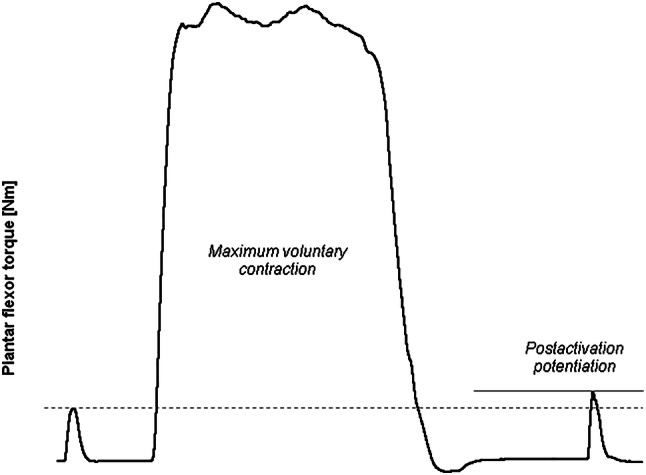
Coaches and athletes in elite sports are constantly seeking to use innovative and advanced training strategies to efficiently improve strength/power performance in already highly-trained individuals. In this regard, high-intensity conditioning contractions have become a popular means to induce acute improvements primarily in muscle contractile properties, which are supposed to translate to subsequent power performances. This performance-enhancing physiological mechanism has previously been called postactivation potentiation (PAP). However, in contrast to the traditional mechanistic understanding of PAP that is based on electrically-evoked twitch properties, an increasing number of studies used the term PAP while referring to acute performance enhancements, even if physiological measures of PAP were not directly assessed. In this current opinion article, we compare the two main approaches (i.e., mechanistic vs. performance) used in the literature to describe PAP effects. We additionally discuss potential misconceptions in the general use of the term PAP. Studies showed that mechanistic and performance-related PAP approaches have different characteristics in terms of the applied research field (basic vs. applied), effective conditioning contractions (e.g., stimulated vs. voluntary), verification (lab-based vs. field tests), effects (twitch peak force vs. maximal voluntary strength), occurrence (consistent vs. inconsistent), and time course (largest effect immediately after vs. ~ 7 min after the conditioning contraction). Moreover, cross-sectional studies revealed inconsistent and trivial-to-large-sized associations between selected measures of mechanistic (e.g., twitch peak force) vs. performance-related PAP approaches (e.g., jump height). In an attempt to avoid misconceptions related to the two different PAP approaches, we propose to use two different terms. Postactivation potentiation should only be used to indicate the increase in muscular force/torque production during an electrically-evoked twitch. In contrast, postactivation performance enhancement (PAPE) should be used to refer to the enhancement of measures of maximal strength, power, and speed following conditioning contractions. The implementation of this terminology would help to better differentiate between mechanistic and performance-related PAP approaches. This is important from a physiological point of view, but also when it comes to aggregating findings from PAP studies, e.g., in the form of meta-analyses, and translating these findings to the field of strength and conditioning.
在精英运动中,教练和运动员一直在寻求使用创新和先进的训练策略,以便有效地提高已经经过高度训练的个体的力量/功率表现。在这方面,高强度的调节收缩已成为一种流行的手段,主要用于引起肌肉收缩特性的急性改善,而这些改善应该转化为随后的功率表现。这种增强性能的生理机制以前被称为后激活增强(PAP)。然而,与基于电引发抽搐特性的传统机械理解的 PAP 不同,越来越多的研究在提到急性性能增强时使用 PAP 一词,即使没有直接评估 PAP 的生理测量。在这篇当前观点文章中,我们比较了文献中用于描述 PAP 效应的两种主要方法(即机械和性能)。我们还讨论了术语 PAP 的一般使用中的潜在误解。研究表明,机械和与性能相关的 PAP 方法在应用研究领域(基础与应用)、有效调节收缩(例如,刺激与自愿)、验证(基于实验室与现场测试)、效果(抽搐峰值力与最大自愿强度)、出现(一致与不一致)和时程(最大效果立即出现与调节收缩后~7 分钟)方面具有不同的特征。此外,横断面研究显示,机械(例如抽搐峰值力)和与性能相关的 PAP 方法(例如跳跃高度)之间的选择测量值之间存在不一致和从微小到较大的关联。为了避免与两种不同 PAP 方法相关的误解,我们建议使用两个不同的术语。后激活增强(PAP)一词应仅用于表示在电引发抽搐期间肌肉力量/扭矩产生的增加。相比之下,后激活性能增强(PAPE)一词应用于指调节收缩后最大力量、功率和速度测量值的增强。这种术语的实施将有助于更好地区分机械和与性能相关的 PAP 方法。这从生理学角度来看很重要,而且在汇总 PAP 研究的结果时也是如此,例如以荟萃分析的形式,以及将这些结果转化为力量和调节领域。