Department of Molecular Medicine, University of Padua, Padua, Italy.
Liver Center and Section of Digestive Diseases, Department of Internal Medicine, Yale University School of Medicine, New Haven, CT.
Hepatology. 2021 Jan;73 Suppl 1(Suppl 1):75-85. doi: 10.1002/hep.31410. Epub 2020 Nov 6.
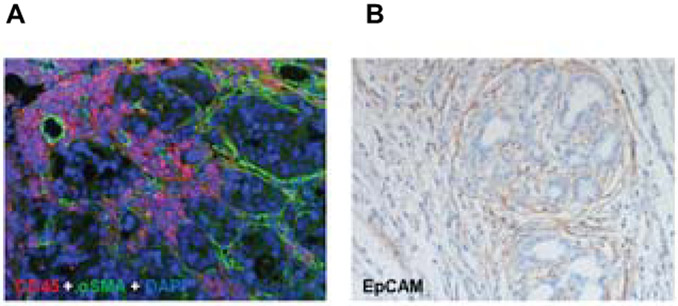
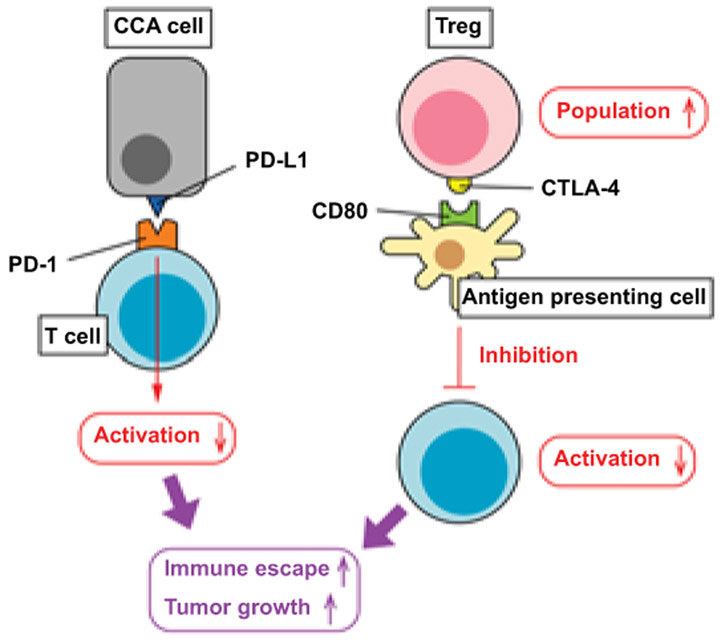
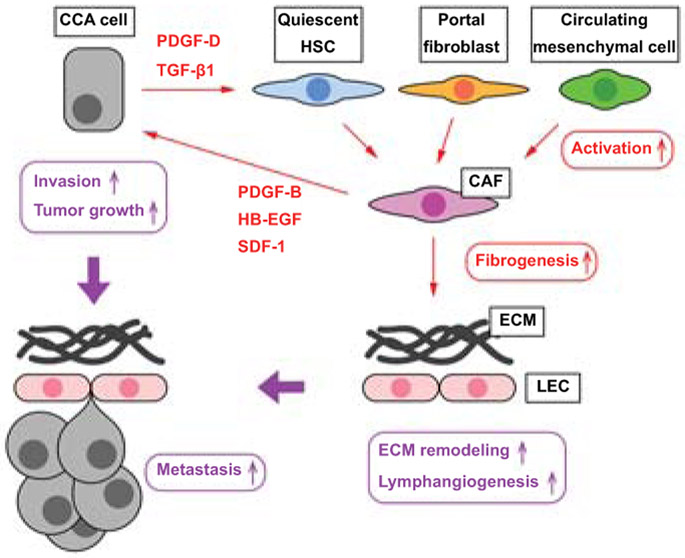
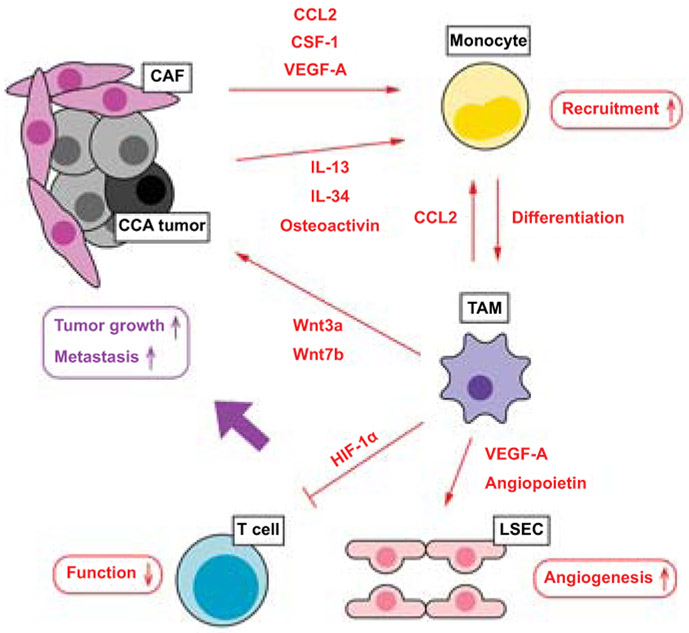
Cholangiocarcinoma (CCA) is an aggressive and heterogeneous malignancy of the biliary tree. A typical hallmark of CCA is that cancer cells are embedded into a dense stroma containing fibrogenic cells, lymphatics and a variety of immune cells. Functional roles of the reactive tumor stroma are not fully elucidated; however, recent studies suggest that the tumor microenvironment plays a key role in the progression and invasiveness of CCA. CCA cells exchange autocrine/paracrine signals with other cancer cells and the infiltrating cell types that populate the microenvironment. This crosstalk is under the control of signals mediated by various cytokines, chemokines, and growth factors. In addition, extracellular vesicles (EVs), exosomes and microvesicles, containing cargo mediators, such as proteins and RNAs, play a key role in cell-to-cell communication, and particularly in epigenetic regulation thanks to their content in miRNAs. Both cytokine- and EV-mediated communications between CCA cells and other liver cells provide a potential novel target for the management of CCA. This review summarizes current understandings of the tumor microenvironment and intercellular communications in CCA and their role in tumor progression.
胆管癌(CCA)是一种侵袭性和异质性的胆道恶性肿瘤。CCA 的一个典型特征是癌细胞嵌入到富含成纤维细胞、淋巴管和各种免疫细胞的致密基质中。反应性肿瘤基质的功能作用尚未完全阐明;然而,最近的研究表明,肿瘤微环境在 CCA 的进展和侵袭性中起着关键作用。CCA 细胞与其他癌细胞以及浸润微环境的细胞类型交换自分泌/旁分泌信号。这种串扰受各种细胞因子、趋化因子和生长因子介导的信号控制。此外,含有货物介质(如蛋白质和 RNA)的细胞外囊泡(EVs)、外泌体和微泡在细胞间通讯中发挥关键作用,特别是由于其 miRNA 含量在表观遗传调控中发挥作用。CCA 细胞与其他肝细胞之间的细胞因子和 EV 介导的通讯为 CCA 的管理提供了一个潜在的新靶点。本综述总结了目前对 CCA 中肿瘤微环境和细胞间通讯及其在肿瘤进展中的作用的理解。