School of Medicine, Ningbo University, Ningbo, Zhejiang, China.
Department of Cardiology, Ningbo First hospital, Ningbo, Zhejiang, China.
Stem Cell Res Ther. 2020 Jun 5;11(1):216. doi: 10.1186/s13287-020-01728-1.
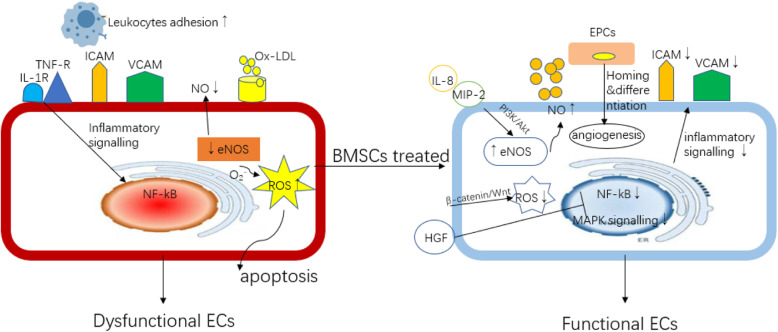
Atherosclerosis is a chronic progressive vascular inflammation characterized by lipid deposition and plaque formation, for which vascular cell dysfunction and impaired immune responses are involved. Up to now, lipid-lowering drugs remain the main therapy for treating atherosclerosis; however, the surgical or interventional therapy is often applied, and yet, morbidity and mortality of such cardiovascular disease remain high worldwide. Over the past decades, an anti-inflammatory approach has become an important therapeutic target for dealing with atherosclerosis, as altered immune responses have been regarded as an essential player in the pathological process of vascular abnormality induced by hyperlipidemia. Interestingly, mesenchymal stem cells, one type of stem cells with the capabilities of self-renewal and multi-potential, have demonstrated their unique immunomodulatory function in the various pathological process, especially in atherosclerosis. While some controversies remain regarding their therapeutic efficacy and working mechanisms, our present review aims to summarize the current research progress on stem cell-based therapy, focusing on its immunomodulatory effects on the pathogenesis of atherosclerosis and how endothelial cells, smooth muscle cells, and other immune cells are regulated by MSC-based therapy.
动脉粥样硬化是一种慢性进行性血管炎症,其特征是脂质沉积和斑块形成,涉及血管细胞功能障碍和免疫反应受损。到目前为止,降脂药物仍然是治疗动脉粥样硬化的主要疗法;然而,手术或介入治疗也经常应用,但这种心血管疾病的发病率和死亡率在全球仍然很高。在过去的几十年中,抗炎治疗已成为治疗动脉粥样硬化的一个重要治疗靶点,因为改变的免疫反应被认为是由高脂血症引起的血管异常病理过程中的一个重要因素。有趣的是,间充质干细胞是一种具有自我更新和多向分化能力的干细胞,在各种病理过程中,特别是在动脉粥样硬化中,表现出独特的免疫调节功能。虽然关于其治疗效果和作用机制仍存在一些争议,但本综述旨在总结基于干细胞的治疗的最新研究进展,重点关注其对动脉粥样硬化发病机制的免疫调节作用,以及间充质干细胞治疗如何调节内皮细胞、平滑肌细胞和其他免疫细胞。