Tahrioui Ali, Ortiz Sergio, Azuama Onyedikachi Cecil, Bouffartigues Emeline, Benalia Nabiha, Tortuel Damien, Maillot Olivier, Chemat Smain, Kritsanida Marina, Feuilloley Marc, Orange Nicole, Michel Sylvie, Lesouhaitier Olivier, Cornelis Pierre, Grougnet Raphaël, Boutefnouchet Sabrina, Chevalier Sylvie
Laboratoire de Microbiologie Signaux et Microenvironnement, LMSM EA4312, Université de Rouen Normandie, Normandie Université, Évreux, France.
CiTCoM UMR 8038 CNRS, Faculté des Sciences Pharmaceutiques et Biologiques, Équipe Produits Naturels, Analyses et Synthèses (PNAS), Université Paris Descartes, Paris, France.
Front Microbiol. 2020 May 26;11:1068. doi: 10.3389/fmicb.2020.01068. eCollection 2020.
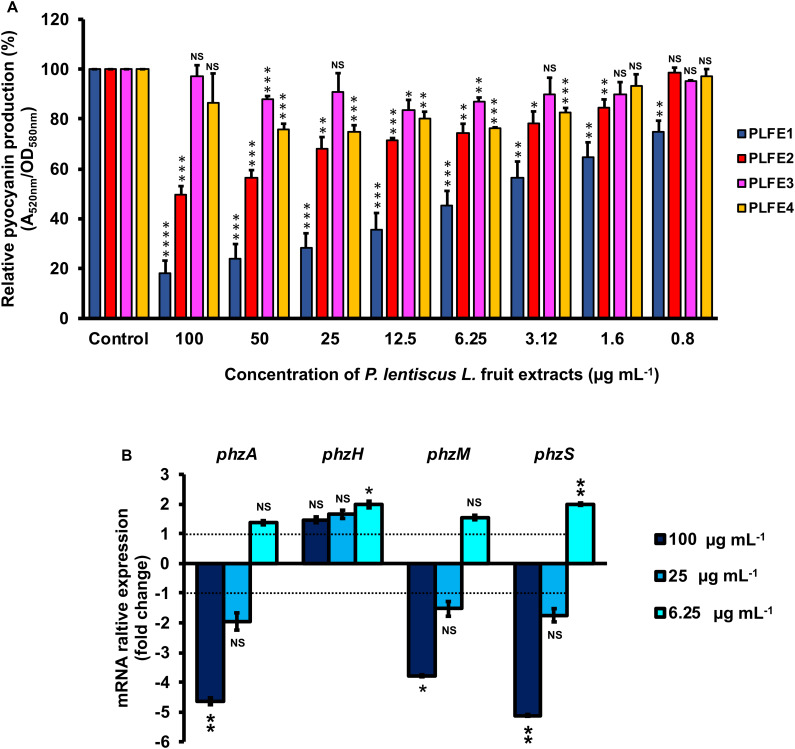
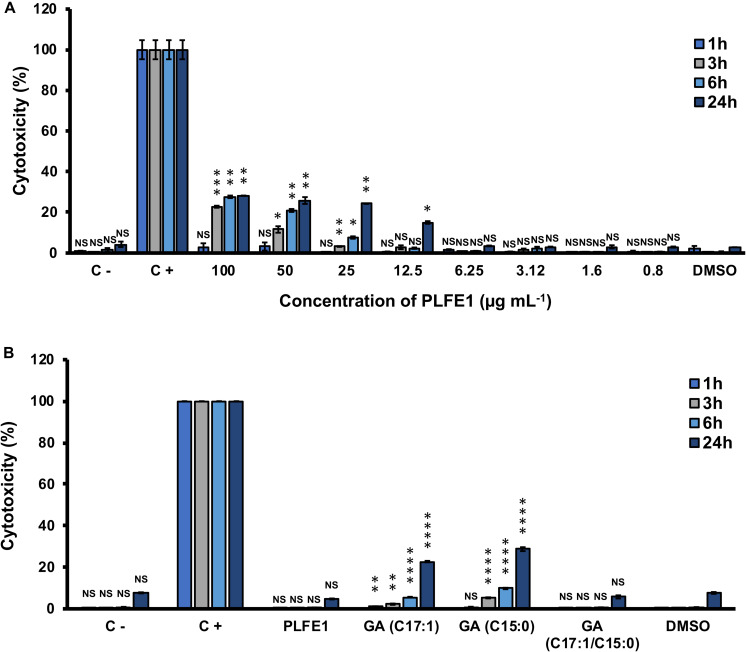
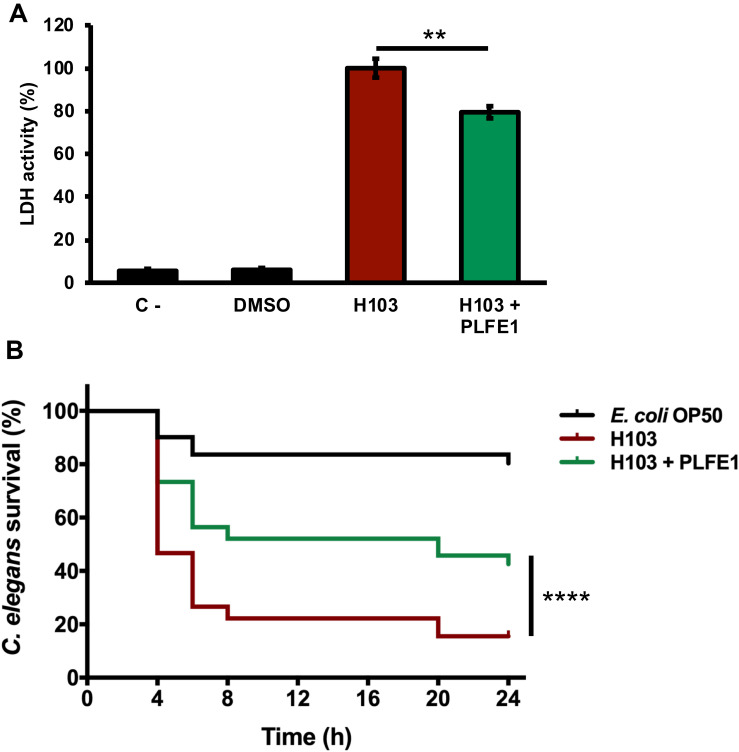
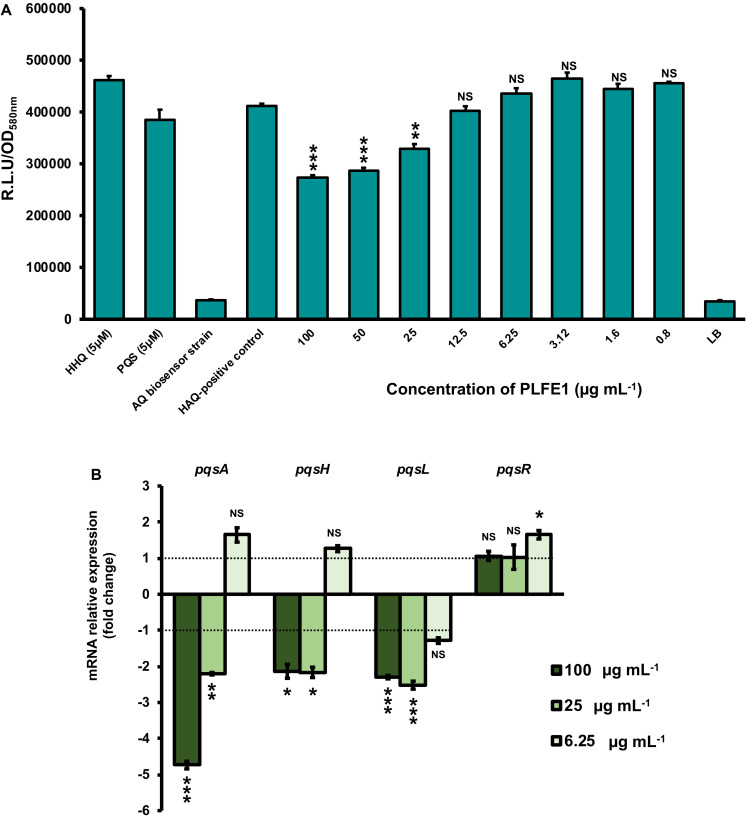
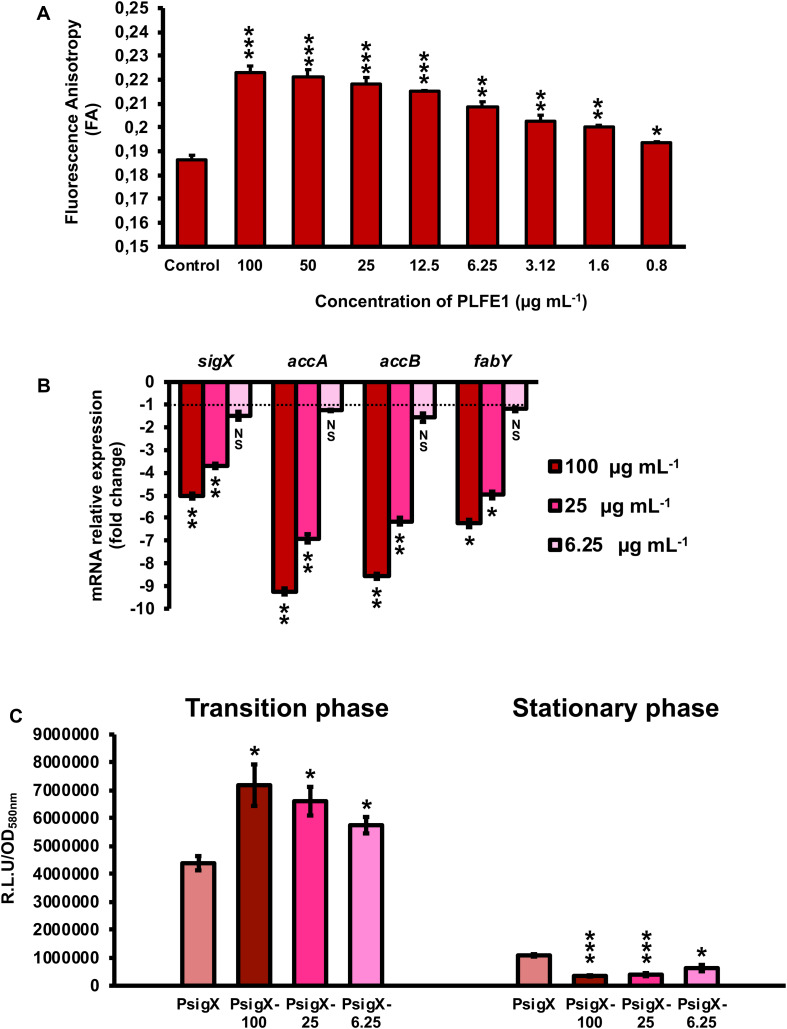
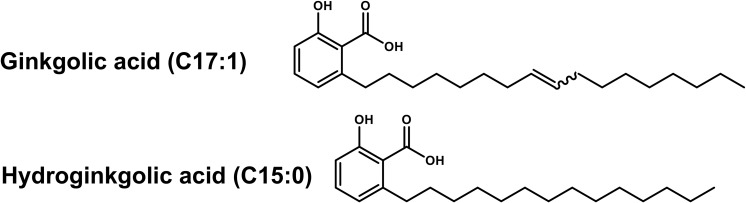
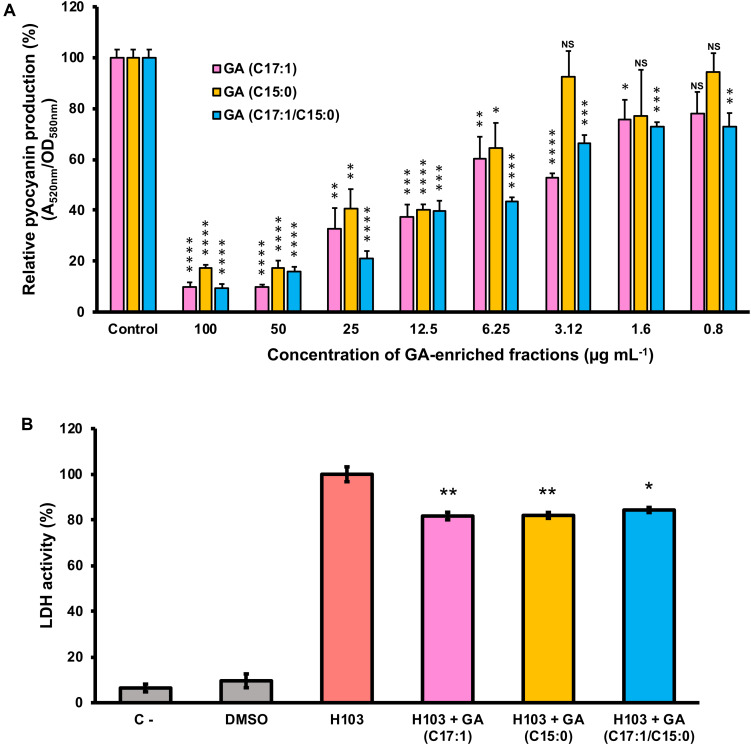
is capable to deploy a collection of virulence factors that are not only essential for host infection and persistence, but also to escape from the host immune system and to become more resistant to drug therapies. Thus, developing anti-virulence agents that may directly counteract with specific virulence factors or disturb higher regulatory pathways controlling the production of virulence armories are urgently needed. In this regard, this study reports that L. fruit cyclohexane extract (PLFE1) thwarts virulence by targeting mainly the pyocyanin pigment production by interfering with 4-hydroxy-2-alkylquinolines molecules production. Importantly, the anti-virulence activity of PLFE1 appears to be associated with membrane homeostasis alteration through the modulation of SigX, an extracytoplasmic function sigma factor involved in cell wall stress response. A thorough chemical analysis of PLFE1 allowed us to identify the ginkgolic acid (C17:1) and hydroginkgolic acid (C15:0) as the main bioactive membrane-interactive compounds responsible for the observed increased membrane stiffness and anti-virulence activity against . This study delivers a promising perspective for the potential future use of PLFE1 or ginkgolic acid molecules as an adjuvant therapy to fight against infections.
它能够部署一系列毒力因子,这些毒力因子不仅对宿主感染和持续存在至关重要,而且能逃避宿主免疫系统并对药物治疗产生更强的抗性。因此,迫切需要开发能够直接对抗特定毒力因子或干扰控制毒力武器库产生的更高调控途径的抗毒力药物。在这方面,本研究报告称,荔枝环己烷提取物(PLFE1)主要通过干扰4-羟基-2-烷基喹啉分子的产生来靶向绿脓菌素色素的产生,从而抑制毒力。重要的是,PLFE1的抗毒力活性似乎与通过调节SigX改变膜稳态有关,SigX是一种参与细胞壁应激反应的胞外功能sigma因子。对PLFE1进行全面的化学分析使我们能够确定银杏酸(C17:1)和氢化银杏酸(C15:0)是导致观察到的膜硬度增加和对……的抗毒力活性的主要生物活性膜相互作用化合物。这项研究为PLFE1或银杏酸分子作为对抗……感染的辅助治疗的潜在未来应用提供了一个有前景的视角。