• 文献检索
  • 文档翻译
  • 深度研究
  • 学术资讯
  • Suppr Zotero 插件Zotero 插件
  • 邀请有礼
  • 套餐&价格
  • 历史记录
应用&插件
Suppr Zotero 插件Zotero 插件浏览器插件Mac 客户端Windows 客户端微信小程序
定价
高级版会员购买积分包购买API积分包
服务
文献检索文档翻译深度研究API 文档MCP 服务
关于我们
关于 Suppr公司介绍联系我们用户协议隐私条款
关注我们

Suppr 超能文献

核心技术专利:CN118964589B侵权必究
粤ICP备2023148730 号-1Suppr @ 2026

文献检索

告别复杂PubMed语法,用中文像聊天一样搜索,搜遍4000万医学文献。AI智能推荐,让科研检索更轻松。

立即免费搜索

文件翻译

保留排版,准确专业,支持PDF/Word/PPT等文件格式,支持 12+语言互译。

免费翻译文档

深度研究

AI帮你快速写综述,25分钟生成高质量综述,智能提取关键信息,辅助科研写作。

立即免费体验

2019冠状病毒病缓解策略分析:

Analysis of the mitigation strategies for COVID-19: .

作者信息

Kassa Semu M, Njagarah John B H, Terefe Yibeltal A

机构信息

Department of Mathematics and Statistical Sciences, Botswana International University of Science and Technology (BIUST), Private Bag 016, Palapye, Botswana.

Department of Mathematics and Applied Mathematics, University of Limpopo, South Africa.

出版信息

Chaos Solitons Fractals. 2020 Sep;138:109968. doi: 10.1016/j.chaos.2020.109968. Epub 2020 Jun 5.

DOI:10.1016/j.chaos.2020.109968
PMID:32536760
原文链接:https://pmc.ncbi.nlm.nih.gov/articles/PMC7274644/
Abstract

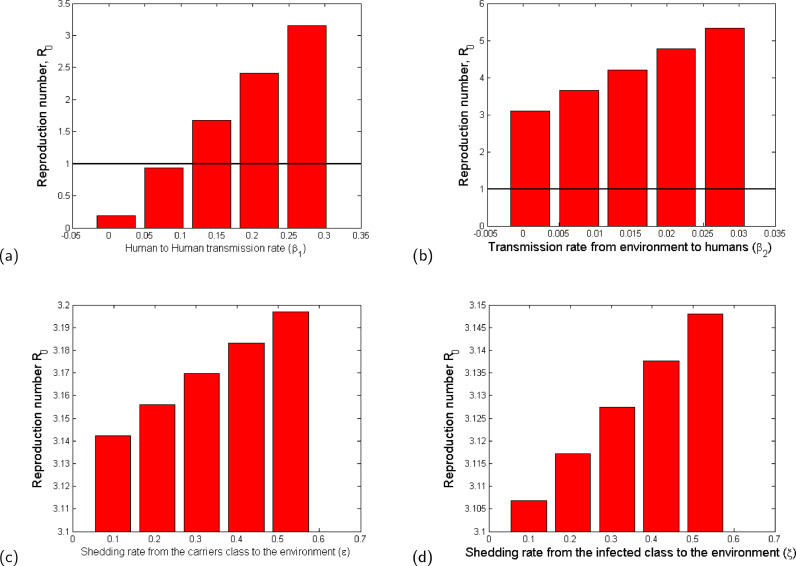
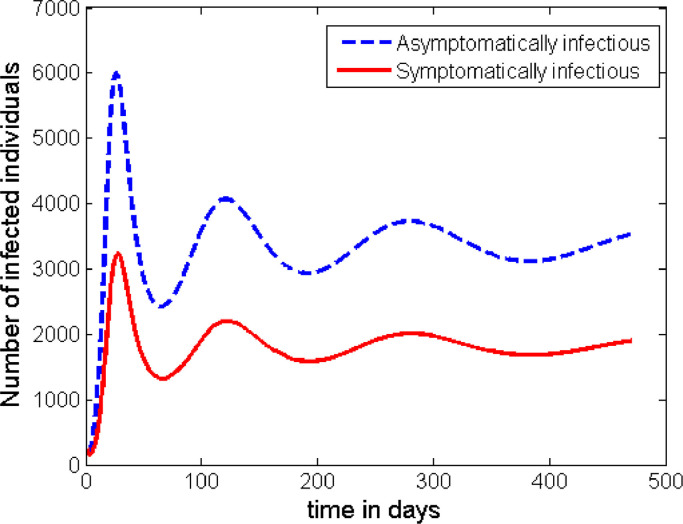
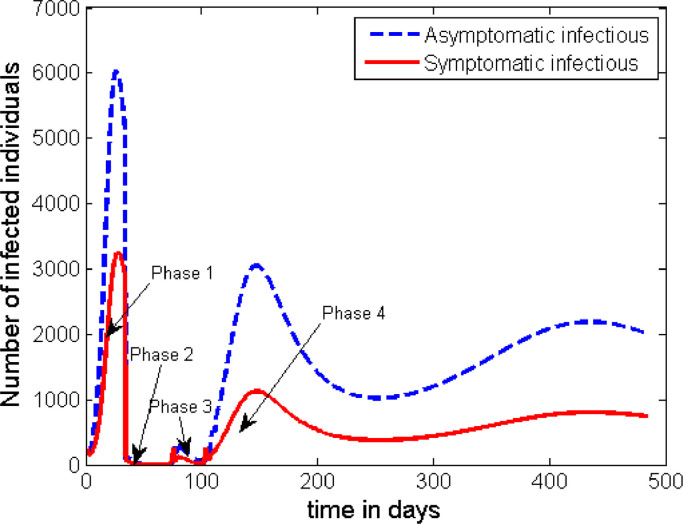
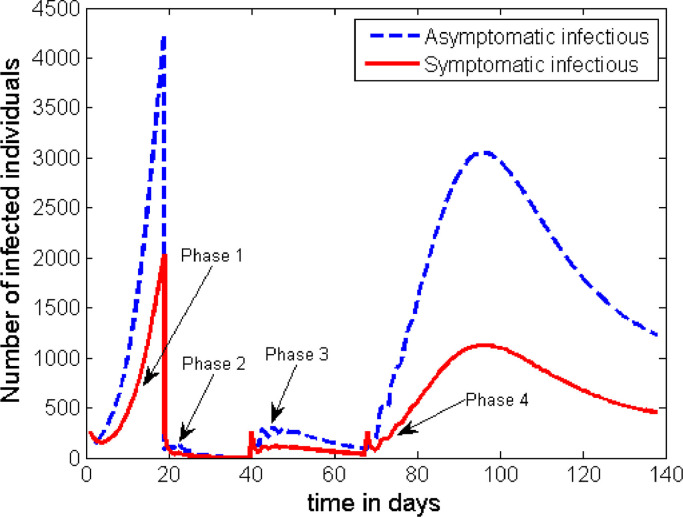
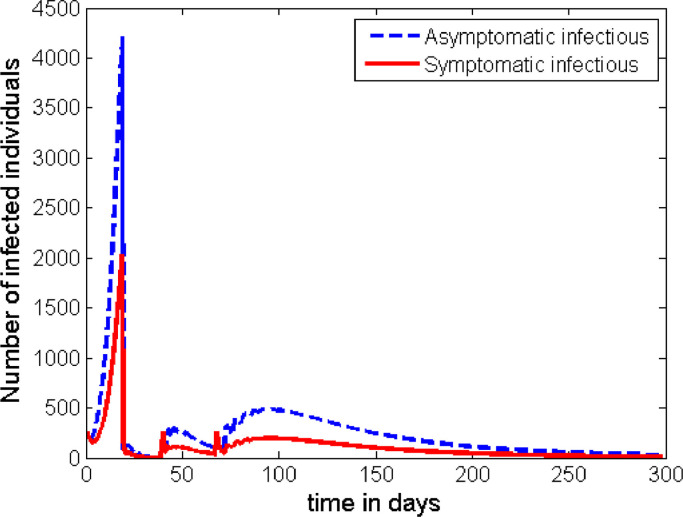
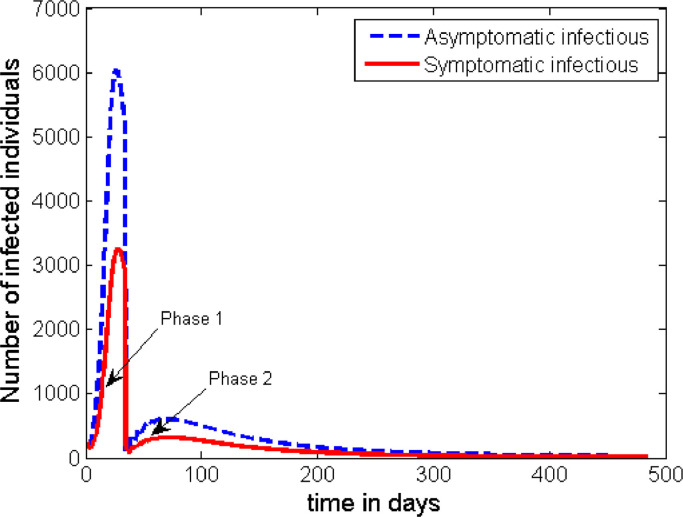
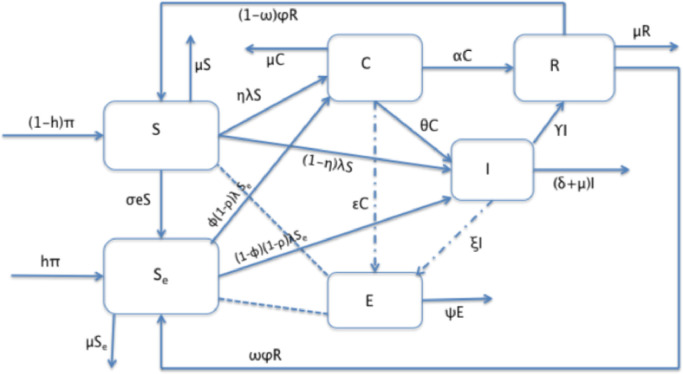
In this article, a mathematical model for the transmission of COVID-19 disease is formulated and analysed. It is shown that the model exhibits a backward bifurcation at when recovered individuals do not develop a permanent immunity for the disease. In the absence of reinfection, it is proved that the model is without backward bifurcation and the disease free equilibrium is globally asymptotically stable for . By using available data, the model is validated and parameter values are estimated. The sensitivity of the value of to changes in any of the parameter values involved in its formula is analysed. Moreover, various mitigation strategies are investigated using the proposed model and it is observed that the asymptomatic infectious group of individuals may play the major role in the re-emergence of the disease in the future. Therefore, it is recommended that in the absence of vaccination, countries need to develop capacities to detect and isolate at least 30% of the asymptomatic infectious group of individuals while treating in isolation at least 50% of symptomatic patients to control the disease.

摘要

在本文中,构建并分析了一个关于COVID-19疾病传播的数学模型。结果表明,当康复个体对该疾病没有产生永久免疫力时,该模型在[具体条件]下呈现后向分岔。在没有再次感染的情况下,证明了该模型不存在后向分岔,并且对于[具体条件],无病平衡点是全局渐近稳定的。利用现有数据对模型进行了验证并估计了参数值。分析了[具体参数]值对其公式中所涉及的任何参数值变化的敏感性。此外,使用所提出的模型研究了各种缓解策略,并且观察到无症状感染个体组可能在未来疾病的再次出现中起主要作用。因此,建议在没有疫苗接种的情况下,各国需要发展能力,检测并隔离至少30%的无症状感染个体组,同时对至少50%的有症状患者进行隔离治疗以控制疾病。
https://cdn.ncbi.nlm.nih.gov/pmc/blobs/8e06/7274644/b62885696d0a/gr11_lrg.jpg
https://cdn.ncbi.nlm.nih.gov/pmc/blobs/8e06/7274644/957ae4662f7a/gr1_lrg.jpg
https://cdn.ncbi.nlm.nih.gov/pmc/blobs/8e06/7274644/8c216eb312d2/gr2_lrg.jpg
https://cdn.ncbi.nlm.nih.gov/pmc/blobs/8e06/7274644/11e542afd040/gr3_lrg.jpg
https://cdn.ncbi.nlm.nih.gov/pmc/blobs/8e06/7274644/20eba480af40/gr4_lrg.jpg
https://cdn.ncbi.nlm.nih.gov/pmc/blobs/8e06/7274644/99cb1ff41484/gr5_lrg.jpg
https://cdn.ncbi.nlm.nih.gov/pmc/blobs/8e06/7274644/2e2520e3f7f8/gr6_lrg.jpg
https://cdn.ncbi.nlm.nih.gov/pmc/blobs/8e06/7274644/3e0ad45bb22d/gr7_lrg.jpg
https://cdn.ncbi.nlm.nih.gov/pmc/blobs/8e06/7274644/d7814575e727/gr8_lrg.jpg
https://cdn.ncbi.nlm.nih.gov/pmc/blobs/8e06/7274644/0c19efd62eba/gr9_lrg.jpg
https://cdn.ncbi.nlm.nih.gov/pmc/blobs/8e06/7274644/ed341a65085b/gr10_lrg.jpg
https://cdn.ncbi.nlm.nih.gov/pmc/blobs/8e06/7274644/b62885696d0a/gr11_lrg.jpg
https://cdn.ncbi.nlm.nih.gov/pmc/blobs/8e06/7274644/957ae4662f7a/gr1_lrg.jpg
https://cdn.ncbi.nlm.nih.gov/pmc/blobs/8e06/7274644/8c216eb312d2/gr2_lrg.jpg
https://cdn.ncbi.nlm.nih.gov/pmc/blobs/8e06/7274644/11e542afd040/gr3_lrg.jpg
https://cdn.ncbi.nlm.nih.gov/pmc/blobs/8e06/7274644/20eba480af40/gr4_lrg.jpg
https://cdn.ncbi.nlm.nih.gov/pmc/blobs/8e06/7274644/99cb1ff41484/gr5_lrg.jpg
https://cdn.ncbi.nlm.nih.gov/pmc/blobs/8e06/7274644/2e2520e3f7f8/gr6_lrg.jpg
https://cdn.ncbi.nlm.nih.gov/pmc/blobs/8e06/7274644/3e0ad45bb22d/gr7_lrg.jpg
https://cdn.ncbi.nlm.nih.gov/pmc/blobs/8e06/7274644/d7814575e727/gr8_lrg.jpg
https://cdn.ncbi.nlm.nih.gov/pmc/blobs/8e06/7274644/0c19efd62eba/gr9_lrg.jpg
https://cdn.ncbi.nlm.nih.gov/pmc/blobs/8e06/7274644/ed341a65085b/gr10_lrg.jpg
https://cdn.ncbi.nlm.nih.gov/pmc/blobs/8e06/7274644/b62885696d0a/gr11_lrg.jpg

相似文献

1
Analysis of the mitigation strategies for COVID-19: .2019冠状病毒病缓解策略分析:
Chaos Solitons Fractals. 2020 Sep;138:109968. doi: 10.1016/j.chaos.2020.109968. Epub 2020 Jun 5.
2
Mathematical modeling, analysis and numerical simulation of the transmission with mitigation of control strategies used in Cameroon.喀麦隆所采用的带有缓解控制策略的传播的数学建模、分析及数值模拟
Chaos Solitons Fractals. 2020 Oct;139:110281. doi: 10.1016/j.chaos.2020.110281. Epub 2020 Sep 18.
3
Occurrence of backward bifurcation and prediction of disease transmission with imperfect lockdown: A case study on COVID-19.不完全封锁下的反向分岔现象及疾病传播预测:以 COVID-19 为例的研究
Chaos Solitons Fractals. 2020 Nov;140:110163. doi: 10.1016/j.chaos.2020.110163. Epub 2020 Aug 17.
4
Global stability and optimal control for a COVID-19 model with vaccination and isolation delays.具有疫苗接种和隔离延迟的COVID-19模型的全局稳定性和最优控制
Results Phys. 2022 Nov;42:106011. doi: 10.1016/j.rinp.2022.106011. Epub 2022 Sep 24.
5
Modeling the dynamics of COVID-19 in the presence of Delta and Omicron variants with vaccination and non-pharmaceutical interventions.在存在德尔塔和奥密克戎变异株的情况下,结合疫苗接种和非药物干预措施对新冠疫情动态进行建模。
Heliyon. 2023 Jul 5;9(7):e17900. doi: 10.1016/j.heliyon.2023.e17900. eCollection 2023 Jul.
6
Mathematical Analysis of the Transmission Dynamics of HIV Syphilis Co-infection in the Presence of Treatment for Syphilis.数学分析梅毒合并 HIV 感染的传播动力学及其梅毒治疗的影响。
Bull Math Biol. 2018 Mar;80(3):437-492. doi: 10.1007/s11538-017-0384-0. Epub 2017 Dec 27.
7
COVID-19 outbreak: a predictive mathematical study incorporating shedding effect.新冠疫情:一项纳入病毒脱落效应的预测性数学研究
J Appl Math Comput. 2023;69(1):1239-1268. doi: 10.1007/s12190-022-01792-1. Epub 2022 Sep 19.
8
Mathematical modelling of COVID-19: A case study of Italy.2019冠状病毒病的数学建模:以意大利为例
Math Comput Simul. 2022 Apr;194:1-18. doi: 10.1016/j.matcom.2021.11.008. Epub 2021 Nov 19.
9
Mathematical model of Ebola transmission dynamics with relapse and reinfection.具有复发和再感染的埃博拉传播动力学数学模型
Math Biosci. 2017 Jan;283:48-59. doi: 10.1016/j.mbs.2016.11.002. Epub 2016 Nov 8.
10
Dynamics of novel COVID-19 in the presence of Co-morbidity.合并症情况下新型冠状病毒肺炎的动态变化
Infect Dis Model. 2022 Jun;7(2):138-160. doi: 10.1016/j.idm.2022.04.005. Epub 2022 May 4.

引用本文的文献

1
Mathematical model of the lumpy skin disease using Caputo fractional-order derivative via invariant point technique.基于不变点技术利用卡普托分数阶导数的牛结节性皮肤病数学模型
Sci Rep. 2025 Mar 17;15(1):9112. doi: 10.1038/s41598-025-92884-y.
2
Prediction and mathematical analysis of the outbreak of coronavirus (COVID-19) in Bangladesh.孟加拉国新型冠状病毒(COVID-19)疫情的预测与数学分析。
Results Appl Math. 2021 May;10:100145. doi: 10.1016/j.rinam.2021.100145. Epub 2021 Feb 13.
3
Modeling the effect of contaminated objects for the transmission dynamics of COVID-19 pandemic with self protection behavior changes.

本文引用的文献

1
The Epidemiological Characteristics of an Outbreak of 2019 Novel Coronavirus Diseases (COVID-19) - China, 2020.2019新型冠状病毒病(COVID-19)疫情的流行病学特征 - 中国,2020年
China CDC Wkly. 2020 Feb 21;2(8):113-122.
2
Novel coronavirus 2019-nCoV (COVID-19): early estimation of epidemiological parameters and epidemic size estimates.新型冠状病毒 2019-nCoV (COVID-19):流行病学参数和疫情规模的早期估计。
Philos Trans R Soc Lond B Biol Sci. 2021 Jul 19;376(1829):20200265. doi: 10.1098/rstb.2020.0265. Epub 2021 May 31.
3
Mathematical modeling of the spread of the coronavirus disease 2019 (COVID-19) taking into account the undetected infections. The case of China.
通过自我保护行为变化对受污染物体在新冠疫情传播动力学中的影响进行建模。
Results Appl Math. 2021 Feb;9:100134. doi: 10.1016/j.rinam.2020.100134. Epub 2020 Nov 30.
4
Heterogeneous risk attitudes and waves of infection.异质风险态度与感染浪潮。
PLoS One. 2024 Apr 9;19(4):e0299813. doi: 10.1371/journal.pone.0299813. eCollection 2024.
5
Sex-structured disease transmission model and control mechanisms for visceral leishmaniasis (VL).性结构疾病传播模型与内脏利什曼病(VL)的控制机制。
PLoS One. 2024 Apr 2;19(4):e0301217. doi: 10.1371/journal.pone.0301217. eCollection 2024.
6
The impact of triple doses vaccination and other interventions for controlling the outbreak of COVID-19 cases and mortality in Australia: A modelling study.三剂疫苗接种及其他干预措施对澳大利亚控制新冠疫情病例及死亡率的影响:一项建模研究
Heliyon. 2024 Feb 10;10(4):e25945. doi: 10.1016/j.heliyon.2024.e25945. eCollection 2024 Feb 29.
7
Effect of cross-border migration on the healthcare system of a destination community: Insights from mathematical modelling of COVID-19 in a developing country.跨境移民对目的地社区医疗保健系统的影响:来自一个发展中国家新冠疫情数学模型的见解
Math Comput Simul. 2023 Jun;208:444-479. doi: 10.1016/j.matcom.2023.01.040. Epub 2023 Feb 3.
8
Mathematical analysis of the impact of the media coverage in mitigating the outbreak of COVID-19.媒体报道对缓解新冠疫情影响的数学分析。
Math Comput Simul. 2023 Mar;205:600-618. doi: 10.1016/j.matcom.2022.10.017. Epub 2022 Oct 22.
9
COVID-19 outbreak: a predictive mathematical study incorporating shedding effect.新冠疫情:一项纳入病毒脱落效应的预测性数学研究
J Appl Math Comput. 2023;69(1):1239-1268. doi: 10.1007/s12190-022-01792-1. Epub 2022 Sep 19.
10
Global stability and analysing the sensitivity of parameters of a multiple-susceptible population model of SARS-CoV-2 emphasising vaccination drive.强调疫苗接种推动的新冠病毒多易感人群模型的全局稳定性及参数敏感性分析
Math Comput Simul. 2023 Jan;203:741-766. doi: 10.1016/j.matcom.2022.07.012. Epub 2022 Jul 23.
考虑未检测到感染情况的2019冠状病毒病(COVID-19)传播的数学模型。以中国为例。
Commun Nonlinear Sci Numer Simul. 2020 Sep;88:105303. doi: 10.1016/j.cnsns.2020.105303. Epub 2020 Apr 30.
4
Mathematical modeling of COVID-19 transmission dynamics with a case study of Wuhan.基于武汉案例研究的新冠病毒传播动力学数学建模
Chaos Solitons Fractals. 2020 Jun;135:109846. doi: 10.1016/j.chaos.2020.109846. Epub 2020 Apr 27.
5
Aerosol and Surface Stability of SARS-CoV-2 as Compared with SARS-CoV-1.与严重急性呼吸综合征冠状病毒1(SARS-CoV-1)相比,严重急性呼吸综合征冠状病毒2(SARS-CoV-2)在气溶胶和表面的稳定性
N Engl J Med. 2020 Apr 16;382(16):1564-1567. doi: 10.1056/NEJMc2004973. Epub 2020 Mar 17.
6
Early dynamics of transmission and control of COVID-19: a mathematical modelling study.COVID-19 的传播和控制的早期动态:一项数学建模研究。
Lancet Infect Dis. 2020 May;20(5):553-558. doi: 10.1016/S1473-3099(20)30144-4. Epub 2020 Mar 11.
7
New coronavirus outbreak: Framing questions for pandemic prevention.新型冠状病毒爆发:为预防大流行提出问题。
Sci Transl Med. 2020 Mar 11;12(534). doi: 10.1126/scitranslmed.abb1469.
8
A mathematical model for simulating the phase-based transmissibility of a novel coronavirus.一种用于模拟新型冠状病毒基于相位的传染性的数学模型。
Infect Dis Poverty. 2020 Feb 28;9(1):24. doi: 10.1186/s40249-020-00640-3.
9
Nowcasting and forecasting the potential domestic and international spread of the 2019-nCoV outbreak originating in Wuhan, China: a modelling study.实时预测和预报源自中国武汉的 2019-nCoV 疫情在国内和国际的潜在传播:一项建模研究。
Lancet. 2020 Feb 29;395(10225):689-697. doi: 10.1016/S0140-6736(20)30260-9. Epub 2020 Jan 31.
10
Preliminary estimation of the basic reproduction number of novel coronavirus (2019-nCoV) in China, from 2019 to 2020: A data-driven analysis in the early phase of the outbreak.2019 年至 2020 年中国新型冠状病毒(2019-nCoV)基本繁殖数的初步估计:疫情早期的基于数据的分析。
Int J Infect Dis. 2020 Mar;92:214-217. doi: 10.1016/j.ijid.2020.01.050. Epub 2020 Jan 30.