Gulino K, Rahman J, Badri M, Morton J, Bonneau R, Ghedin E
Department of Biology, Center for Genomics and Systems Biology, New York University, New York, New York, USA.
Flatiron Institute, Simons Foundation, New York, New York, USA.
mSystems. 2020 Jun 16;5(3):e00876-19. doi: 10.1128/mSystems.00876-19.
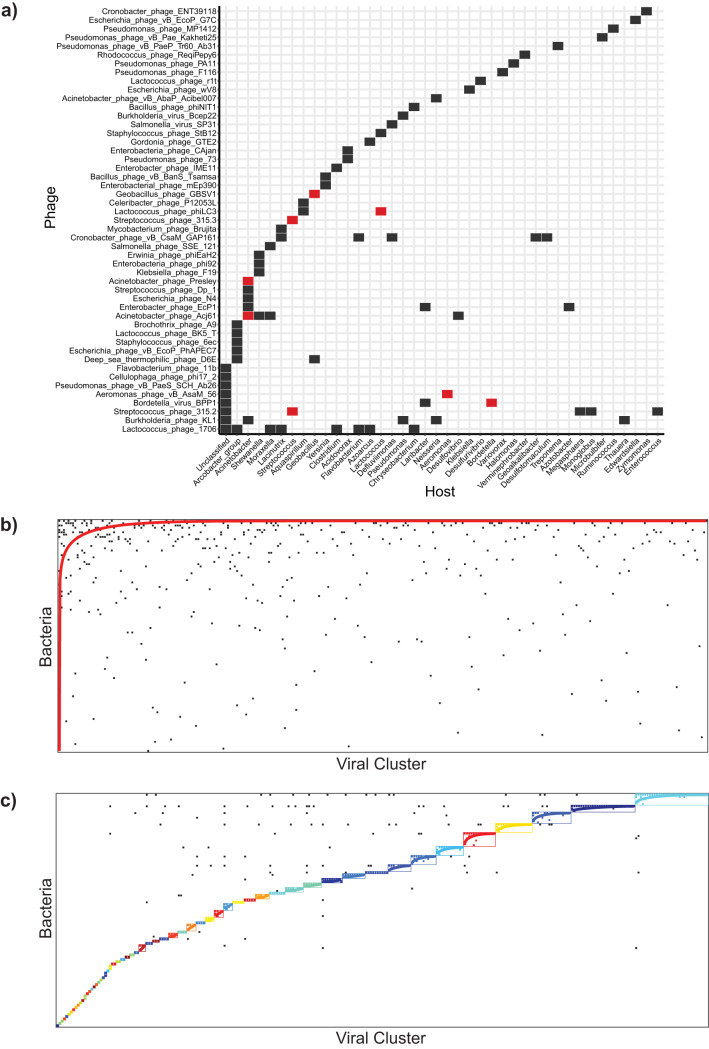
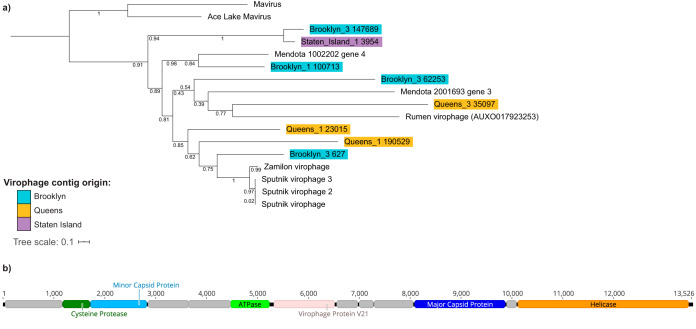
Bacteriophages are abundant members of all microbiomes studied to date, influencing microbial communities through interactions with their bacterial hosts. Despite their functional importance and ubiquity, phages have been underexplored in urban environments compared to their bacterial counterparts. We profiled the viral communities in New York City (NYC) wastewater using metagenomic data collected in November 2014 from 14 wastewater treatment plants. We show that phages accounted for the largest viral component of the sewage samples and that specific virus communities were associated with local environmental conditions within boroughs. The vast majority of the virus sequences had no homology matches in public databases, forming an average of 1,700 unique virus clusters (putative genera). These new clusters contribute to elucidating the overwhelming proportion of data that frequently goes unidentified in viral metagenomic studies. We assigned potential hosts to these phages, which appear to infect a wide range of bacterial genera, often outside their presumed host. We determined that infection networks form a modular-nested pattern, indicating that phages include a range of host specificities, from generalists to specialists, with most interactions organized into distinct groups. We identified genes in viral contigs involved in carbon and sulfur cycling, suggesting functional importance of viruses in circulating pathways and gene functions in the wastewater environment. In addition, we identified virophage genes as well as a nearly complete novel virophage genome. These findings provide an understanding of phage abundance and diversity in NYC wastewater, previously uncharacterized, and further examine geographic patterns of phage-host association in urban environments. Wastewater is a rich source of microbial life and contains bacteria, viruses, and other microbes found in human waste as well as environmental runoff sources. As part of an effort to characterize the New York City wastewater metagenome, we profiled the viral community of sewage samples across all five boroughs of NYC and found that local sampling sites have unique sets of viruses. We focused on bacteriophages, or viruses of bacteria, to understand how they may influence the microbial ecology of this system. We identified several new clusters of phages and successfully associated them with bacterial hosts, providing insight into virus-host interactions in urban wastewater. This study provides a first look into the viral communities present across the wastewater system in NYC and points to their functional importance in this environment.
噬菌体是迄今为止所有已研究微生物群落中的丰富成员,通过与细菌宿主的相互作用影响微生物群落。尽管噬菌体具有重要的功能且无处不在,但与细菌相比,其在城市环境中的研究仍不够充分。我们利用2014年11月从14个污水处理厂收集的宏基因组数据,对纽约市(NYC)废水中的病毒群落进行了分析。我们发现噬菌体占污水样本中病毒成分的最大比例,并且特定的病毒群落与行政区内的当地环境条件相关。绝大多数病毒序列在公共数据库中没有同源匹配,平均形成1700个独特的病毒簇(假定属)。这些新的簇有助于阐明病毒宏基因组研究中经常无法识别的大量数据。我们为这些噬菌体确定了潜在宿主,它们似乎感染广泛的细菌属,且常常超出其假定宿主范围。我们确定感染网络形成模块化嵌套模式,这表明噬菌体具有一系列宿主特异性,从泛化型到特化型,大多数相互作用组织成不同的组。我们在病毒重叠群中鉴定出参与碳和硫循环的基因,表明病毒在废水环境中的循环途径和基因功能中具有重要作用。此外,我们鉴定出了噬病毒体基因以及一个近乎完整的新型噬病毒体基因组。这些发现有助于了解NYC废水中噬菌体的丰度和多样性,此前这些方面尚未得到描述,并且进一步研究了城市环境中噬菌体 - 宿主关联的地理模式。废水是微生物生命的丰富来源,包含人类粪便以及环境径流源中发现的细菌、病毒和其他微生物。作为表征纽约市废水宏基因组工作的一部分,我们对NYC所有五个行政区的污水样本中的病毒群落进行了分析,发现当地采样点有独特的病毒组。我们专注于噬菌体,即细菌病毒,以了解它们如何影响该系统的微生物生态学。我们鉴定出几个新的噬菌体簇,并成功将它们与细菌宿主关联起来,从而深入了解城市废水中病毒 - 宿主的相互作用。这项研究首次对NYC整个废水系统中存在的病毒群落进行了研究,并指出了它们在该环境中的功能重要性。