Cardiovascular Epidemiology Unit, Gertner Institute for Epidemiology and Health Policy Research, Sheba Medical Center, 52621, Ramat-Gan, Israel.
Biostatistics and Biomathematics Unit, Gertner Institute for Epidemiology and Health Policy Research, Sheba Medical Center, Ramat-Gan, Israel.
Isr J Health Policy Res. 2020 Jun 17;9(1):30. doi: 10.1186/s13584-020-00387-0.
Socioeconomic differences in oral health and dental care utilization are a persistent problem in many high-income countries. We evaluated demographic, geographic and socioeconomic factors associated with disparities in households' out-of-pocket expenditure (OOPE) on dental care, and the effect of ongoing dental health reform on these disparities.
This cross-sectional analysis used data collected in two Israeli Household Expenditure Surveys conducted in 2014 and 2018. OOPE for dental care was estimated using a two-part multivariable model. A logistic regression was used to examine the likelihood of reporting any OOPE, and a log-transformed linear regression model examined the level of expenditure among those who reported any OOPE.
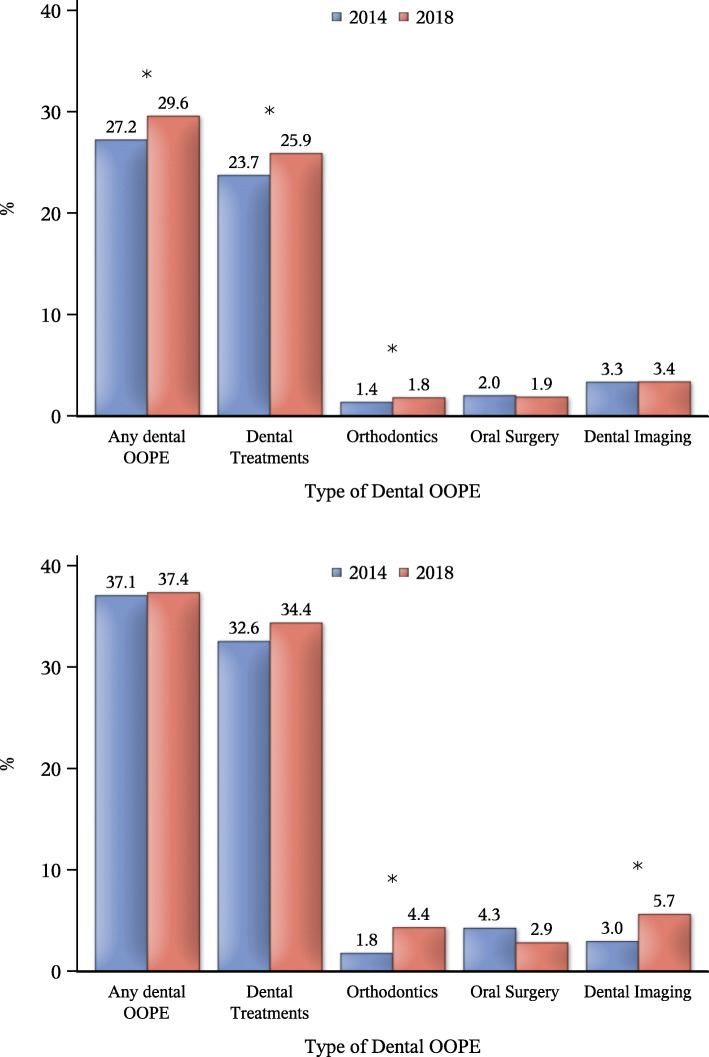
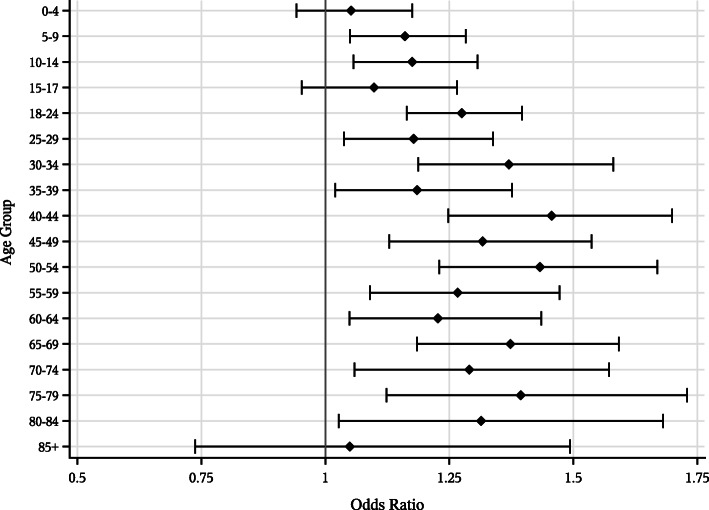
In 2018, OOPE on dental care accounted for 22% of total health expenditure for all households, whereas among those who reported dental OOPE it reached 43%. Households with children up to age 14 years reported lower OOPE, regardless of ownership of supplementary health insurance. Owning supplementary health insurance had a heterogeneous effect on the level of OOPE, with a significant increase among those with 0-8 years of education, compared to households without such insurance, but not among those of higher educational level. In 2014, Arab ethnic minority and residence in the country periphery were associated with a greater likelihood for any OOPE and higher amounts of OOPE on dental care. While the gaps between Jewish and Arab households persisted into 2018, those between peripheral and non-peripheral localities seem to have narrowed.
The burden of dental OOPE on Israeli households remains heavy and some disparities still exist, even after the implementation of the dental health reform. Expanding the dental health reform and addressing barriers to preventive dental care, especially among Arabs and those of lower educational level, may help in reducing households' private expenses on dental care.
在许多高收入国家,口腔健康和牙科保健利用方面的社会经济差异是一个持续存在的问题。我们评估了与家庭牙科保健自付支出(OOPE)差异相关的人口统计学、地理和社会经济因素,以及正在进行的牙科保健改革对这些差异的影响。
本横断面分析使用了 2014 年和 2018 年两次以色列家庭支出调查中收集的数据。使用两部分多变量模型估算牙科保健的 OOPE。使用逻辑回归检查报告任何 OOPE 的可能性,对数转换线性回归模型检查报告任何 OOPE 的支出水平。
2018 年,所有家庭的牙科保健 OOPE 占总健康支出的 22%,而报告牙科 OOPE 的家庭则达到 43%。有 0-14 岁儿童的家庭报告的 OOPE 较低,无论是否拥有补充健康保险。拥有补充健康保险对 OOPE 水平的影响具有异质性,与没有此类保险的家庭相比,教育程度在 0-8 年的家庭的 OOPE 显著增加,但教育程度较高的家庭则没有。2014 年,阿拉伯少数民族和居住在该国边缘地区与更大的可能性报告任何 OOPE 和更高的牙科保健 OOPE 金额相关。尽管犹太人和阿拉伯家庭之间的差距在 2018 年仍存在,但边缘和非边缘地区之间的差距似乎已经缩小。
即使在实施牙科保健改革之后,以色列家庭的牙科 OOPE 负担仍然很重,一些差异仍然存在。扩大牙科保健改革并解决预防牙科保健的障碍,特别是在阿拉伯人和教育程度较低的人群中,可能有助于减少家庭在牙科保健方面的私人支出。