The INCLEN Trust International, New Delhi, India.
Andhra Medical College, Vishakhapatnam, Andhra Pradesh, India.
Vaccine. 2020 Oct 7;38(43):6849-6857. doi: 10.1016/j.vaccine.2020.04.059. Epub 2020 Jun 15.
Intussusception has been linked with rotavirus vaccine (RVV) as a rare adverse reaction. In view of limited background data on intussusception in India and in preparation for RVV introduction, a surveillance network was established to document the epidemiology of intussusception cases in Indian children.
Intussusception in children 2-23 months were documented at 19 nationally representative sentinel hospitals through a retrospective surveillance for 69 months (July 2010 to March 2016). For each case clinical, hospital course, treatment and outcome data were collected.
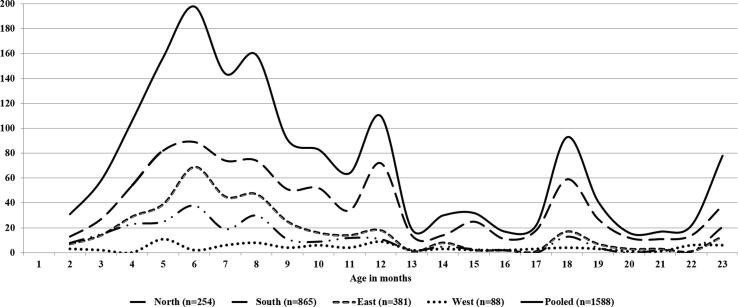
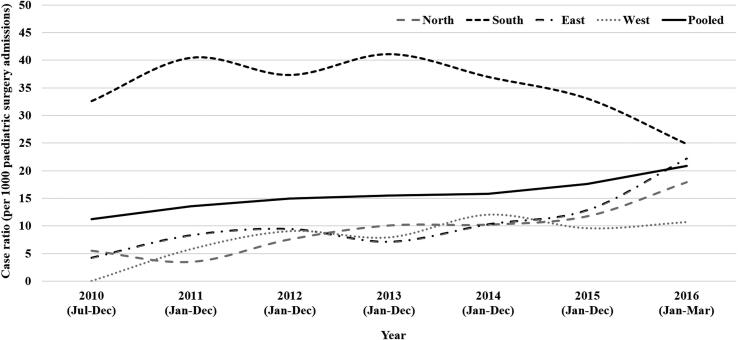
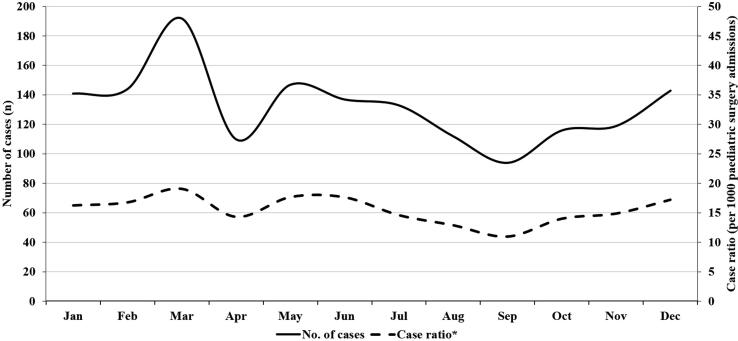
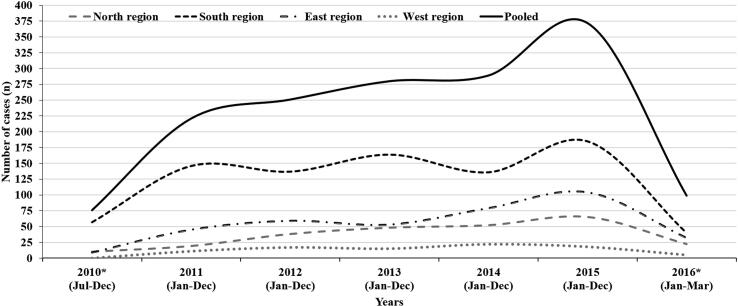
Among the 1588 intussusception cases, 54.5% were from South India and 66.3% were boys. The median age was 8 months (IQR 6, 12) with 34.6% aged 2-6 months. Seasonal variation with higher cases were documented during March-June period. The most common symptoms and signs were vomiting (63.4%), bloody stool (49.1%), abdominal pain (46.9%) and excessive crying (42.8%). The classical triad (vomiting, abdominal pain, and blood in stools) was observed in 25.6% cases. 96.4% cases were diagnosed by ultrasound with ileocolic location as the commonest (85.3%). Management was done by reduction (50.8%) and surgery (41.1%) and only 1% of the patients' died. 91.1% cases met Brighton criteria level 1 and 3.3% Level 2. Between 2010 and 2015, the case load and case ratio increased across all regions.
Intussusception cases have occurred in children across all parts of the country, with low case fatality in the settings studied. The progressive rise cases could indicate an increasing awareness and availability of diagnostic facilities.
肠套叠与轮状病毒疫苗(RVV)有关,是一种罕见的不良反应。鉴于印度肠套叠的背景数据有限,并且为 RVV 的引入做准备,建立了一个监测网络,以记录印度儿童肠套叠病例的流行病学情况。
通过对 19 家具有全国代表性的哨点医院的 69 个月(2010 年 7 月至 2016 年 3 月)回顾性监测,记录 2-23 个月儿童的肠套叠病例。为每个病例收集临床、医院病程、治疗和结局数据。
在 1588 例肠套叠病例中,54.5%来自印度南部,66.3%为男孩。中位年龄为 8 个月(IQR 6,12),34.6%为 2-6 个月。记录到 3 月至 6 月期间病例较多的季节性变化。最常见的症状和体征为呕吐(63.4%)、血便(49.1%)、腹痛(46.9%)和过度哭泣(42.8%)。25.6%的病例出现典型三联征(呕吐、腹痛和血便)。96.4%的病例通过超声诊断,回盲部最常见(85.3%)。治疗方法为复位(50.8%)和手术(41.1%),仅有 1%的患者死亡。91.1%的病例符合布莱顿标准 1 级,3.3%符合 2 级。2010 年至 2015 年,所有地区的病例数和病例比例均有所增加。
肠套叠病例发生在全国各地的儿童中,在所研究的环境中,病死率较低。病例的逐渐增加可能表明诊断设施的意识和可用性有所提高。