Department of Child and Adolescent Psychiatry, Institute of Psychiatry, Psychology and Neuroscience, King's College London, London, UK.
Department of Child and Adolescent Psychiatry, Institute of Psychiatry, Psychology and Neuroscience, King's College London, London, UK.
Neuroimage Clin. 2020;27:102311. doi: 10.1016/j.nicl.2020.102311. Epub 2020 Jun 10.
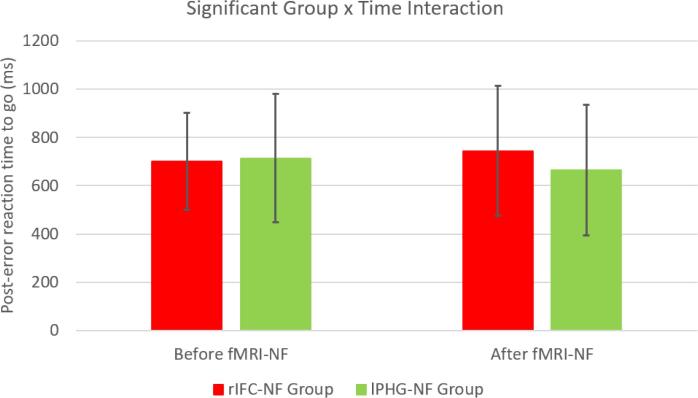
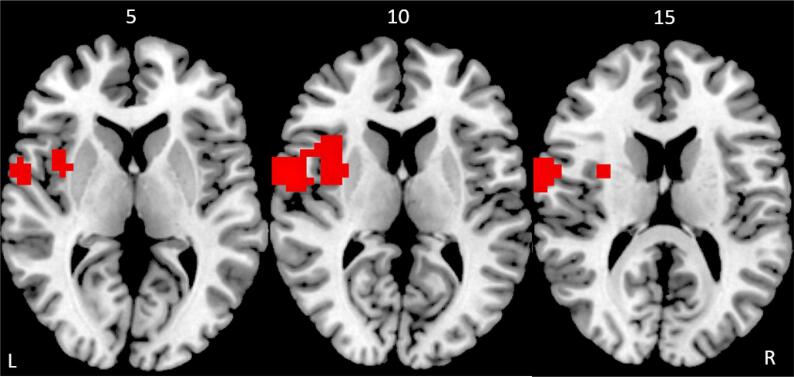
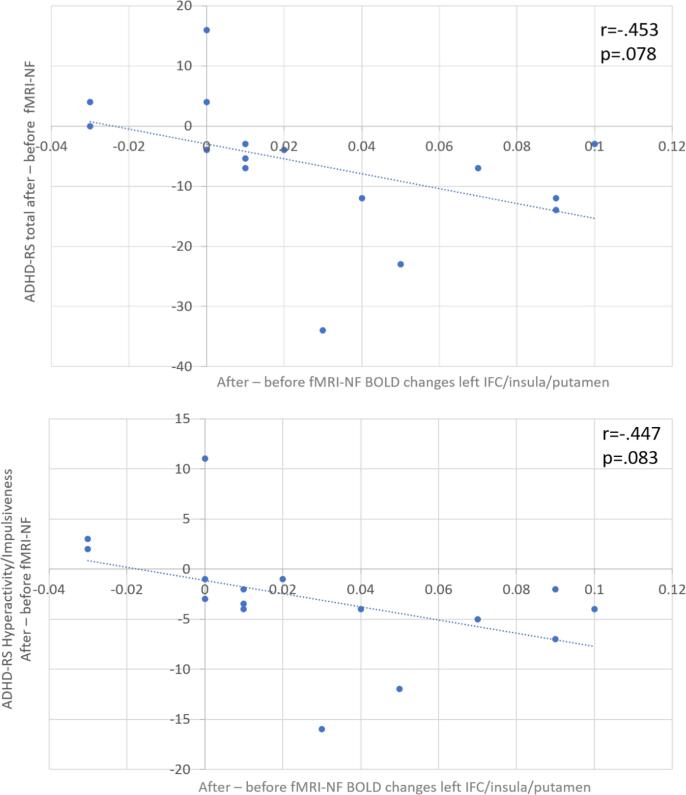
Attention Deficit/Hyperactivity Disorder (ADHD) is a self-regulation disorder, with impairments in error monitoring associated with underactivation of the related brain network(s). Psychostimulant medication improves ADHD symptoms and can upregulate brain function, but has side effects, with limited evidence for longer-term effects. Real-time functional magnetic resonance neurofeedback (fMRI-NF) has potential longer-term neuroplastic effects. We previously reported the effects of 11 runs of 8.5 min of fMRI-NF of the right inferior frontal cortex (rIFC) in adolescents with ADHD. This resulted in improvement of clinical symptom and enhanced rIFC activation post-pre treatment during response inhibition, when compared to a control group receiving fMRI-NF of the left parahippocampal gyrus (lPHG). In the current study we applied a novel analysis to the existing data by investigating the effects of fMRI-NF of rIFC in 16 adolescents with ADHD compared to fMRI-NF of lPHG in 11 adolescents with ADHD on the neurofunctional correlates of error monitoring during the same fMRI tracking stop task and potential associations with cognitive and clinical measures. We found stronger performance adjustment to errors in the rIFC-NF compared to the control lPHG-NF group. At the brain function level, fMRI-NF of rIFC compared to that of lPHG was associated with increased activation in error monitoring regions of the left IFC, premotor cortex, insula and putamen. The increased activation in left IFC-insular-striatal error monitoring regions in the rIFC-NF relative to the lPHG-NF group was furthermore trend-wise correlated with NF-induced ADHD symptom improvements. The findings of this study show, that during error monitoring, fMRI-NF training of rIFC upregulation elicited improvement in post-error behavioural adjustments and concomitant increased activation in left hemispheric fronto-insular-striatal and premotor regions mediating self-control and self-monitoring functions. This suggests that the administration of fMRI-NF of the rIFC may have had an impact on wider networks of self-regulation and self-monitoring in adolescents with ADHD.
注意缺陷多动障碍(ADHD)是一种自我调节障碍,与相关脑网络(s)的激活不足相关的错误监测受损。精神兴奋剂药物可改善 ADHD 症状并上调大脑功能,但具有副作用,且长期效果的证据有限。实时功能磁共振神经反馈(fMRI-NF)具有潜在的长期神经可塑性作用。我们之前报道了 11 次 ADHD 青少年右额下回(rIFC)8.5 分钟 fMRI-NF 的影响。与接受左海马旁回(lPHG)fMRI-NF 的对照组相比,这导致了临床症状的改善和反应抑制时 rIFC 激活的增强,治疗前和治疗后。在当前的研究中,我们通过比较 16 名 ADHD 青少年的 rIFC fMRI-NF 与 11 名 ADHD 青少年的 lPHG fMRI-NF 对相同 fMRI 跟踪停止任务中错误监测的神经功能相关性的影响,以及与认知和临床措施的潜在关联,对现有数据进行了新的分析。我们发现,在 rIFC-NF 组中,与控制组相比,rIFC-NF 组的错误表现调整更强。在大脑功能水平上,与 lPHG-NF 相比,rIFC-NF 与左侧 IFC、运动前皮层、岛叶和壳核的错误监测区域的激活增加相关。rIFC-NF 相对于 lPHG-NF 组的左侧 IFC-岛叶-纹状体错误监测区域的激活增加与 NF 诱导的 ADHD 症状改善呈趋势相关。本研究的结果表明,在错误监测过程中,rIFC 的 fMRI-NF 上调训练引起了错误后行为调整的改善,并伴有左侧半球额-岛-纹状体和运动前区域介导的自我控制和自我监测功能的伴随激活增加。这表明 rIFC 的 fMRI-NF 的给药可能对 ADHD 青少年的自我调节和自我监测的更广泛网络产生了影响。