Department of Health Management, Shengjing Hospital of China Medical University, Shenyang, China.
Department of Clinical Laboratory, Shengjing Hospital of China Medical University, Shenyang, China.
Clin Appl Thromb Hemost. 2020 Jan-Dec;26:1076029620932226. doi: 10.1177/1076029620932226.
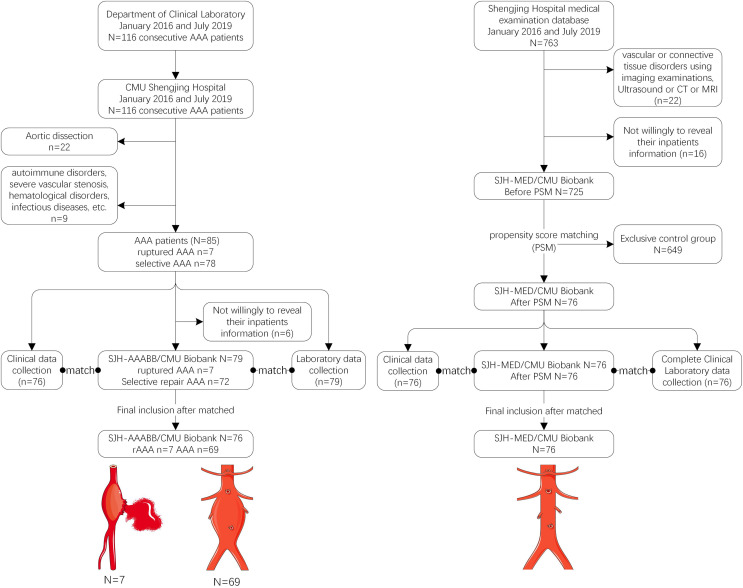
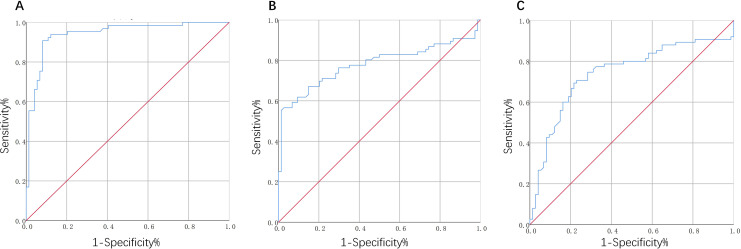
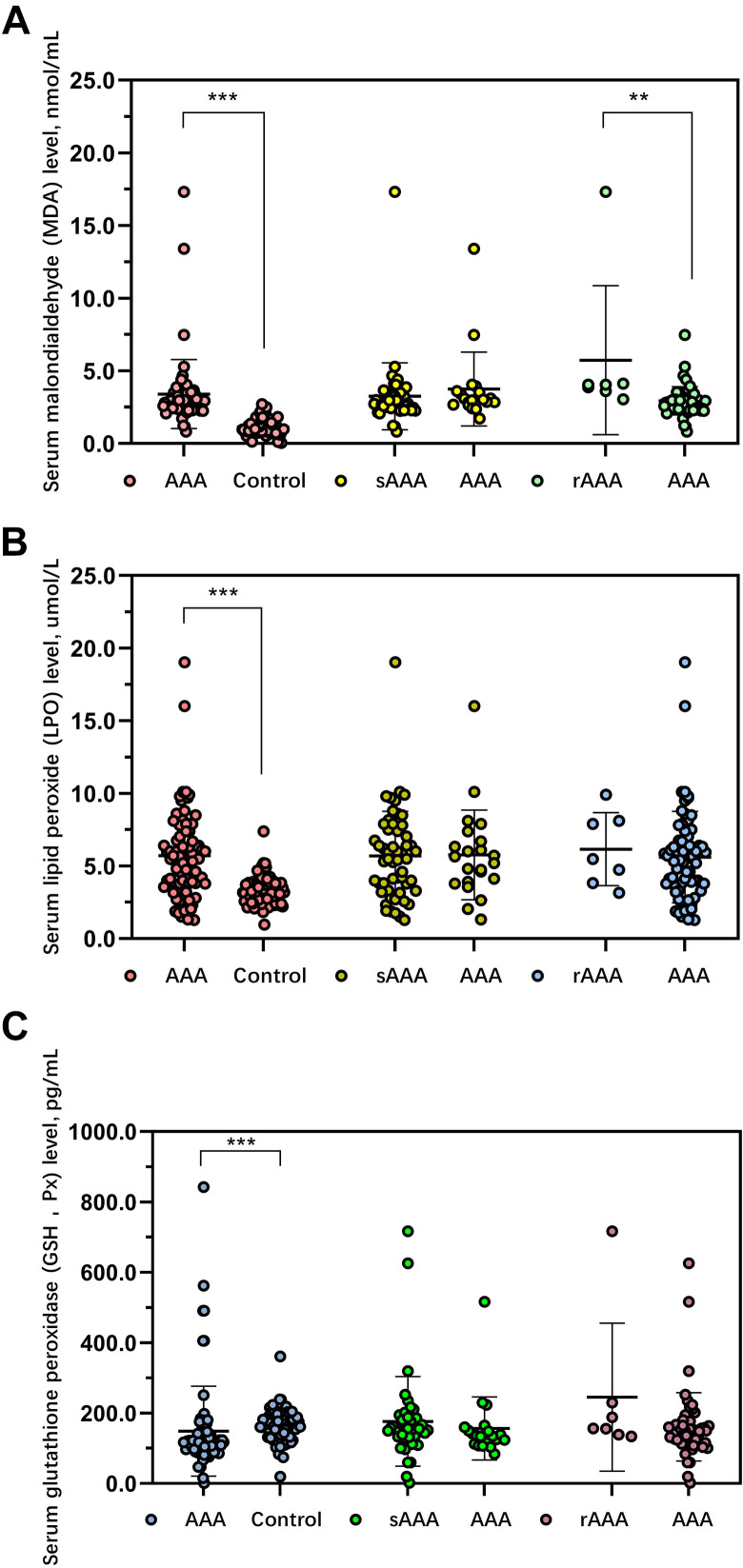
This research was designed to determine the association of serum lipid peroxidation products with disease severity in patients with abdominal aortic aneurysm (AAA). In total, 76 pairs of AAA cases as well as matched controls were enrolled in our research using propensity score matching (PSM). And their malondialdehyde (MDA), lipid hydroperoxide (LPO), and glutathione peroxidase (GSH-Px) levels were also detected through enzyme-linked immunosorbent assay (ELISA). Additionally, the relative clinical data of enrolled participants were extracted. The serum biomarker concentrations were measured in 76 patients with AAAs (diameter between 30 and 54 mm, n = 54; diameter ≥55 mm, n = 22) and 76 control patients from observational cohort study. After PSM adjustment for clinical variables, including age, gender, heart ratio, body mass index, smoking, hypertension, diabetes mellitus, coronary heart disease, and stroke, the serum MDA and LPO among AAA cases were remarkably increased compared with those from the normal patients. Inversely, serum GSH-Px was significantly decreased in patients with AAA compared to the control group. Besides, the serum levels of MDA and LPO were independently associated with AAA risk. Typically, there was significantly positive correlation between MDA level and LPO level (R = 0.358) but negative correlation of MDA level with GSH-Px (R = -0.203) level in patients with AAA. Meanwhile, the area under the receiver operating characteristic curve was 0.965 when MDA was used to diagnose AAA, and the optimal threshold value was 0.242 nmol/mL. Moreover, serum MDA level was significantly increased in cases with rupture AAA compared to those in selective AAA cases. Logistic regression analysis suggested that a higher serum MDA level indicated an elevated risk of AAA rupture (odds ratio = 2.536; 95% CI: 1.037-6.203; =0.041). Our present findings suggest that serum peroxidation contents were evidently changed among AAA cases. Serum MDA and LPO concentrations could be used to predict disease severity in patients with AAA. Moreover, serum MDA may serve as the candidate biomarker for diagnosis of AAA and accurate identification of increased risks of AAA rupture.
本研究旨在确定血清脂质过氧化产物与腹主动脉瘤(AAA)患者疾病严重程度的相关性。我们使用倾向评分匹配(PSM)共纳入了 76 对 AAA 病例和匹配对照。并通过酶联免疫吸附测定(ELISA)检测了丙二醛(MDA)、脂质过氧化物(LPO)和谷胱甘肽过氧化物酶(GSH-Px)的水平。此外,还提取了纳入参与者的相关临床数据。在观察性队列研究中,我们测量了 76 例 AAA 患者(直径 30-54mm,n=54;直径≥55mm,n=22)和 76 例对照患者的血清生物标志物浓度。经过 PSM 调整后,包括年龄、性别、心脏比率、体重指数、吸烟、高血压、糖尿病、冠心病和中风在内的临床变量,与正常患者相比,AAA 病例的血清 MDA 和 LPO 明显升高。相反,与对照组相比,AAA 患者的血清 GSH-Px 显著降低。此外,血清 MDA 和 LPO 水平与 AAA 风险独立相关。通常,AAA 患者的 MDA 水平与 LPO 水平呈显著正相关(R=0.358),与 GSH-Px 水平呈负相关(R=-0.203)。同时,当使用 MDA 诊断 AAA 时,ROC 曲线下面积为 0.965,最佳阈值为 0.242nmol/mL。此外,破裂性 AAA 患者的血清 MDA 水平明显高于择期性 AAA 患者。Logistic 回归分析表明,较高的血清 MDA 水平提示 AAA 破裂的风险增加(比值比=2.536;95%可信区间:1.037-6.203;P=0.041)。本研究结果表明,AAA 患者的血清过氧化含量明显改变。血清 MDA 和 LPO 浓度可用于预测 AAA 患者的疾病严重程度。此外,血清 MDA 可能是诊断 AAA 和准确识别 AAA 破裂风险增加的候选生物标志物。