Luxembourg Institute of Science and Technology, 41 rue du Brill, L-4422, Belvaux, Luxembourg.
Université Libre de Bruxelles, 50 avenue F.D. Roosevelt, B-1050, Brussels, Belgium.
Microbiome. 2020 Jun 23;8(1):96. doi: 10.1186/s40168-020-00872-3.
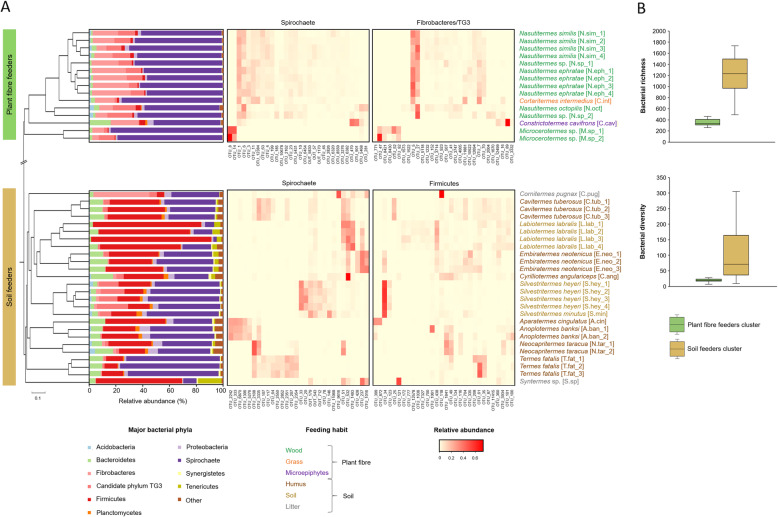
Termites are among the most successful insect lineages on the globe and are responsible for providing numerous ecosystem services. They mainly feed on wood and other plant material at different stages of humification. Lignocellulose is often a principal component of such plant diet, and termites largely rely on their symbiotic microbiota and associated enzymes to decompose their food efficiently. While lower termites and their gut flagellates were given larger scientific attention in the past, the gut lignocellulolytic bacteria of higher termites remain less explored. Therefore, in this study, we investigated the structure and function of gut prokaryotic microbiomes from 11 higher termite genera representative of Syntermitinae, Apicotermitinae, Termitidae and Nasutitermitinae subfamilies, broadly grouped into plant fibre- and soil-feeding termite categories.
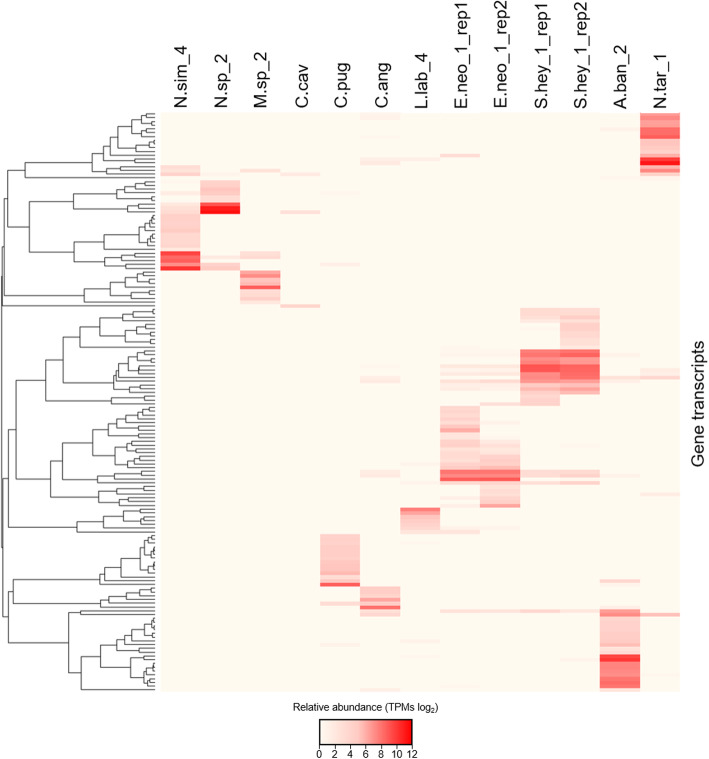
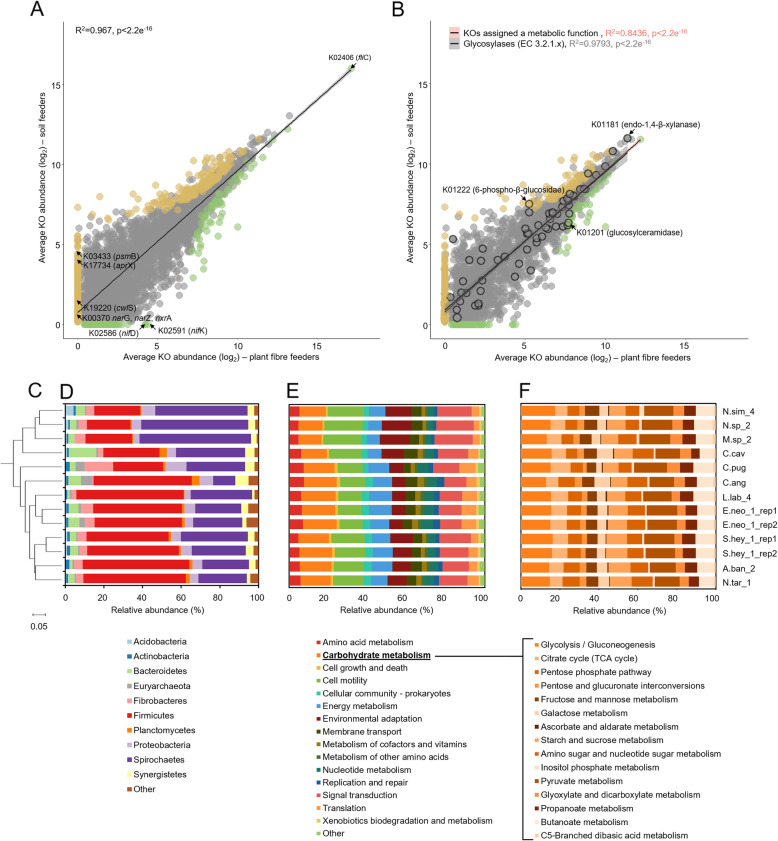
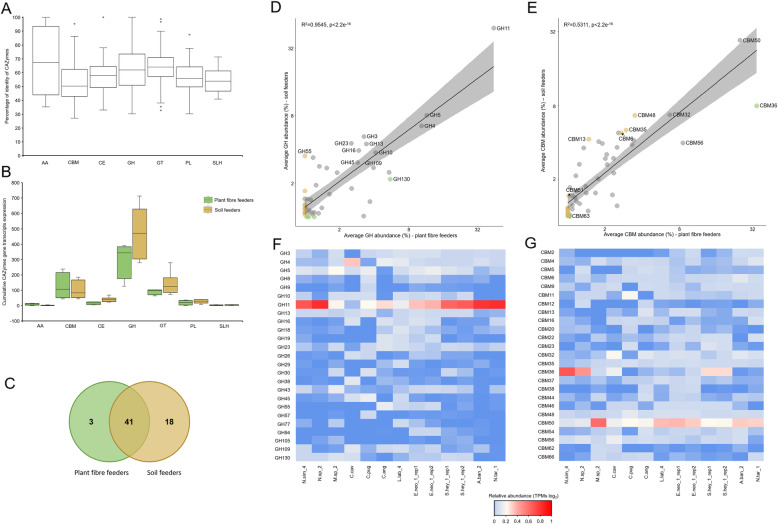
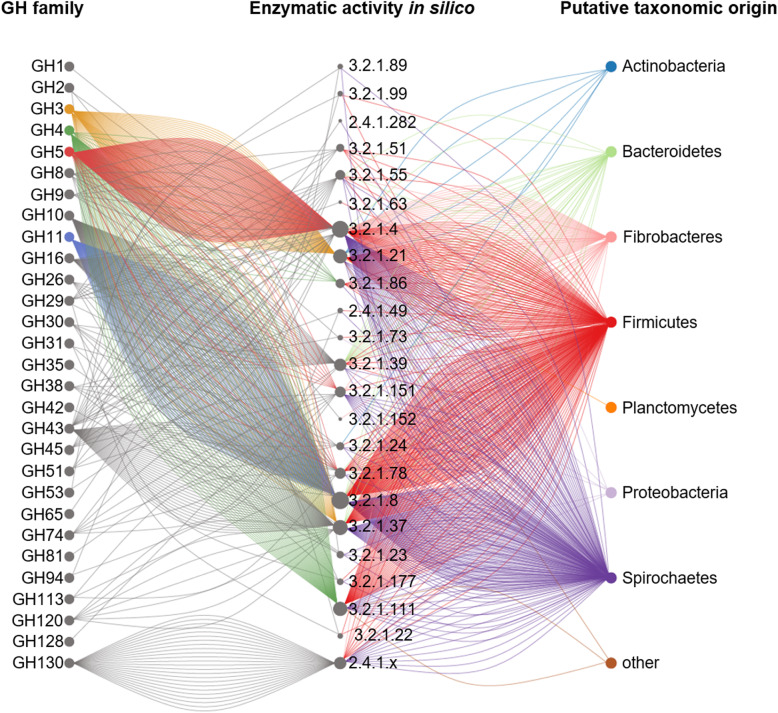
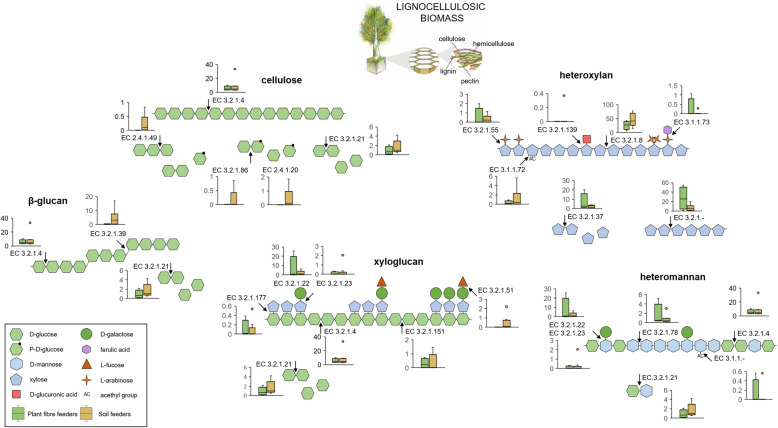
Despite the different compositional structures of the studied termite gut microbiomes, reflecting well the diet and host lineage, we observed a surprisingly high functional congruency between gut metatranscriptomes from both feeding groups. The abundance of transcripts encoding for carbohydrate active enzymes as well as expression and diversity profiles of assigned glycoside hydrolase families were also similar between plant fibre- and soil-feeding termites. Yet, dietary imprints highlighted subtle metabolic differences specific to each feeding category. Roughly, 0.18% of de novo re-constructed gene transcripts were shared between the different termite gut microbiomes, making each termite gut a unique reservoir of genes encoding for potentially industrially applicable enzymes, e.g. relevant to biomass degradation. Taken together, we demonstrated the functional equivalence in microbial populations across different termite hosts.
Our results provide valuable insight into the bacterial component of the termite gut system and significantly expand the inventory of termite prokaryotic genes participating in the deconstruction of plant biomass. Video Abstract.
白蚁是全球最成功的昆虫谱系之一,它们负责提供众多生态系统服务。它们主要以不同腐解阶段的木材和其他植物材料为食。木质纤维素通常是这种植物饮食的主要成分,白蚁主要依靠共生微生物群及其相关酶来有效地分解食物。虽然过去人们对低级白蚁及其肠道鞭毛虫给予了更多的科学关注,但高级白蚁的肠道木质纤维素分解细菌仍未得到充分探索。因此,在这项研究中,我们调查了代表 Syntermitinae、Apicotermitinae、Termitidae 和 Nasutitermitinae 亚科的 11 种高级白蚁属的肠道原核微生物组的结构和功能,这些白蚁大致分为以植物纤维和土壤为食的两类。
尽管研究中白蚁肠道微生物组的组成结构不同,很好地反映了饮食和宿主谱系,但我们观察到来自这两个摄食组的肠道宏转录组之间存在惊人的高功能一致性。编码碳水化合物活性酶的转录物丰度以及糖苷水解酶家族的表达和多样性谱在以植物纤维和土壤为食的白蚁中也相似。然而,饮食印记突出了每个摄食类群特有的细微代谢差异。大约有 0.18%的从头重建基因转录本存在于不同的白蚁肠道微生物组之间,这使得每个白蚁肠道都是一个独特的基因库,这些基因编码潜在的工业应用酶,例如与生物质降解相关的酶。总之,我们证明了不同白蚁宿主之间微生物种群的功能等效性。
我们的研究结果为白蚁肠道系统的细菌组成部分提供了有价值的见解,并极大地扩展了参与植物生物质解构的白蚁原核基因目录。视频摘要。