National Center for Genetic Engineering and Biotechnology (BIOTEC), 113 Thailand Science Park, Phahonyothin Road, Khlong Nueng, Khlong Luang, Pathum Thani, 12120, Thailand.
Pilot Plant Development and Training Institute, King Mongkut's University of Technology Thonburi (Bangkhuntien), Bangkok, 10150, Thailand.
Sci Rep. 2020 Jun 24;10(1):10241. doi: 10.1038/s41598-020-66857-2.
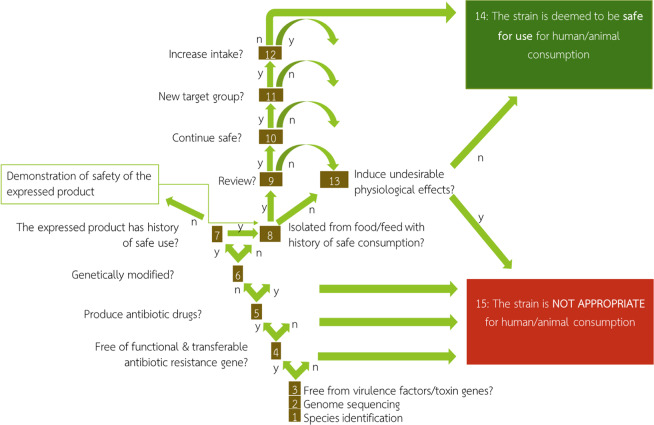
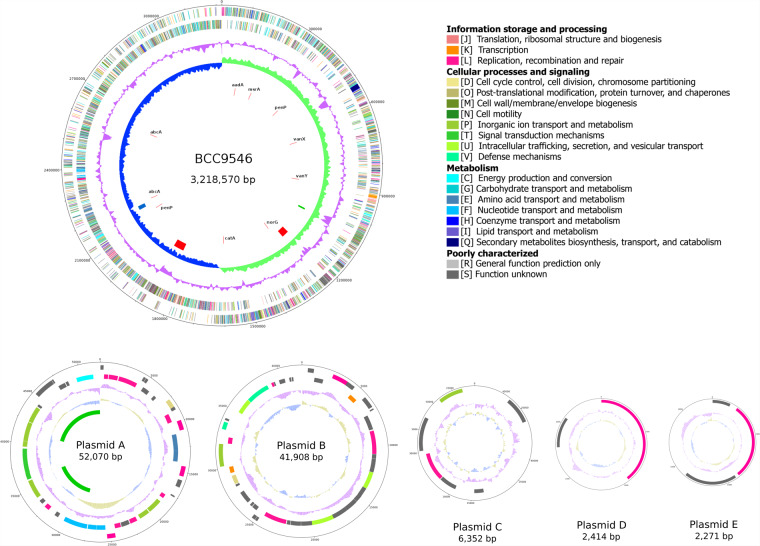
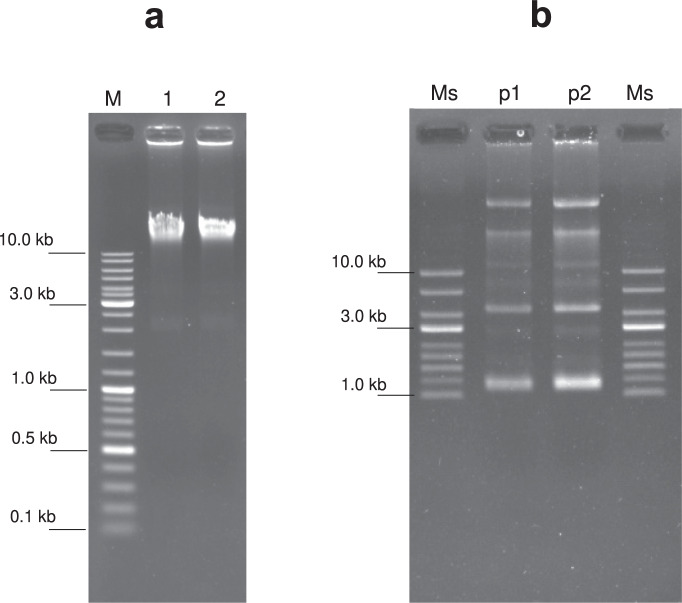
The safety of microbial cultures utilized for consumption is vital for public health and should be thoroughly assessed. Although general aspects on the safety assessment of microbial cultures have been suggested, no methodological detail nor procedural guideline have been published. Herein, we propose a detailed protocol on microbial strain safety assessment via whole-genome sequence analysis. A starter culture employed in traditional fermented pork production, nham, namely Lactobacillus plantarum BCC9546, was used as an example. The strain's whole-genome was sequenced through several next-generation sequencing techniques. Incomplete plasmid information from the PacBio sequencing platform and shorter chromosome size from the hybrid Oxford Nanopore-Illumina platform were noted. The methods for 1) unambiguous species identification using 16S rRNA gene and average nucleotide identity, 2) determination of virulence factors and undesirable genes, 3) determination of antimicrobial resistance properties and their possibility of transfer, and 4) determination of antimicrobial drug production capability of the strain were provided in detail. Applicability of the search tools and limitations of databases were discussed. Finally, a procedural guideline for the safety assessment of microbial strains via whole-genome analysis was proposed.
用于消费的微生物培养物的安全性对公共卫生至关重要,应进行彻底评估。尽管已经提出了关于微生物培养物安全性评估的一般方面,但尚未发布方法细节或程序指南。本文通过全基因组序列分析,提出了一种用于微生物菌株安全性评估的详细方案。以传统发酵猪肉生产中使用的起始培养物 nham,即植物乳杆菌 BCC9546 为例。通过几种下一代测序技术对该菌株的全基因组进行了测序。注意到来自 PacBio 测序平台的不完整质粒信息和来自杂交 Oxford Nanopore-Illumina 平台的较短染色体大小。详细介绍了以下方法:1)使用 16S rRNA 基因和平均核苷酸同一性进行明确的物种鉴定,2)确定毒力因子和不良基因,3)确定抗菌药物抗性特性及其转移的可能性,4)确定菌株的抗菌药物生产能力。讨论了搜索工具的适用性和数据库的局限性。最后,提出了通过全基因组分析评估微生物菌株安全性的程序指南。