Benassi Mariagrazia, Garofalo Sara, Ambrosini Federica, Sant'Angelo Rosa Patrizia, Raggini Roberta, De Paoli Giovanni, Ravani Claudio, Giovagnoli Sara, Orsoni Matteo, Piraccini Giovanni
Department of Psychology, University of Bologna, Bologna, Italy.
AUSL della Romagna, SPDC Psychiatric Emergency Unit, Cesena, Italy.
Front Psychol. 2020 Jun 10;11:1085. doi: 10.3389/fpsyg.2020.01085. eCollection 2020.
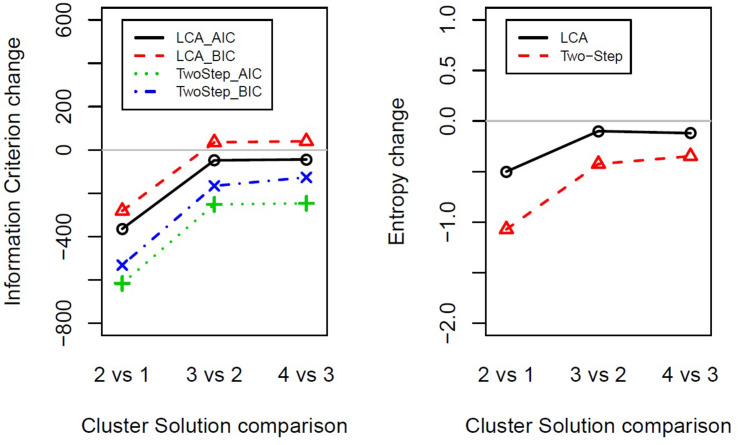
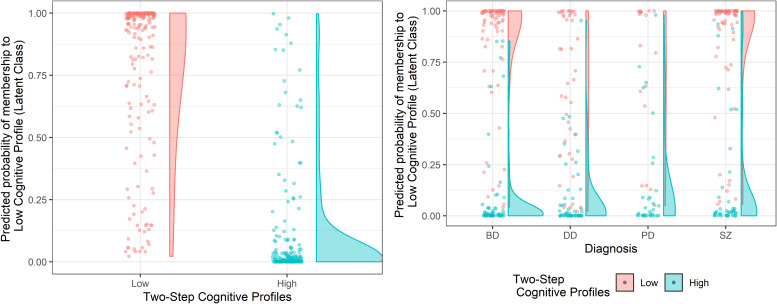
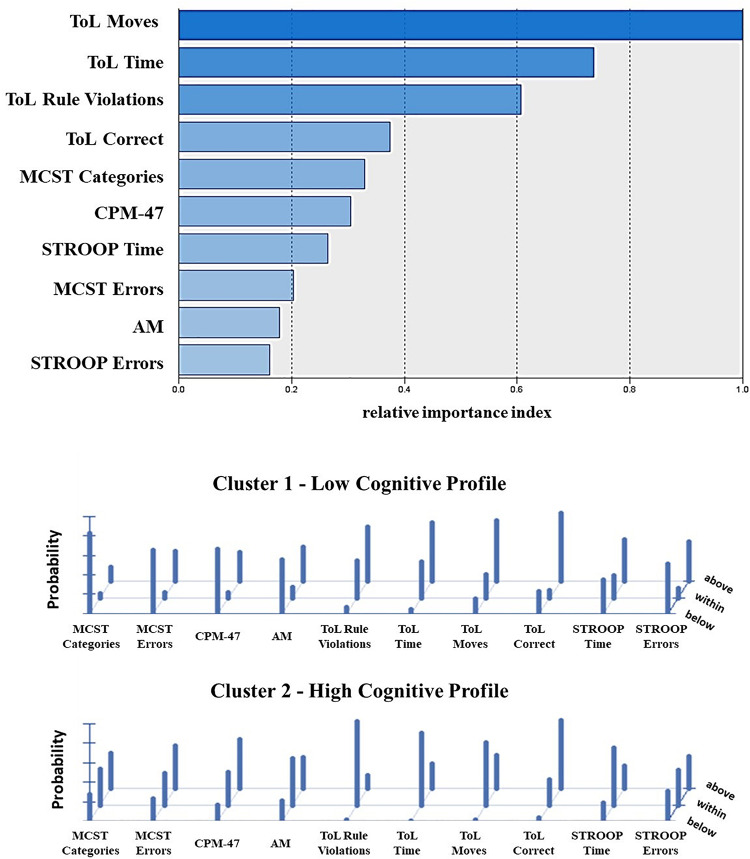
The heterogeneity of cognitive profiles among psychiatric patients has been reported to carry significant clinical information. However, how to best characterize such cognitive heterogeneity is still a matter of debate. Despite being well suited for clinical data, cluster analysis techniques, like the Two-Step and the Latent Class, received little to no attention in the literature. The present study aimed to test the validity of the cluster solutions obtained with Two-Step and Latent Class cluster analysis on the cognitive profile of a cross-diagnostic sample of 387 psychiatric inpatients. Two-Step and Latent Class cluster analysis produced similar and reliable solutions. The overall results reported that it is possible to group all psychiatric inpatients into Low and High Cognitive Profiles, with a higher degree of cognitive heterogeneity in schizophrenia and bipolar disorder patients than in depressive disorders and personality disorder patients.
据报道,精神科患者认知特征的异质性承载着重要的临床信息。然而,如何最好地描述这种认知异质性仍是一个有争议的问题。尽管聚类分析技术非常适合临床数据,但像两步法和潜在类别法这样的聚类分析技术在文献中很少受到关注。本研究旨在检验用两步法和潜在类别聚类分析获得的聚类解决方案对387名精神科住院患者的交叉诊断样本认知特征的有效性。两步法和潜在类别聚类分析产生了相似且可靠的解决方案。总体结果表明,有可能将所有精神科住院患者分为低认知特征组和高认知特征组,精神分裂症和双相情感障碍患者的认知异质性程度高于抑郁症和人格障碍患者。