Brandt Kali M, Gunn Hilary, Moretti Nathalia, Zemetra Robert S
Wheat Breeding and Genetics, Crop and Soil Science, Oregon State University, Corvallis, OR, United States.
Front Plant Sci. 2020 Jun 10;11:769. doi: 10.3389/fpls.2020.00769. eCollection 2020.
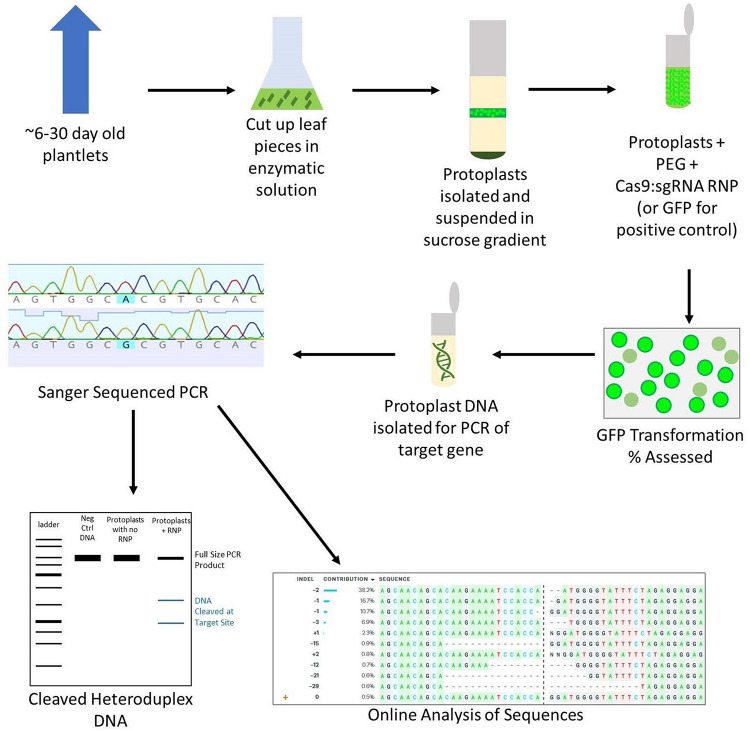
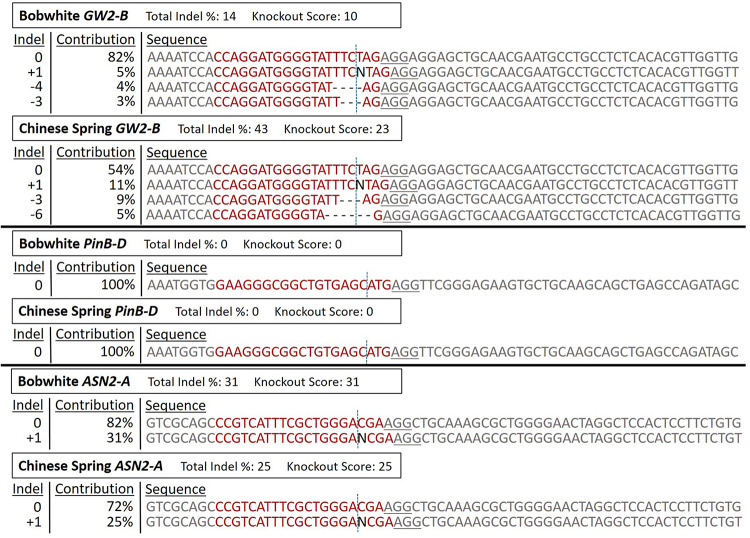
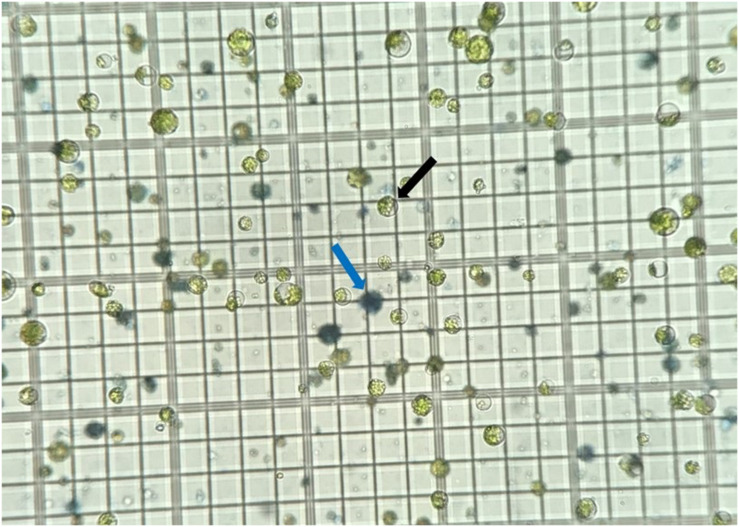
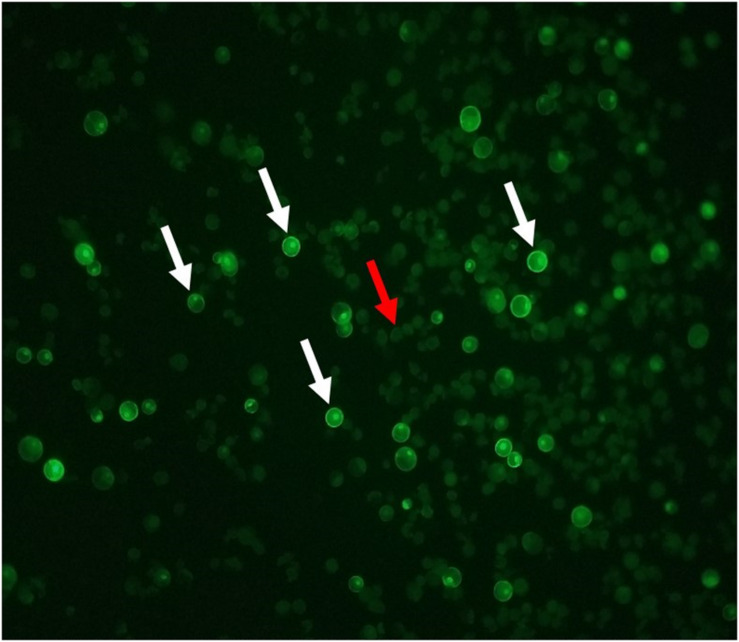
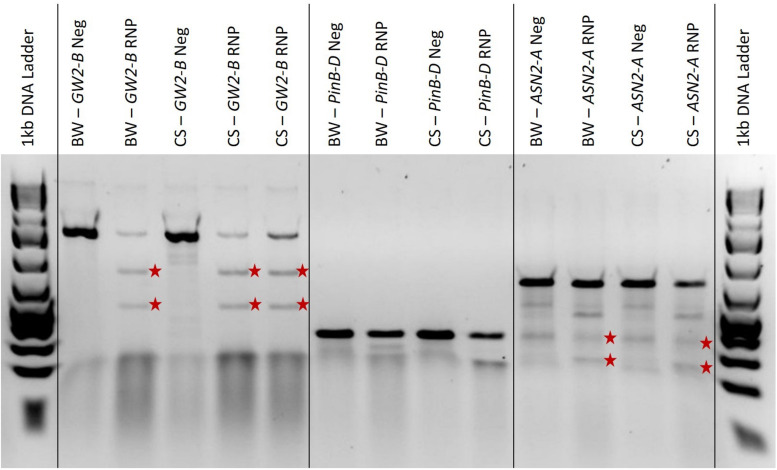
The genetic engineering method CRISPR has been touted as an efficient, inexpensive, easily used, and targeted genetic modification technology that is widely suggested as having the potential to solve many of the problems facing agriculture now and in the future. Like all new technologies, however, it is not without challenges. One of the most difficult challenges to anticipate and detect is gene targets that are inaccessible due to the chromatin state at their specific location. There is currently no way to predict this during the process of designing a sgRNA target, and the only way to detect this issue before spending time and resources on full transformations is to test the cleavage ability of the sgRNA . In wheat, this is possible using protoplast isolation and PEG transformation with Cas9 ribonucleoprotein complexes. Therefore, we have developed a streamlined protocol for testing the accessibility of sgRNA targets in wheat. The first steps involve digesting wheat leaf tissue in an enzymatic solution and then isolating viable protoplasts using filters and a sucrose gradient. The protoplasts are then transformed using Cas9 ribonucleoprotein complexes via PEG-mediated transformation. DNA is isolated from the CRISPR-Cas-edited protoplasts and PCR is performed to amplify the gene target region. The PCR product is then used to assess the editing efficiency of the chosen sgRNA using Sanger sequencing. This simplified protocol for the isolation and transformation of wheat protoplast cells using Cas9 ribonucleoprotein complexes streamlines CRISPR transformation projects by allowing for a fast and easy test of sgRNA accessibility .
基因工程方法CRISPR被誉为一种高效、廉价、易于使用且具有靶向性的基因编辑技术,被广泛认为有潜力解决当前及未来农业面临的诸多问题。然而,与所有新技术一样,它并非没有挑战。最难预测和检测的挑战之一是由于特定位置的染色质状态导致基因靶点无法接近。目前在设计sgRNA靶点的过程中无法预测这一点,并且在投入时间和资源进行完全转化之前检测此问题的唯一方法是测试sgRNA的切割能力。在小麦中,可以使用原生质体分离和用Cas9核糖核蛋白复合物进行PEG转化来实现这一点。因此,我们开发了一种简化方案来测试小麦中sgRNA靶点的可及性。第一步是在酶溶液中消化小麦叶片组织,然后使用过滤器和蔗糖梯度分离有活力的原生质体。然后通过PEG介导的转化使用Cas9核糖核蛋白复合物对原生质体进行转化。从经CRISPR-Cas编辑的原生质体中分离DNA,并进行PCR以扩增基因靶点区域。然后使用桑格测序法将PCR产物用于评估所选sgRNA的编辑效率。这种使用Cas9核糖核蛋白复合物分离和转化小麦原生质体细胞的简化方案,通过允许快速简便地测试sgRNA的可及性,简化了CRISPR转化项目。