Gantumur Enkhtuul, Nakahata Masaki, Kojima Masaru, Sakai Shinji
Department of Materials Engineering Science, Graduate School of Engineering Science, Osaka University, Toyonaka, Osaka 560-8531, Japan.
Int J Bioprint. 2020 Jan 21;6(1):250. doi: 10.18063/ijb.v6i1.250. eCollection 2020.
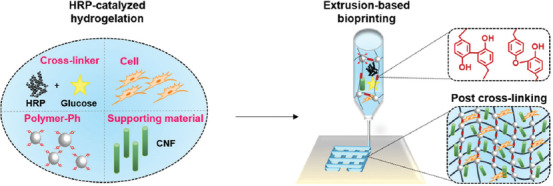
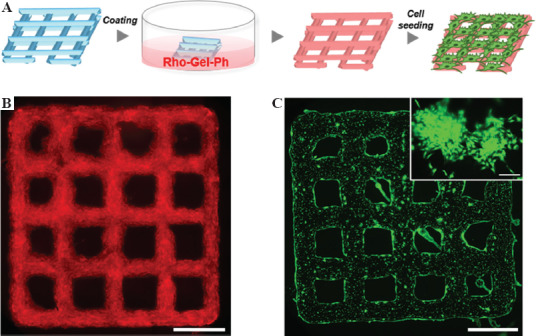
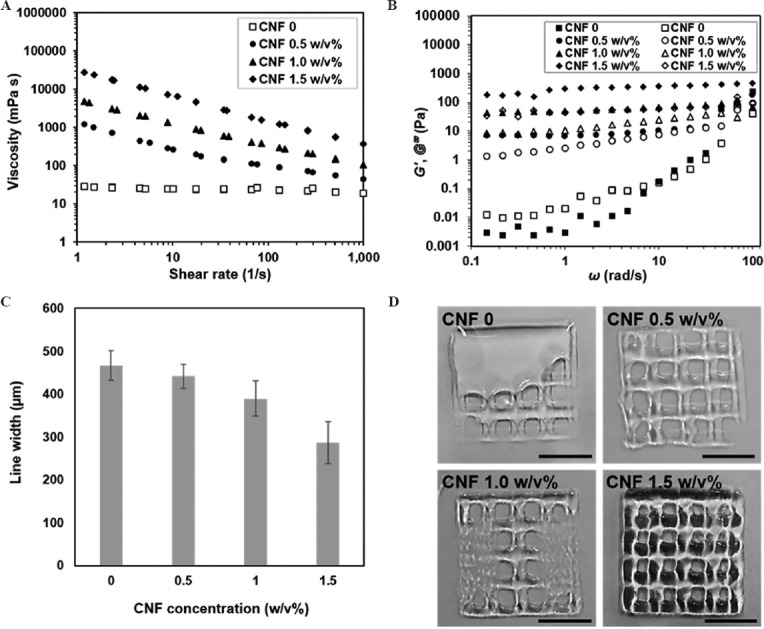
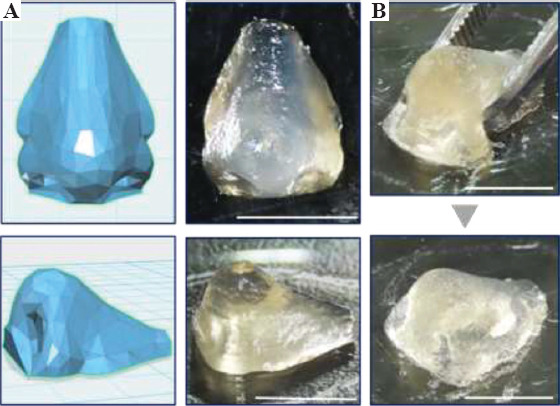
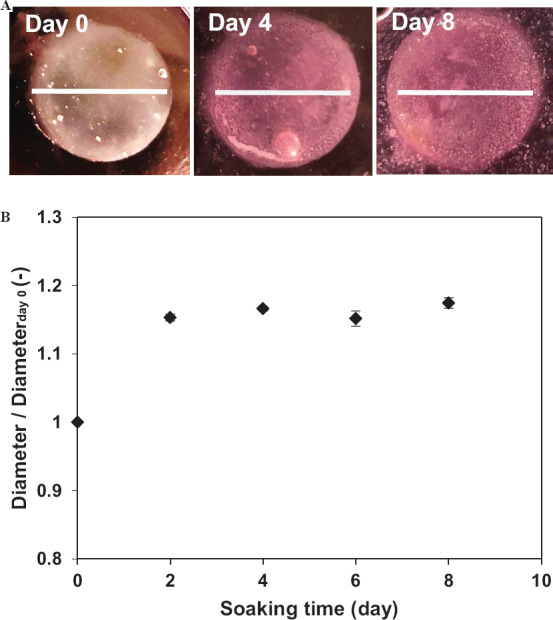
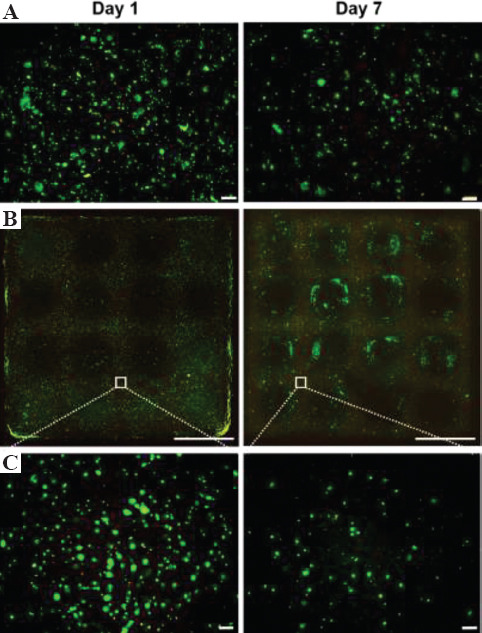
We report an extrusion-based bioprinting approach, in which stabilization of extruded bioink is achieved through horseradish peroxidase (HRP)-catalyzed cross-linking consuming hydrogen peroxide (HO) supplied from HRP and glucose. The bioinks containing living cells, HRP, glucose, alginate possessing phenolic hydroxyl (Ph) groups, and cellulose nanofiber were extruded to fabricate 3D hydrogel constructs. Lattice- and human nose-shaped 3D constructs were successfully printed and showed good stability in cell culture medium for over a week. Mouse 10T1/2 fibroblasts enclosed in the printed constructs remained viable after 7 days of culture. It was also able to switch a non-cell-adhesive surface of the printed construct to cell-adhesive surface for culturing cells on it through a subsequent cross-linking of gelatin possessing Ph moieties. These results demonstrate the possibility of utilizing the presented cross-linking method for 3D bioprinting.
我们报道了一种基于挤压的生物打印方法,其中通过辣根过氧化物酶(HRP)催化的交联反应来实现挤出生物墨水的稳定化,该交联反应消耗由HRP和葡萄糖提供的过氧化氢(HO)。将含有活细胞、HRP、葡萄糖、具有酚羟基(Ph)基团的藻酸盐和纤维素纳米纤维的生物墨水挤出,以制造3D水凝胶构建体。成功打印出格子状和人鼻形状的3D构建体,并且它们在细胞培养基中显示出超过一周的良好稳定性。封装在打印构建体中的小鼠10T1/2成纤维细胞在培养7天后仍保持活力。通过随后对具有Ph部分的明胶进行交联,还能够将打印构建体的非细胞粘附表面转变为细胞粘附表面,以便在其上培养细胞。这些结果证明了利用所提出的交联方法进行3D生物打印的可能性。