Health Research Centre, University of Almería, 04120 Almería, Spain.
Laboratory of Kinesiology, Biomechanics and Ergonomics (KIBIOMER Lab.), Research Central Services, University of Almería, 04120 Almería, Spain.
Int J Environ Res Public Health. 2020 Jun 27;17(13):4626. doi: 10.3390/ijerph17134626.
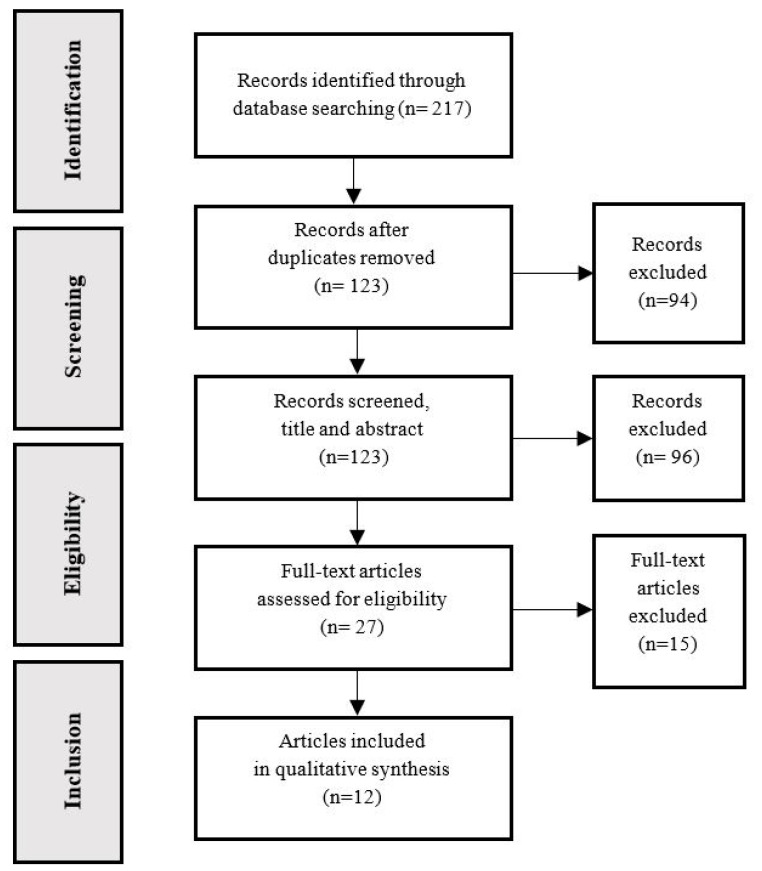
The aim of this study was to analyze the literature on muscle activation measured by surface electromyography (sEMG) of the muscles recruited when performing the leg press exercise and its variants. The Preferred Reporting Items of Systematic Reviews and Meta-Analyses (PRISMA) guidelines were followed to report this review. The search was carried out using the PubMed, Scopus, and Web of Science electronic databases. The articles selected met the following inclusion criteria: (a) a cross-sectional or longitudinal study design; (b) neuromuscular activation assessed during the leg press exercise, or its variants; (c) muscle activation data collected using sEMG; and (d) study samples comprising healthy and trained participants. The main findings indicate that the leg press exercise elicited the greatest sEMG activity from the quadriceps muscle complex, which was shown to be greater as the knee flexion angle increased. In conclusion, (1) the vastus lateralis and vastus medialis elicited the greatest muscle activation during the leg press exercise, followed closely by the rectus femoris; (2) the biceps femoris and the gastrocnemius medialis showed greater muscular activity as the knee reached full extension, whereas the vastus lateralis and medialis, the rectus femoris, and the tibialis anterior showed a decreasing muscular activity pattern as the knee reached full extension; (3) evidence on the influence of kinematics modifications over sEMG during leg press variants is still not compelling as very few studies match their findings.
本研究旨在分析使用表面肌电图(sEMG)测量在进行腿举练习及其变体时募集的肌肉的肌肉激活的文献。本综述遵循了系统评价和荟萃分析的首选报告项目(PRISMA)指南进行报告。使用 PubMed、Scopus 和 Web of Science 电子数据库进行了搜索。选择的文章符合以下纳入标准:(a)横断面或纵向研究设计;(b)在腿举运动或其变体期间评估神经肌肉激活;(c)使用 sEMG 收集肌肉激活数据;(d)研究样本包括健康和训练有素的参与者。主要发现表明,腿举练习引起股四头肌复合体的最大 sEMG 活动,随着膝关节弯曲角度的增加,这种活动增加。总之,(1)在腿举运动中,股外侧肌和股内侧肌引起的肌肉激活最大,其次是股直肌;(2)股二头肌和腓肠肌内侧在膝关节达到完全伸展时表现出更大的肌肉活动,而股外侧肌和股内侧肌、股直肌和胫骨前肌在膝关节达到完全伸展时表现出肌肉活动减少的模式;(3)关于运动学修改对腿举变体中 sEMG 的影响的证据仍然不令人信服,因为很少有研究与其发现相匹配。