Department of Botany, Savitribai Phule Pune University, Pune, 411 007, India.
Central Instrumentation Facility, Savitribai Phule Pune University, Pune, 411 007, India.
Sci Rep. 2020 Jun 30;10(1):10668. doi: 10.1038/s41598-020-67637-8.
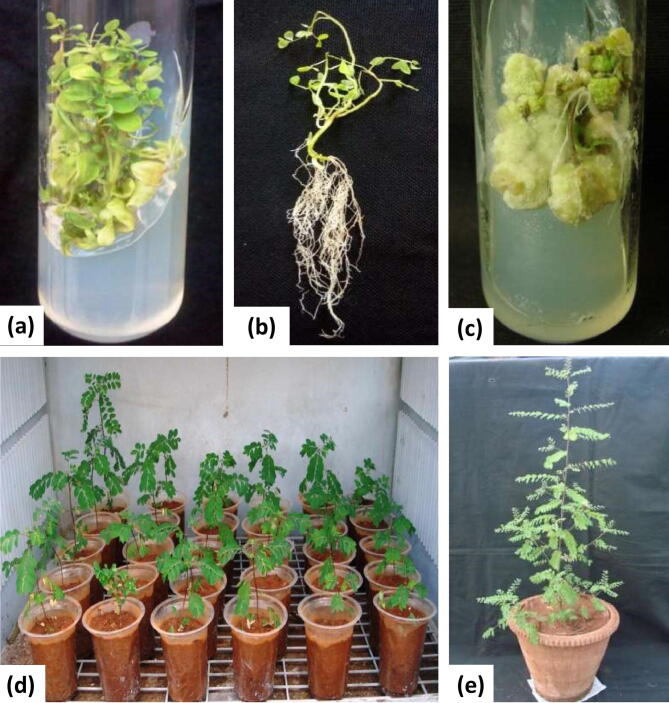
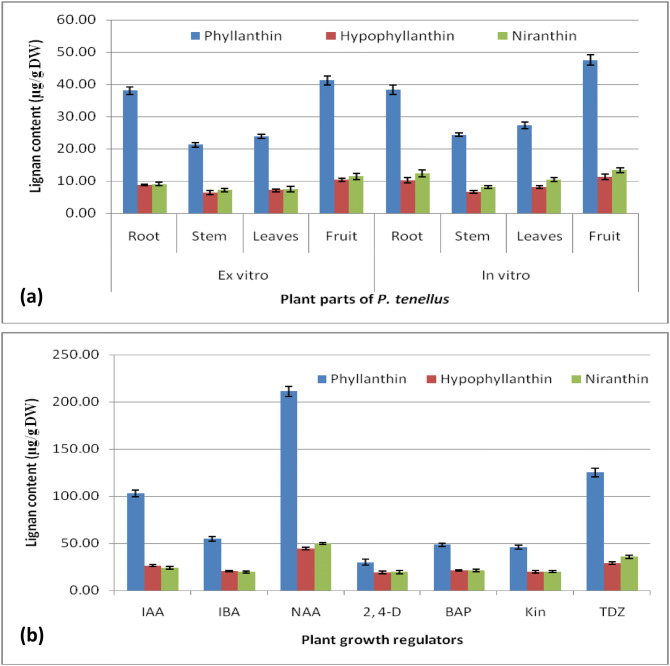
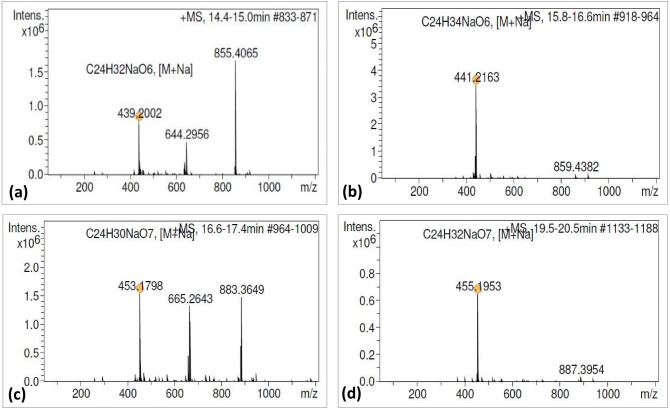
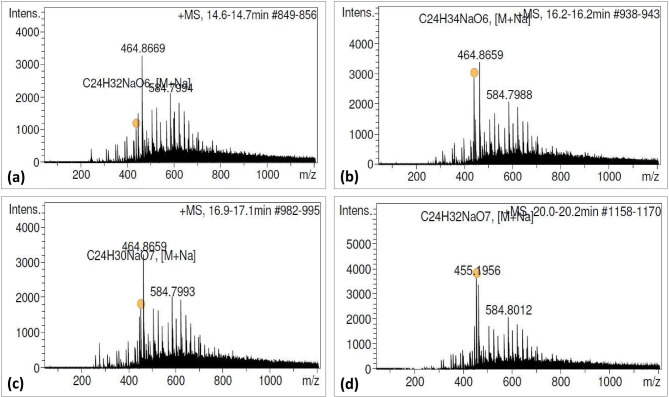
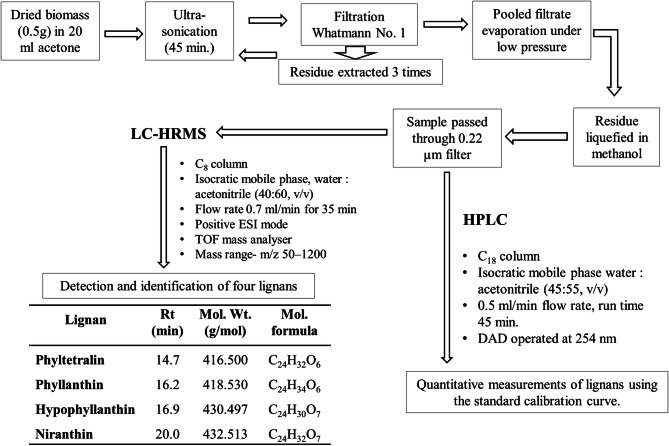
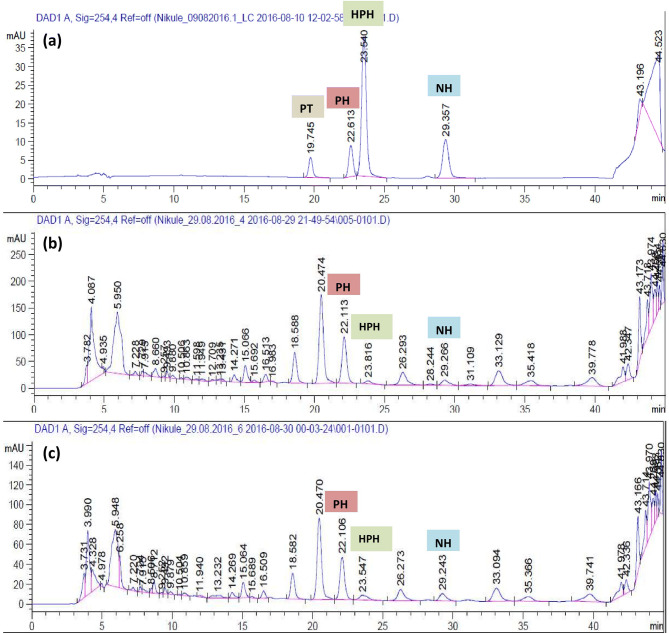
This is the first report on identification and quantification of important hepatoprotective and anticancer polyphenolic lignans such as phyllanthin (PH), hypophyllanthin (HPH), niranthin (NH) and phyltetralin (PT) in natural plant and in vitro cultures of Phyllanthus tenellus Roxb. The identification of lignans was carried out by Liquid Chromatography-High Resolution Mass Spectrometry (LC-HRMS) and quantified using High-Performance Liquid Chromatography (HPLC). In addition, an efficient protocol has been developed for multiple shoot induction in nodal explants of in vitro derived shoots of P. tenellus. Maximum number of shoot regeneration (7.83 ± 0.15) was achieved on medium incorporated with 1.0 mg/l 6-Benzylaminopurine (BAP). The medium containing Indole-3-acetic acid (IAA) 2 mg/l was superior for induction of rooting in in vitro raised shoots. The plantlets were acclimatized to the field condition with 100% survival. The quantitative HPLC analysis showed that the lignan content was variable with the auxins and cytokinins incorporated in the medium. The lignan content was higher in callus grown on Murashige and Skoog (MS) medium + 2.0 mg/l Naphthaleneacetic acid (NAA). The reported protocol can be used for mass propagation and application of biotechnological approaches for improvement of P. tenellus. The results indicate intriguing possibilities for the utilization of P. tenellus plant parts as an alternative source and of callus culture to scale up bioactive lignan production for pharmaceutical applications.
这是第一篇关于鉴定和定量分析重要的肝保护和抗癌多酚木脂素的报告,如叶下珠素(PH)、叶下珠素(HPH)、尼拉亭(NH)和菲替醇(PT),这些物质存在于天然植物和 Phyllanthus tenellus Roxb 的体外培养物中。木脂素的鉴定是通过液相色谱-高分辨率质谱(LC-HRMS)进行的,并用高效液相色谱(HPLC)进行定量。此外,还为 Phyllanthus tenellus 的体外衍生芽的节间外植体中诱导丛生芽开发了一种有效的方案。在含有 1.0 mg/l 6-苄基氨基嘌呤(BAP)的培养基上,获得了最多的芽再生(7.83±0.15)。含有吲哚-3-乙酸(IAA)2 mg/l 的培养基更有利于诱导体外培养的芽生根。将组培苗适应野外条件,成活率达到 100%。定量 HPLC 分析表明,木质素含量随培养基中添加的生长素和细胞分裂素而变化。在添加 2.0 mg/l 萘乙酸(NAA)的 Murashige 和 Skoog(MS)培养基上培养的愈伤组织中木质素含量更高。所报道的方案可用于大规模繁殖和应用生物技术方法来改善 Phyllanthus tenellus。结果表明,Phyllanthus tenellus 植物部分作为替代来源的利用以及愈伤组织培养扩大生物活性木质素生产用于制药应用具有诱人的可能性。