Department of Biostatistics, Yale School of Public Health, New Haven, CT, USA.
Center for Methods in Implementation and Preventive Science, Yale University, New Haven, CT, USA.
Stat Methods Med Res. 2021 Feb;30(2):612-639. doi: 10.1177/0962280220932962. Epub 2020 Jul 6.
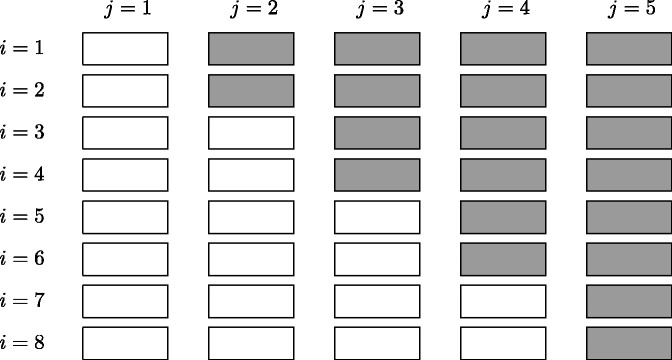
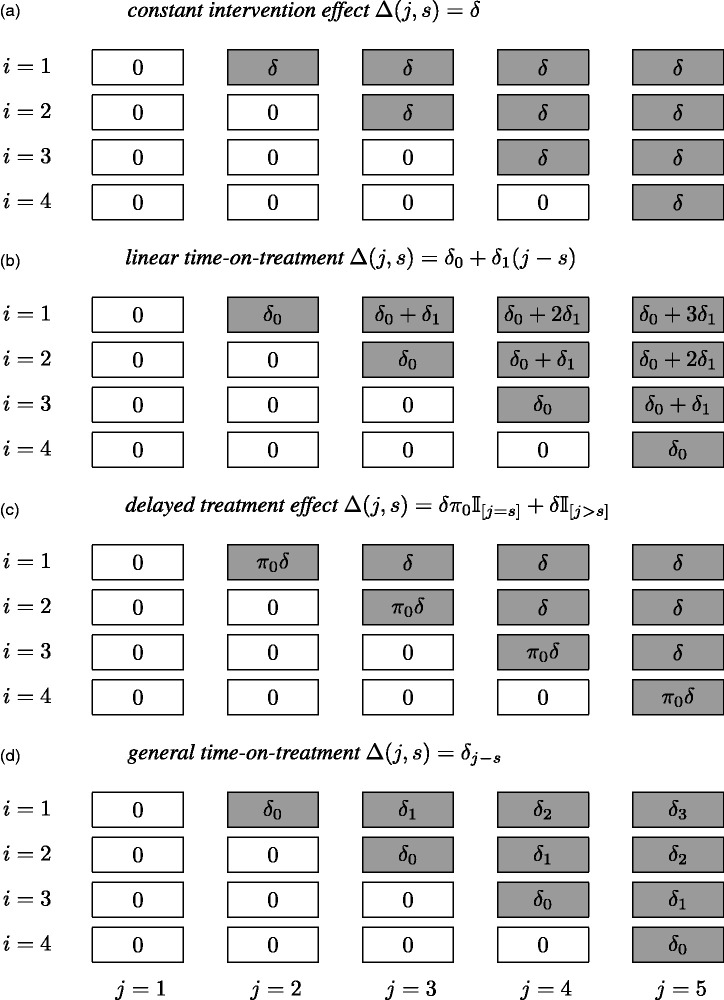
The stepped wedge cluster randomized design has received increasing attention in pragmatic clinical trials and implementation science research. The key feature of the design is the unidirectional crossover of clusters from the control to intervention conditions on a staggered schedule, which induces confounding of the intervention effect by time. The stepped wedge design first appeared in the Gambia hepatitis study in the 1980s. However, the statistical model used for the design and analysis was not formally introduced until 2007 in an article by Hussey and Hughes. Since then, a variety of mixed-effects model extensions have been proposed for the design and analysis of these trials. In this article, we explore these extensions under a unified perspective. We provide a general model representation and regard various model extensions as alternative ways to characterize the secular trend, intervention effect, as well as sources of heterogeneity. We review the key model ingredients and clarify their implications for the design and analysis. The article serves as an entry point to the evolving statistical literatures on stepped wedge designs.
阶梯式楔形群随机设计在实用临床试验和实施科学研究中受到越来越多的关注。该设计的主要特点是在交错的时间安排上,从对照条件到干预条件的单向群集交叉,从而导致干预效果的混杂。该设计最早出现在 20 世纪 80 年代的冈比亚肝炎研究中。然而,直到 2007 年,Hussey 和 Hughes 在一篇文章中才正式介绍了该设计和分析所使用的统计模型。从那时起,已经提出了各种混合效应模型扩展,用于这些试验的设计和分析。在本文中,我们从统一的角度探讨了这些扩展。我们提供了一个通用的模型表示,并将各种模型扩展视为描述季节性趋势、干预效果以及异质性来源的替代方法。我们回顾了关键的模型成分,并阐明了它们对设计和分析的影响。本文是对阶梯式楔形设计不断发展的统计文献的一个入门。