UBC, Faculty of Medicine, Respiratory Medicine Division, Centre for Clinical Epidemiology and Evaluation (C2E2), Vancouver General Hospital - Research Pavilion, 716-828 West 10th Ave, Vancouver, BC, V5Z 1M9, Canada.
Addict Sci Clin Pract. 2020 Jul 6;15(1):23. doi: 10.1186/s13722-020-00197-4.
A lack of culturally and linguistically appropriate smoking cessation intervention programs exist among Chinese-Canadian communities. Smoking cessation programs that are provided in Canadian mainstream culture and language have shown limited effectiveness in altering smoking behaviours of smokers from these communities. Our study aimed to explore and compare smoking patterns, knowledge, beliefs, and risk perceptions of adult current smokers between Chinese- and English-speaking Canadians participating in a culturally and linguistically tailored smoking cessation program.
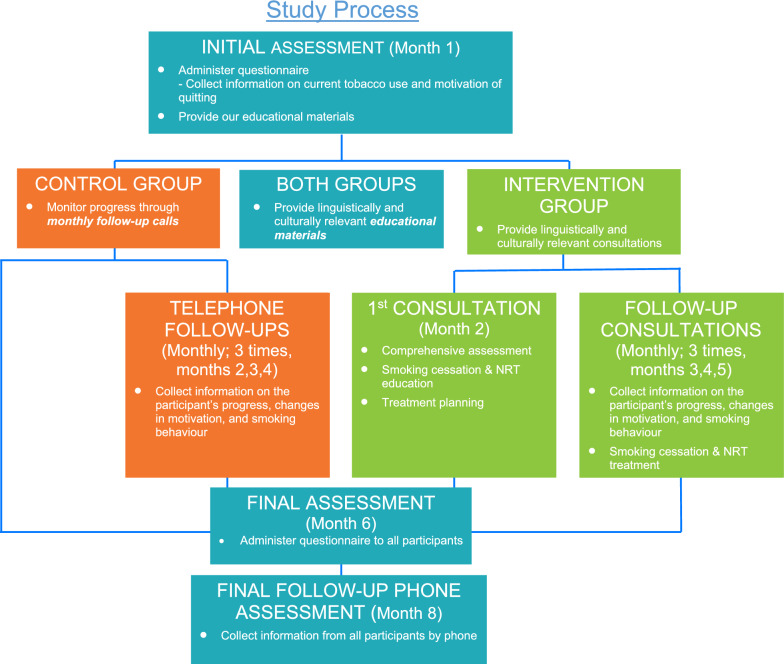
A qualitative study embedded in an effectiveness study using an 8-month quasi-experimental design, was conducted to compare the effects of four one-on-one culturally and linguistically sensitive consultation sessions (intervention group) and three telephone follow-up assessments (control group). All participants were provided take-home educational materials (designed exclusively for this study), and completed study questionnaires at baseline and 6-month post-intervention. An 8-month post-intervention phone assessment was conducted with all participants to assess cessation progress and maintenance.
70 Chinese- and English-speaking adult (aged 19-80) current smokers (≥ 5 cigarettes per day) residing in the Greater Vancouver Area, Canada, were recruited between May 2018 and April 2019.
Thematic analysis was conducted on self-reported qualitative information from study questionnaires and verbatim transcripts of in-person consultations and telephone follow-ups. Cultural- and demographic-related themes were considered.
Perceptions of smoking patterns, smoking status, triggers, and barriers to smoking cessation were identified. Important elements of smoking cessation program, including facilitator characteristics, duration, procedures, cultural factors, and topics were also identified. Differences in perceptions of smoking were observed between gender and language groups. Stress was a major trigger for smoking in both language groups. An individual's social network was reported as the largest barrier to successful cessation for Chinese-speaking participants.
Our study provides knowledge and information to further examine the role of risk perception (realization of the possible harms of smoking) in smoking cessation to facilitate the development of future interventions that could more effectively promote smoking cessation among new immigrants and within ethnocultural communities. We found that our program was generally accepted by smokers in both language groups and the participants reported that they were able to apply the strategies learned in the intervention during their quit smoking plan.
在加拿大华人社区中,缺乏文化和语言上适当的戒烟干预计划。在加拿大主流文化和语言中提供的戒烟计划,在改变这些社区吸烟者的吸烟行为方面效果有限。我们的研究旨在探索和比较参与文化和语言定制戒烟计划的华裔和英语为母语的加拿大成年人当前吸烟者的吸烟模式、知识、信念和风险认知。
一项定性研究嵌入在一项使用 8 个月准实验设计的有效性研究中,旨在比较四对一文化和语言敏感咨询(干预组)和三次电话随访评估(对照组)的效果。所有参与者都获得了家庭学习材料(专为这项研究设计),并在基线和 6 个月干预后完成了研究问卷。所有参与者都进行了 8 个月的干预后电话评估,以评估戒烟进展和维持情况。
2018 年 5 月至 2019 年 4 月期间,在加拿大大温哥华地区招募了 70 名(年龄 19-80 岁)华裔和英语为母语的成年(每天吸烟≥5 支)当前吸烟者。
对研究问卷中的自我报告定性信息和面对面咨询和电话随访的逐字记录进行了主题分析。考虑了文化和人口统计学相关主题。
确定了对吸烟模式、吸烟状况、触发因素和戒烟障碍的看法。还确定了戒烟计划的重要要素,包括促进者的特点、持续时间、程序、文化因素和主题。在性别和语言群体之间观察到对吸烟的看法存在差异。压力是两个语言群体吸烟的主要触发因素。个人的社交网络被报告为华裔参与者成功戒烟的最大障碍。
我们的研究提供了知识和信息,以进一步研究风险认知(意识到吸烟可能造成的危害)在戒烟中的作用,以促进未来干预措施的发展,这些干预措施可以更有效地促进新移民和族裔社区中的戒烟。我们发现,我们的计划在两个语言群体的吸烟者中都得到了普遍接受,参与者报告说他们能够在戒烟计划中应用干预中所学的策略。
