Lu Rong, Zhang Yuyang, Tao Hongyue, Zhou Lu, Li Huidi, Chen Tianwu, Zhang Peng, Lu Yao, Chen Shuang
Department of Radiology, Huashan Hospital, Fudan University, Shanghai, 200040, China.
Department of Medicinal Chemistry, School of Pharmacy, Fudan University, Shanghai, 201203, China.
Bioact Mater. 2020 Jun 21;5(4):758-767. doi: 10.1016/j.bioactmat.2020.05.009. eCollection 2020 Dec.
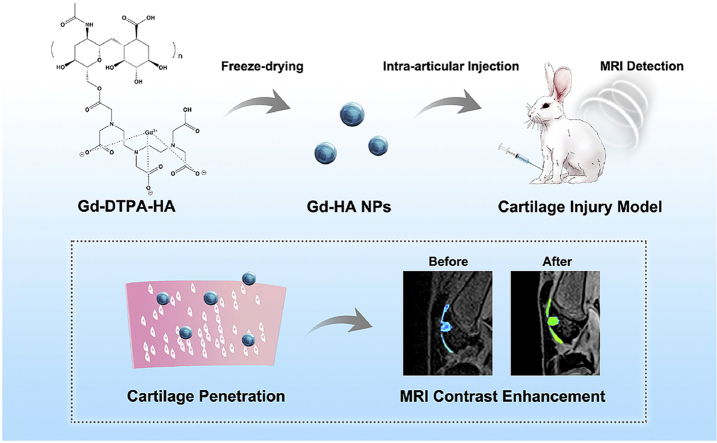
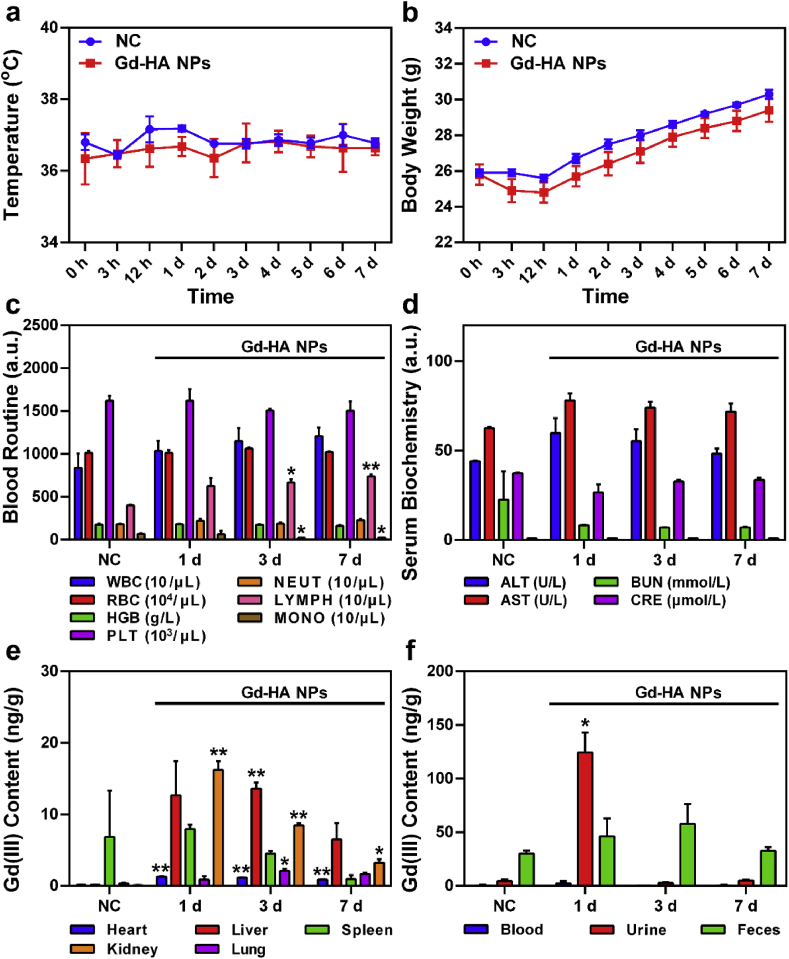
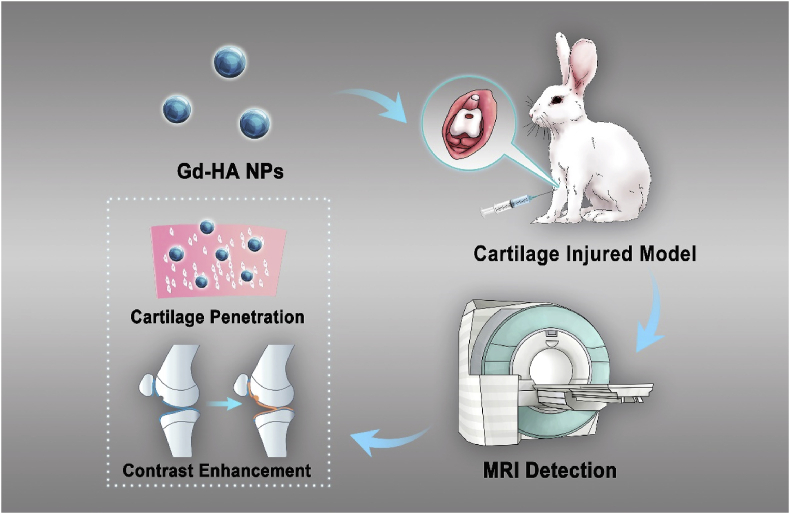
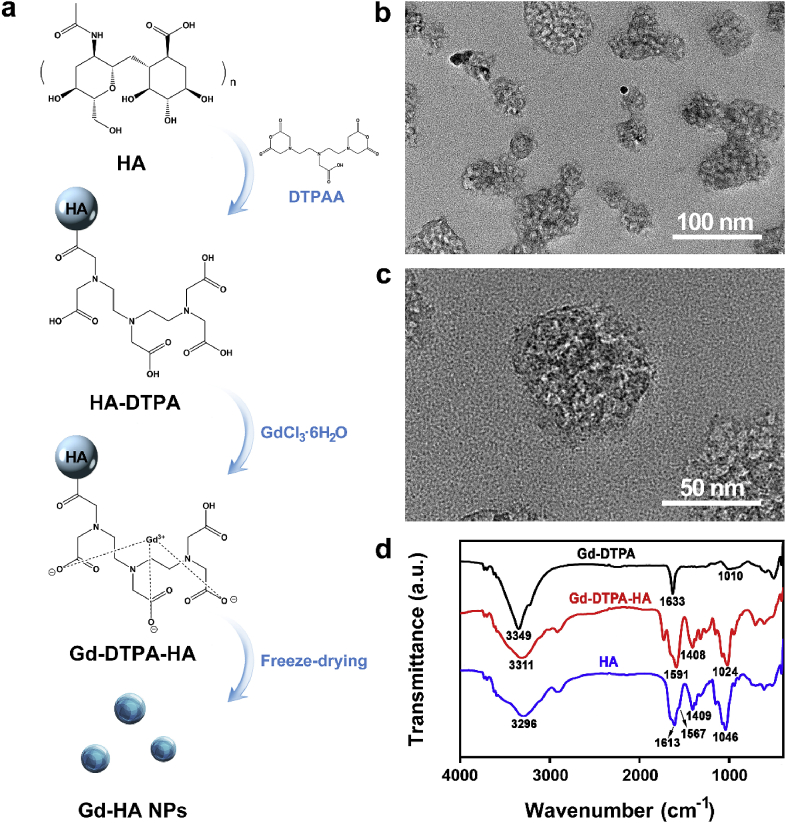
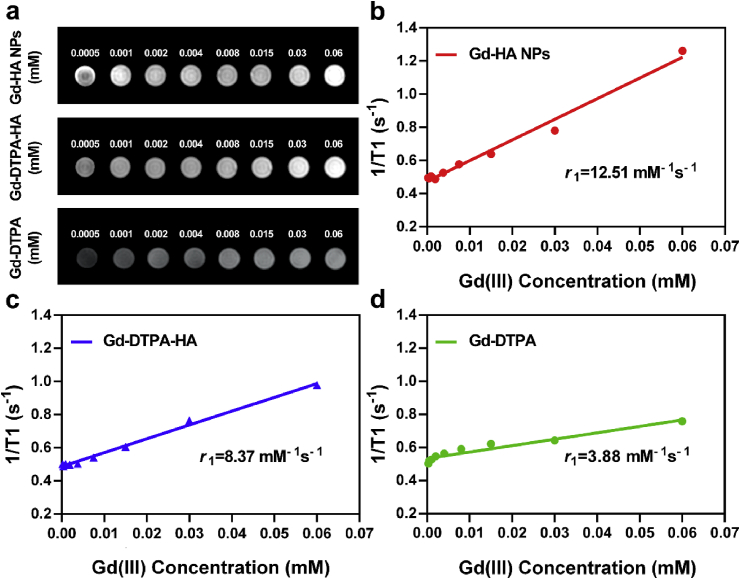
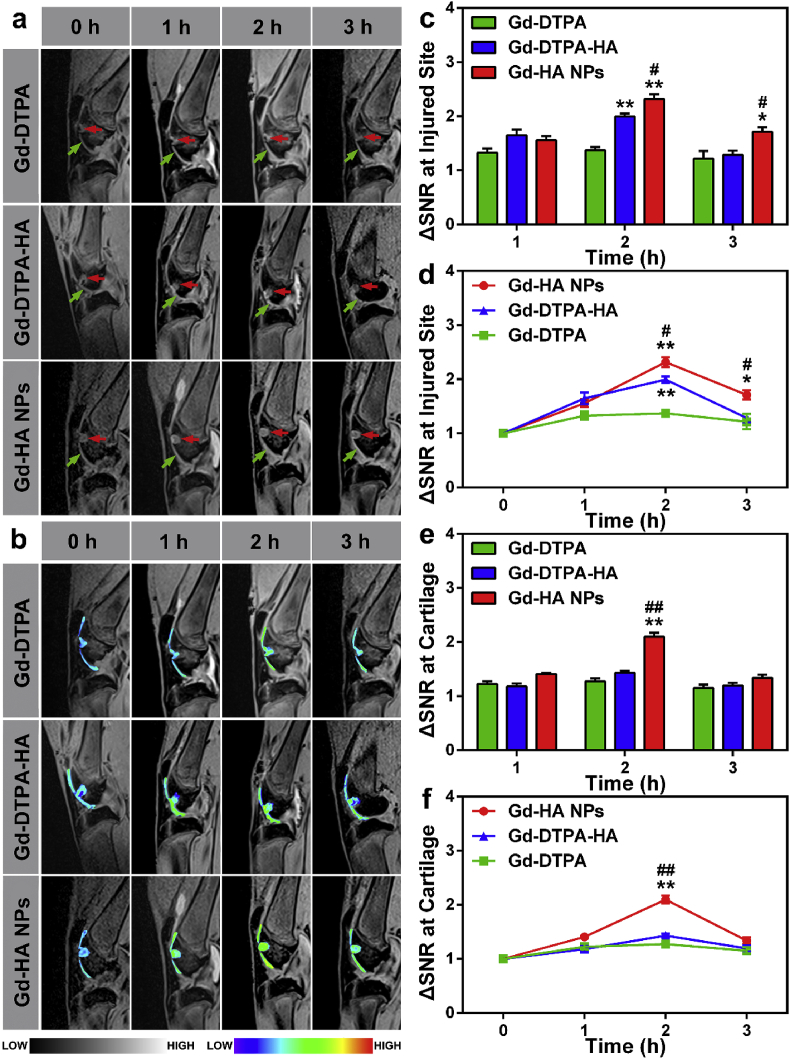
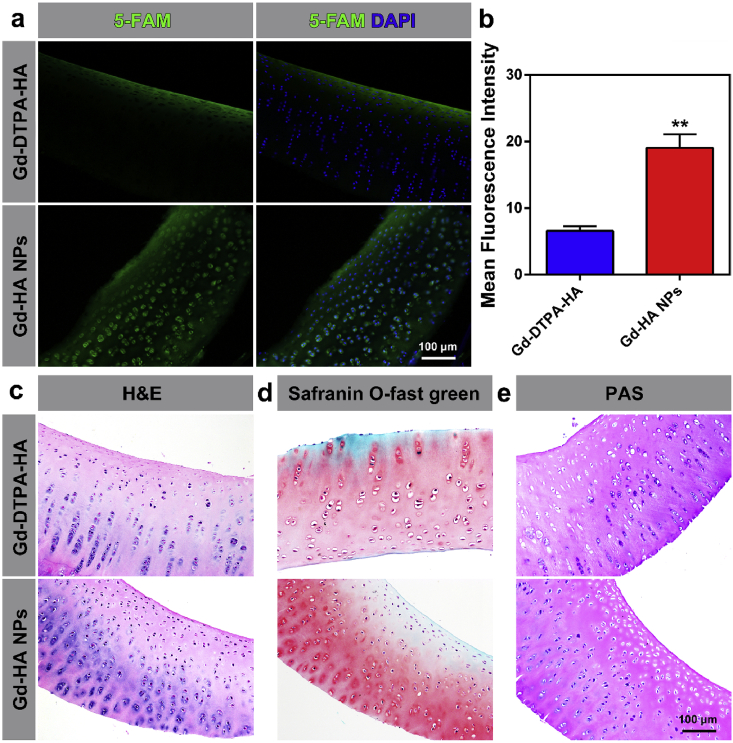
Accurate detection of cartilage injuries is critical for their proper treatment because these injuries lack the self-healing ability and lead to joint dysfunction. However, the low longitudinal T1 relaxivity (1) and non-specificity of contrast agents (such as gadolinium(III)-diethylenetriamine-pentaacetic acid (Gd-DTPA)) significantly limit the efficiency of clinical magnetic resonance imaging (MRI) applications. To overcome these drawbacks, we integrated hyaluronic acid (HA) with Gd to synthesize a Gd-DTPA-HA composite, which was subsequently freeze-dried to produce nanoparticles (NPs). The resultant Gd-HA NPs demonstrated a greater 1 value (12.51 mM s) compared with the bulk Gd-DTPA-HA (8.37 mM s) and clinically used Gd-DTPA (3.88 mM s). Moreover, the high affinity of HA to the cartilage allowed these NPs to penetrate deeper beyond the cartilage surface. As a result, Gd-HA NPs considerably increased the quality of cartilage and lesion MR images via their intra-articular injection . Specifically, 2 h after NP administration, the signal-to-noise ratio at the injured cartilage site was 2.3 times greater than the value measured before the injection. In addition, Gd-HA NPs exhibited good biosafety properties due to the absence of adverse effects in the blood or on the main organs. It was also showed that Gd NPs were first metabolized by the kidney and liver and then excreted from the body with urine. Thus, Gd-HA NPs can potentially serve as an efficient MRI contrast agent for improved detection of cartilage injuries.
准确检测软骨损伤对于其恰当治疗至关重要,因为这些损伤缺乏自我修复能力并会导致关节功能障碍。然而,纵向T1弛豫率较低(1)以及造影剂(如钆(III)-二乙烯三胺五乙酸(Gd-DTPA))的非特异性显著限制了临床磁共振成像(MRI)应用的效率。为克服这些缺点,我们将透明质酸(HA)与钆整合以合成Gd-DTPA-HA复合物,随后将其冻干以制备纳米颗粒(NPs)。所得的Gd-HA NPs与块状Gd-DTPA-HA(8.37 mM s)和临床使用的Gd-DTPA(3.88 mM s)相比,表现出更高的1值(12.51 mM s)。此外,HA对软骨的高亲和力使这些NPs能够深入穿透软骨表面。结果,Gd-HA NPs通过关节内注射显著提高了软骨和病变的MR图像质量。具体而言,在给予NPs后2小时,损伤软骨部位的信噪比是注射前测量值的2.3倍。此外,由于在血液或主要器官中未出现不良反应,Gd-HA NPs表现出良好的生物安全性。还表明Gd NPs首先由肾脏和肝脏代谢,然后随尿液从体内排出。因此,Gd-HA NPs有潜力作为一种有效的MRI造影剂,用于改进软骨损伤的检测。