Shanghai Key Laboratory of Atmospheric Particle Pollution and Prevention (LAP(3)), Department of Environmental Science & Engineering, Institute of Atmospheric Sciences, Fudan University, Shanghai 200438, China; Institute of Eco-Chongming (IEC), 20 Cuiniao Rd., Chenjia Zhen, Chongming, Shanghai 202162, China.
Shanghai Environmental Monitor Center, Shanghai 200235, China.
Sci Total Environ. 2020 Nov 15;743:140758. doi: 10.1016/j.scitotenv.2020.140758. Epub 2020 Jul 6.
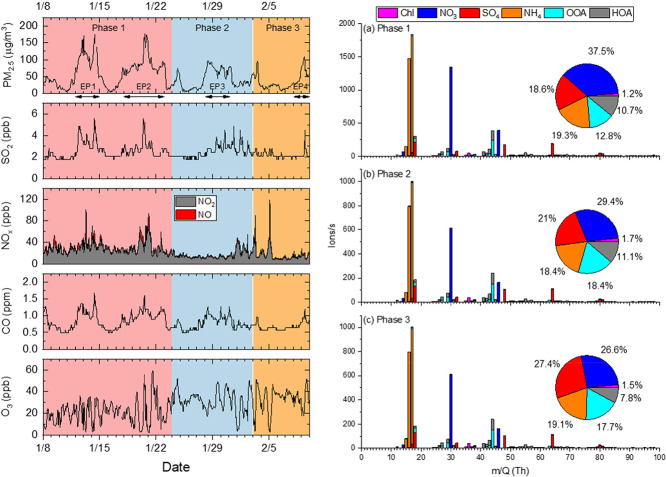
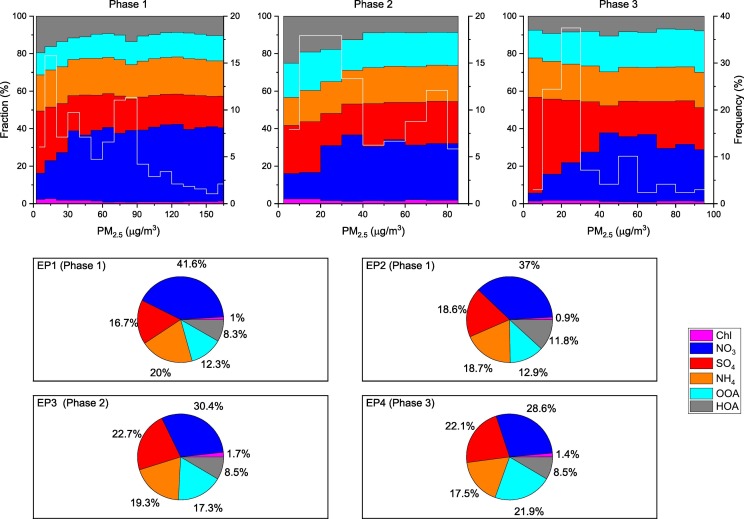
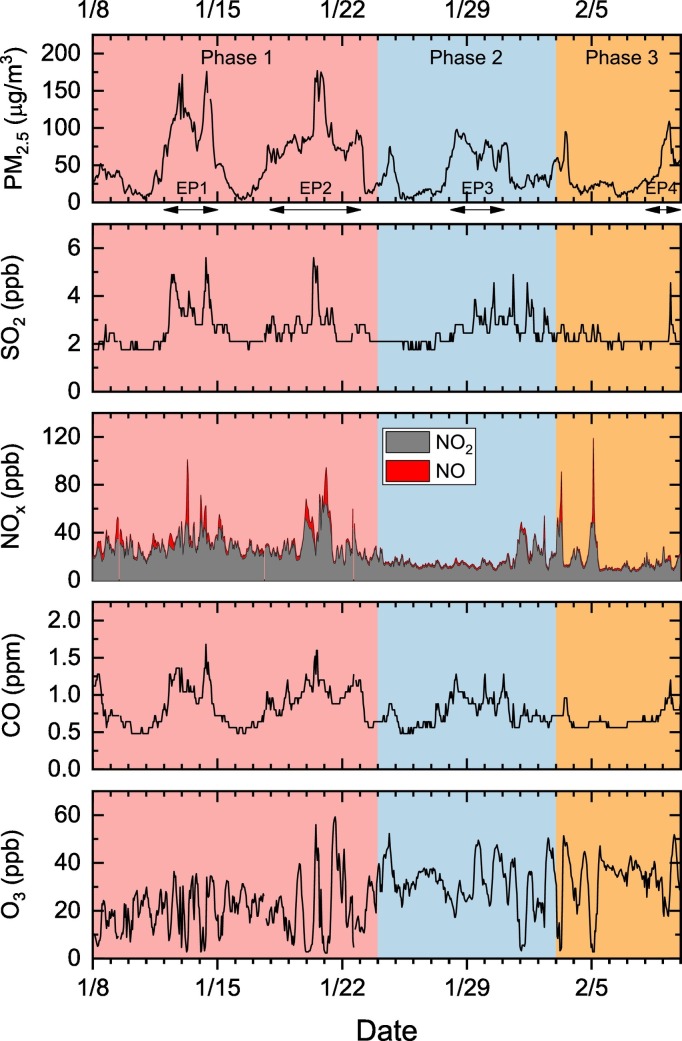
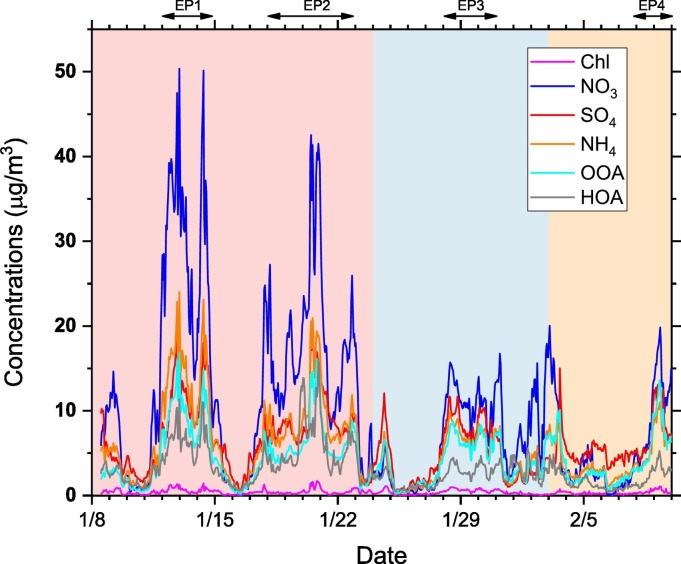
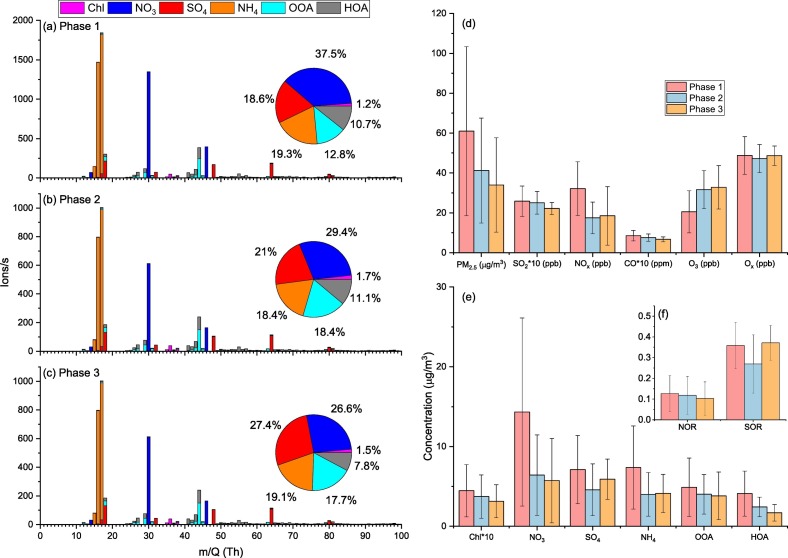
The COVID-19 epidemic broke out in Wuhan, Hubei in December 2019 and in January 2020 and was later transmitted to the entire country. Quarantine measures during Chinese New Year effectively alleviated the spread of the epidemic, but they simultaneously resulted in a decline in anthropogenic emissions from industry, transportation, and import and export of goods. Herein, we present the major chemical composition of non-refractory PM (NR-PM) and the concentrations of gaseous pollutants in an urban site in Shanghai before and during the quarantine period of the COVID-19 epidemic, which was Jan. 8-23 and Jan. 24-Feb. 8, respectively. The observed results show that the reduction in PM can be mainly attributed to decreasing concentrations of nitrate and primary aerosols. Nitrate accounted for 37% of NR-PM before the quarantine period when there was no emission reduction. During the quarantine period, the nitrate concentration decreased by approximately 60%, which is attributed to a reduction in the NO concentration. Ammonium, as the main balancing cation, showed an approximately 45% simultaneous decrease in concentration. The concentrations of chloride and hydrocarbon-like organic aerosols from primary emissions also declined due to limited human activities. By contrast, sulphate and oxygenated organic aerosols showed a slight decrease in concentration, with their contributions increasing to 27% and 18%, respectively, during the quarantine period, which resulted in two pollution episodes with PM exceeding 100 μg/m. This study provides a better understanding of the impact of quarantine measures on variations of the PM concentration and chemical compositions. Atmospheric oxidation capacities based on the oxidant (O = O + NO) and oxidation ratios have been discussed for elucidating the source and formation of haze in an environment with lower anthropogenic emissions. With increasing contribution of secondary aerosols, lower NO and nitrate concentrations did not completely avoid haze in Shanghai during the epidemic.
2019 年 12 月,湖北省武汉市爆发了 COVID-19 疫情,随后疫情蔓延至全国。中国春节期间的隔离措施有效缓解了疫情的传播,但同时也导致了工业、交通和进出口货物人为排放的减少。在此,我们介绍了上海市一个城区在 COVID-19 疫情隔离期前后(分别为 1 月 8 日至 23 日和 1 月 24 日至 2 月 8 日)非难熔颗粒物(NR-PM)的主要化学成分和气态污染物浓度。观测结果表明,PM 的减少主要归因于硝酸盐和一次气溶胶浓度的降低。在没有减排措施的隔离前,硝酸盐占 NR-PM 的 37%。在隔离期间,硝酸盐浓度下降了约 60%,这归因于 NO 浓度的降低。作为主要平衡阳离子的铵,浓度也同时下降了约 45%。由于人类活动受限,来自一次排放的氯和碳氢化合物样有机物气溶胶的浓度也有所下降。相比之下,硫酸盐和含氧有机物气溶胶的浓度略有下降,在隔离期间其贡献率分别增加到 27%和 18%,导致两次 PM 超过 100μg/m 的污染事件。本研究更好地了解了隔离措施对 PM 浓度和化学组成变化的影响。基于氧化剂(O=O+NO)和氧化比的大气氧化能力已被讨论,以阐明在人为排放较低的环境中霾的来源和形成。随着二次气溶胶贡献的增加,较低的 NO 和硝酸盐浓度并不能完全避免上海在疫情期间出现霾。