Department of Clinical Neurosciences, Neurology-Sleep Disorders Center, IRCCS San Raffaele Scientific Institute, Milan, Italy.
Faculty of Psychology, "Vita-Salute" San Raffaele University, Milan, Italy.
J Neurol. 2021 Jan;268(1):8-15. doi: 10.1007/s00415-020-10056-6. Epub 2020 Jul 11.
In Italy, lockdown due to COVID-19 health emergency started on March 10 and partially ended on May 3rd, 2020. There was a significant increase of psychological distress and symptoms of mental illness, and worsening of quality of sleep in the general population.
Participants completed an anonymous web-based survey that include questionnaires about sleep and anxiety and depression symptoms. Our sample included 400 subjects: 307 students (mean age 22.84 ± 2.68) and 93 university administration staff workers (mean age 37.02 ± 12.46).
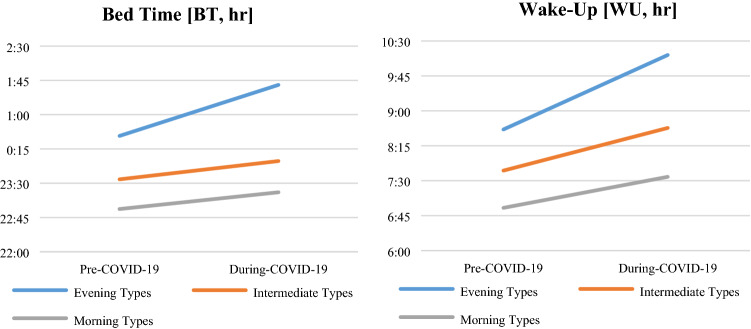
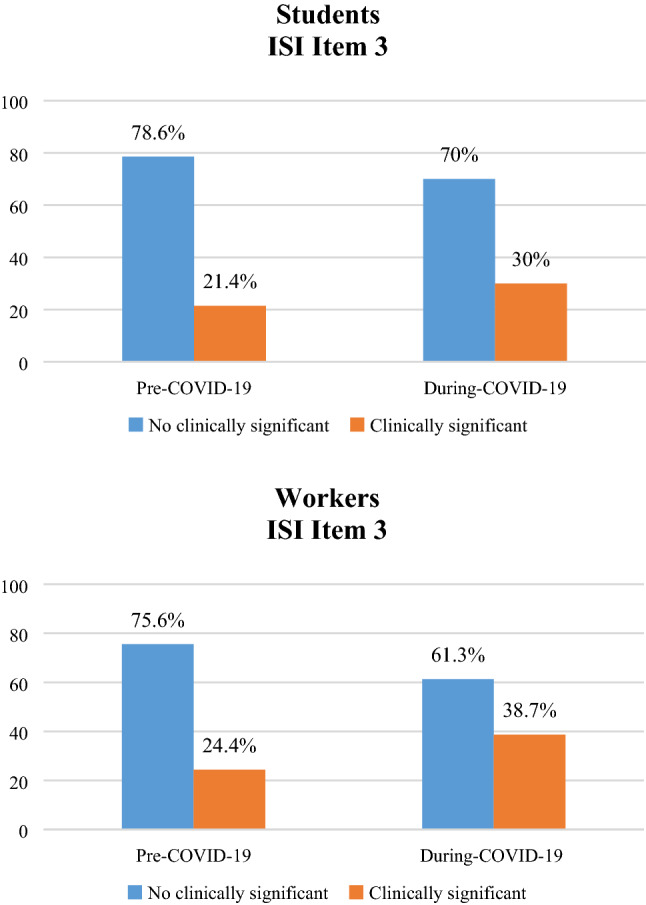
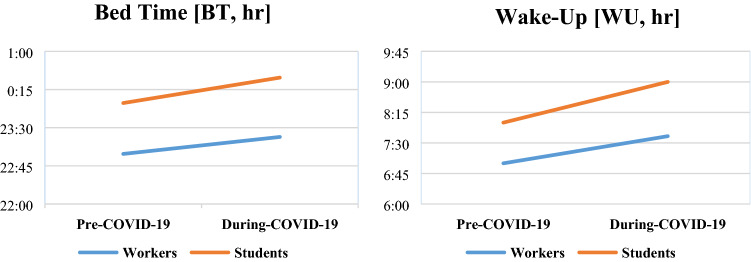
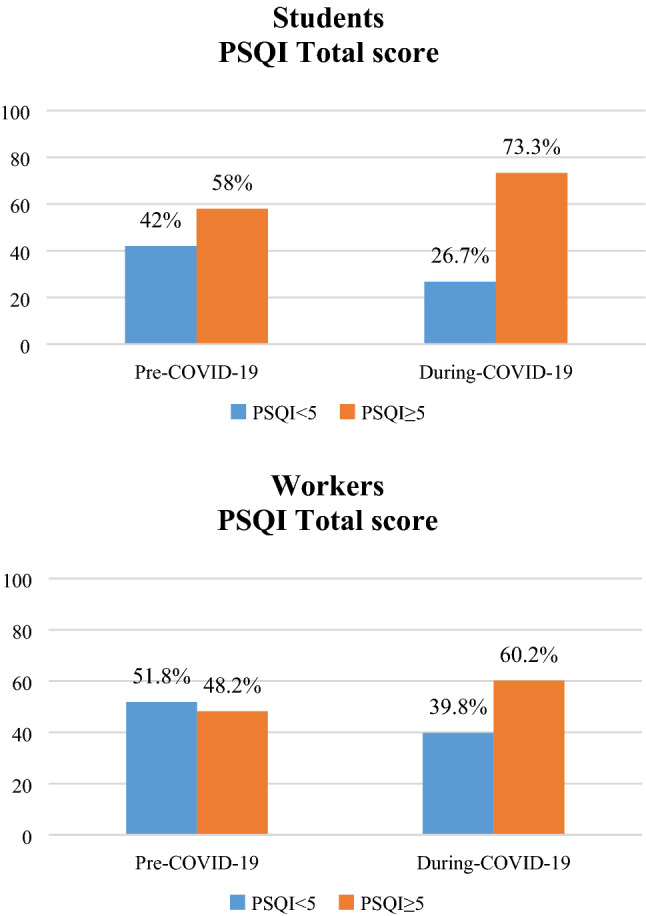
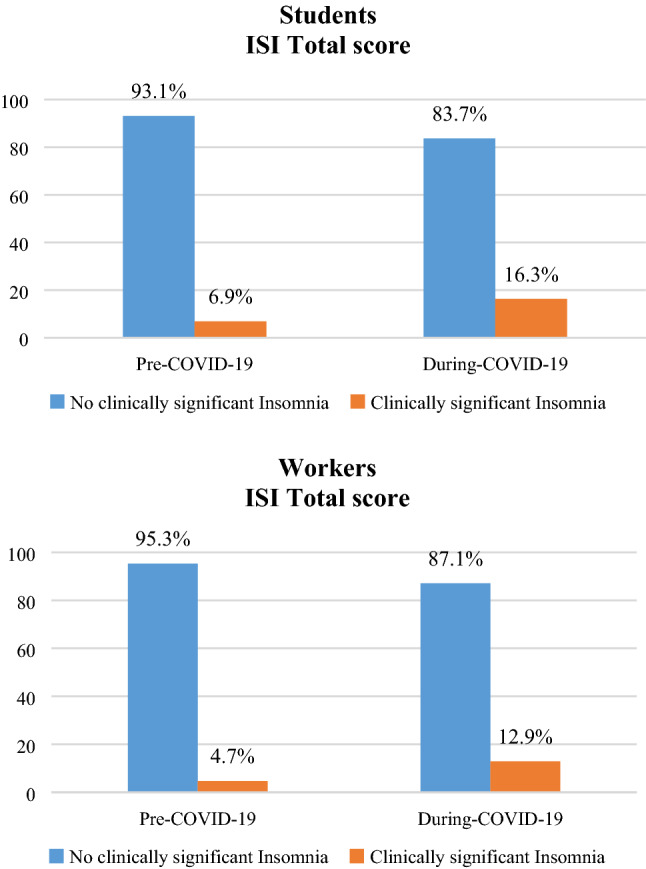
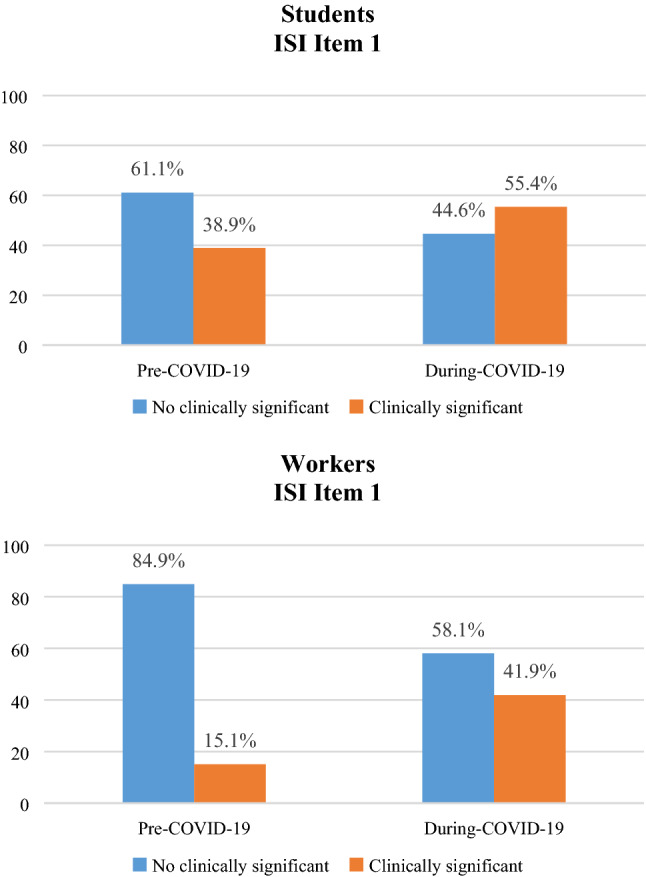
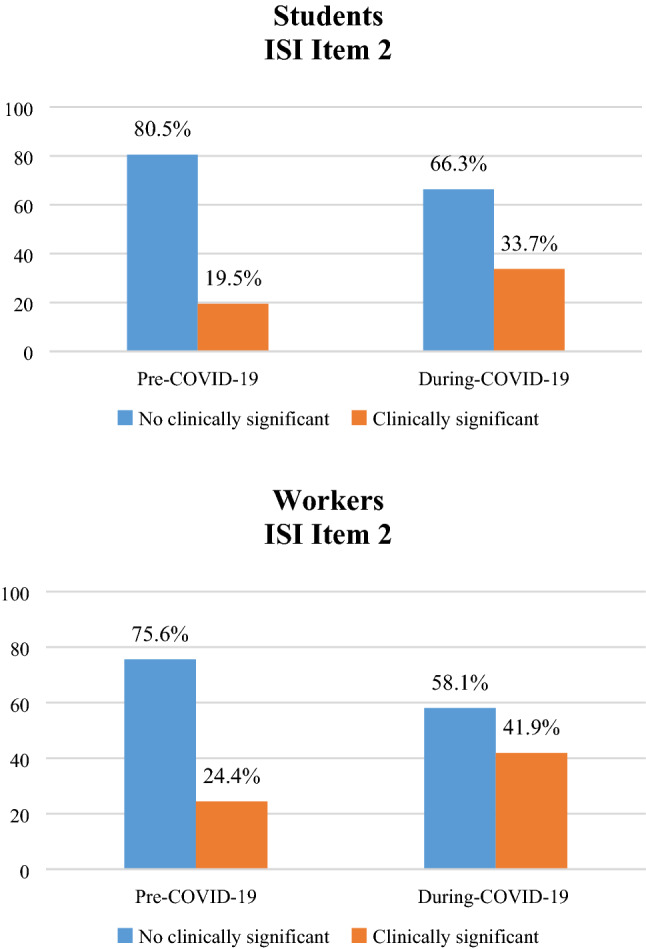
we found an increase in Bed Time hour, Sleep Latency, and Wake-Up time between before and during COVID-19 emergency and a worsening of sleep quality and of insomnia symptoms. In particular, during the lockdown, the impact of the delay in Bed Time and in Wake-Up was more pronounced in students. In workers, we observed a prevalence of maintenance insomnia before COVID-19 of 24% that significantly increase during COVID-19 reaching 40%, while workers with difficulties in sleep initiation were only 15% that increased to 42%. In our sample, 27.8% showed depressive symptoms, while 34.3% showed anxious symptoms, in particular in students.
The impact of lockdown was greater in students than in workers, and in females than in males. Concerning the psycho-emotional aspects, about one-third of our sample showed depressive or anxious symptoms. The results of our study may provide support for the implementation of some interventions for well-being in pandemic condition.
在意大利,由于 COVID-19 健康紧急情况而实施的封锁于 2020 年 3 月 10 日开始,并于 5 月 3 日部分结束。在普通人群中,心理困扰和精神疾病症状明显增加,睡眠质量恶化。
参与者完成了一项匿名的网络调查,其中包括关于睡眠和焦虑和抑郁症状的问卷。我们的样本包括 400 名受试者:307 名学生(平均年龄 22.84±2.68)和 93 名大学行政工作人员(平均年龄 37.02±12.46)。
我们发现,在 COVID-19 紧急情况下,睡眠时间、入睡潜伏期和醒来时间增加,睡眠质量和失眠症状恶化。特别是在封锁期间,Bed Time 和 Wake-Up 延迟对学生的影响更为明显。在工作人员中,我们观察到在 COVID-19 之前,维持性失眠的患病率为 24%,在 COVID-19 期间显著增加到 40%,而入睡困难的工作人员仅为 15%,增加到 42%。在我们的样本中,27.8%的人表现出抑郁症状,34.3%的人表现出焦虑症状,特别是在学生中。
封锁对学生的影响大于对工作人员的影响,对女性的影响大于对男性的影响。关于心理情绪方面,我们的样本中有大约三分之一的人表现出抑郁或焦虑症状。我们的研究结果可能为大流行期间实施一些幸福感干预措施提供支持。