The Nelson Mandela African Institution of Science and Technology (NM-AIST), Arusha, Tanzania.
Tropical Pesticides Research Institute (TPRI), Arusha, Tanzania.
PLoS One. 2020 Jul 15;15(7):e0235345. doi: 10.1371/journal.pone.0235345. eCollection 2020.
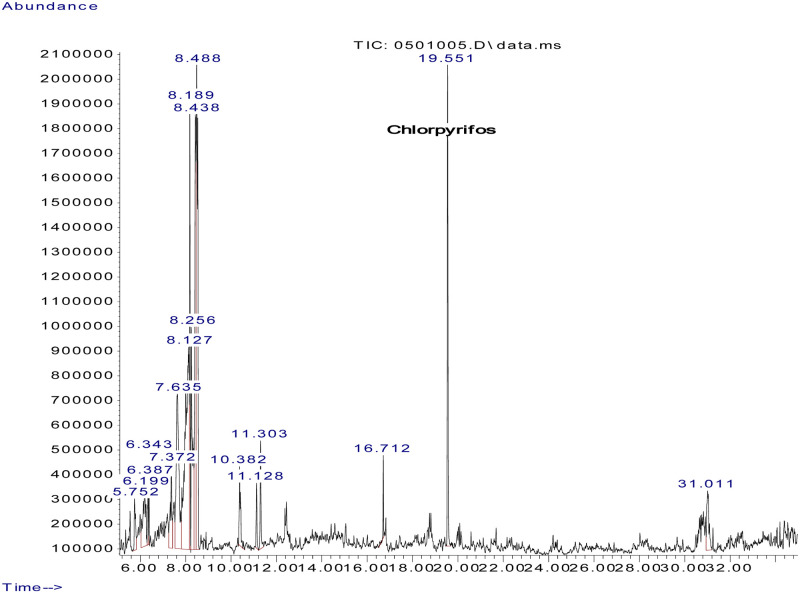
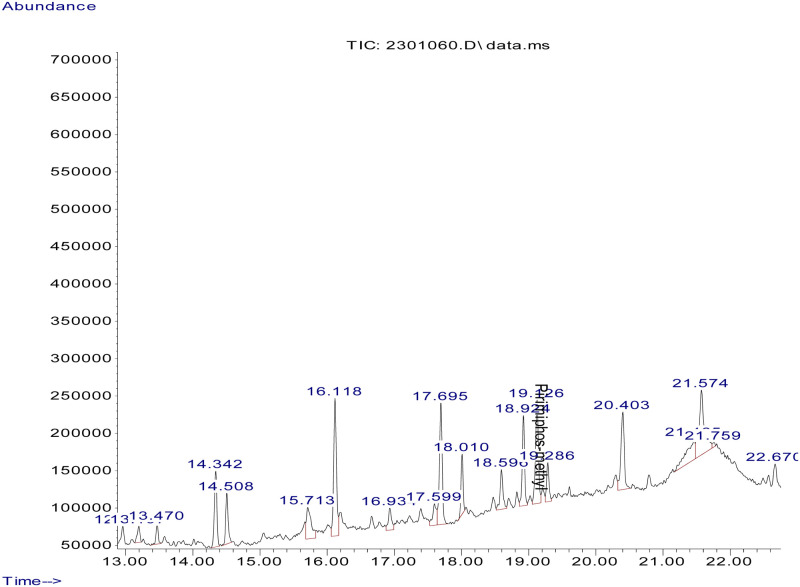
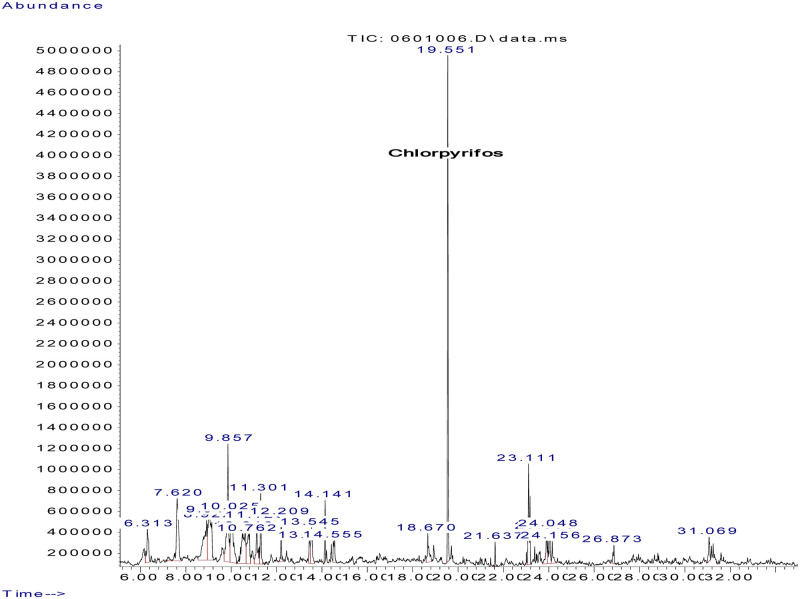
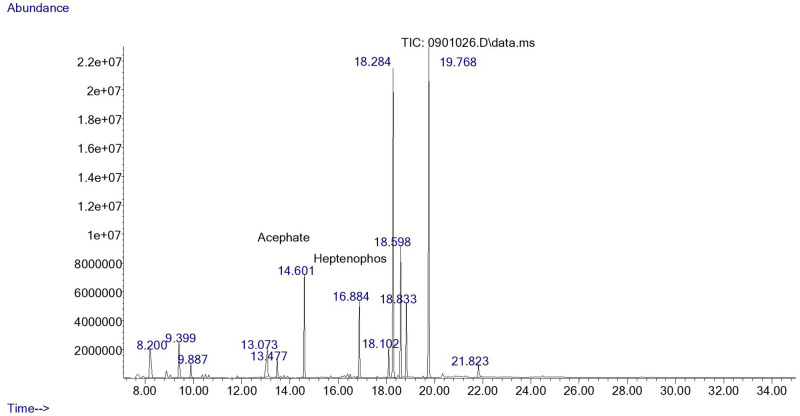
This study was carried out to investigate the risks of simultaneous exposure to pesticide residues and bacteria contaminants in locally produced fresh vegetables and vegetables in Tanzania. A total of 613 samples were analyzed for pesticide residues, out of which 250 were also analyzed for bacterial contamination. Overall, 47.5% had pesticide residues, 74.2% exceeded Maximum Residue Levels (MRLs). Organophosphorus (95.2%), organochlorines (24.0%), pyrethroids (17.3%), and carbamates (9.2%) residues dominated. MRL values were mostly exceeded in tomatoes, onions, watermelons, cucumbers, Chinese cabbage, and sweet paper. Tetramethrin (0.0329-1.3733 mg/kg), pirimiphos-methyl (0.0003-1.4093 mg/kg), permethrin (0.0009-2.4537 mg/kg), endosulfan (beta) (0.0008-2.3416 mg/kg), carbaryl (0.0215-1.5068 mg/kg), profenofos (0.0176-2.1377 mg/kg), chlorpyrifos (0.0004-1.2549 mg/kg) and dieldrin (0.0011-0.5271 mg/kg) exceeded MRLs. The prevalence of bacteria contamination was high (63.2%). Enterobacter (55.6%) Pseudomonas aeruginosa (32.4%), E. coli (28.2%), Citrobacter (26.8%), Klebsiella oxytoca (14.8%), and Salmonella (7.7%) were isolated. Furthermore, 46.4% tested positive for both pesticide residues and bacterial contaminants. Vegetables from farms (60.7%) contained more dual contaminants than market-based vegetables (41.8%). This may have resulted from excessive pesticide use and unhygienic handling of fresh fruits and vegetables at production level. Binary logistic regression showed that fresh fruits and vegetables with pesticide residues were 2.231 times more likely to have bacteria contaminants (OR: 2.231; 95% CI: 0.501, 8.802). The contamination levels of pesticide residues and bacterial contaminants could be perceived as a serious problem as most fresh fruits and vegetables recorded values of pesticide residues far above the MRLs with pathogenic bacteria isolated in higher proportions. MRLs was higher in most vegetables consumed raw or semi-cooked such as watermelons, carrots, cucumber, tomatoes, onion and sweet paper. There is an urgent need to develop pesticide monitoring and surveillance systems at farmer level, educating farmers and promoting the use of greener pesticides to mitigate the health effects of pesticides and bacterial contaminants.
本研究旨在调查坦桑尼亚本地生产的新鲜蔬菜和蔬菜中同时暴露于农药残留和细菌污染物的风险。对 613 个样本进行了农药残留分析,其中 250 个样本还进行了细菌污染分析。总体而言,有 47.5%的样本含有农药残留,74.2%的样本超过了最大残留限量(MRL)。有机磷(95.2%)、有机氯(24.0%)、拟除虫菊酯(17.3%)和氨基甲酸酯(9.2%)残留为主。番茄、洋葱、西瓜、黄瓜、白菜和甜叶菊的 MRL 值大多超标。四氟菊酯(0.0329-1.3733mg/kg)、吡虫脒(0.0003-1.4093mg/kg)、氯菊酯(0.0009-2.4537mg/kg)、硫丹(β)(0.0008-2.3416mg/kg)、西维因(0.0215-1.5068mg/kg)、丙溴磷(0.0176-2.1377mg/kg)、毒死蜱(0.0004-1.2549mg/kg)和狄氏剂(0.0011-0.5271mg/kg)超过了 MRL 值。细菌污染的流行率很高(63.2%)。分离出肠杆菌(55.6%)、铜绿假单胞菌(32.4%)、大肠杆菌(28.2%)、柠檬酸杆菌(26.8%)、产酸克雷伯氏菌(14.8%)和沙门氏菌(7.7%)。此外,有 46.4%的样本同时含有农药残留和细菌污染物。来自农场的蔬菜(60.7%)比市场蔬菜(41.8%)含有更多的双重污染物。这可能是由于在生产过程中过度使用农药和对新鲜水果和蔬菜的不卫生处理所致。二元逻辑回归显示,含有农药残留的新鲜水果和蔬菜更有可能含有细菌污染物(OR:2.231;95%CI:0.501,8.802)。由于大多数新鲜水果和蔬菜的农药残留值远远超过 MRL,且分离出的病原菌比例较高,因此农药残留和细菌污染物的污染水平可能被视为一个严重问题。大多数食用生的或半熟的蔬菜和水果,如西瓜、胡萝卜、黄瓜、番茄、洋葱和甜叶菊,MRL 值较高。迫切需要在农民层面建立农药监测和监测系统,对农民进行教育,并推广使用更环保的农药,以减轻农药和细菌污染物对健康的影响。