Petresc Bianca, Lebovici Andrei, Caraiani Cosmin, Feier Diana Sorina, Graur Florin, Buruian Mircea Marian
Department of Radiology, "George Emil Palade" University of Medicine, Pharmacy, Science and Technology of Târgu Mureș, 540139 Târgu Mureș, Romania.
Department of Radiology, Emergency Clinical County Hospital Cluj-Napoca, 400006 Cluj-Napoca, Romania.
Cancers (Basel). 2020 Jul 14;12(7):1894. doi: 10.3390/cancers12071894.
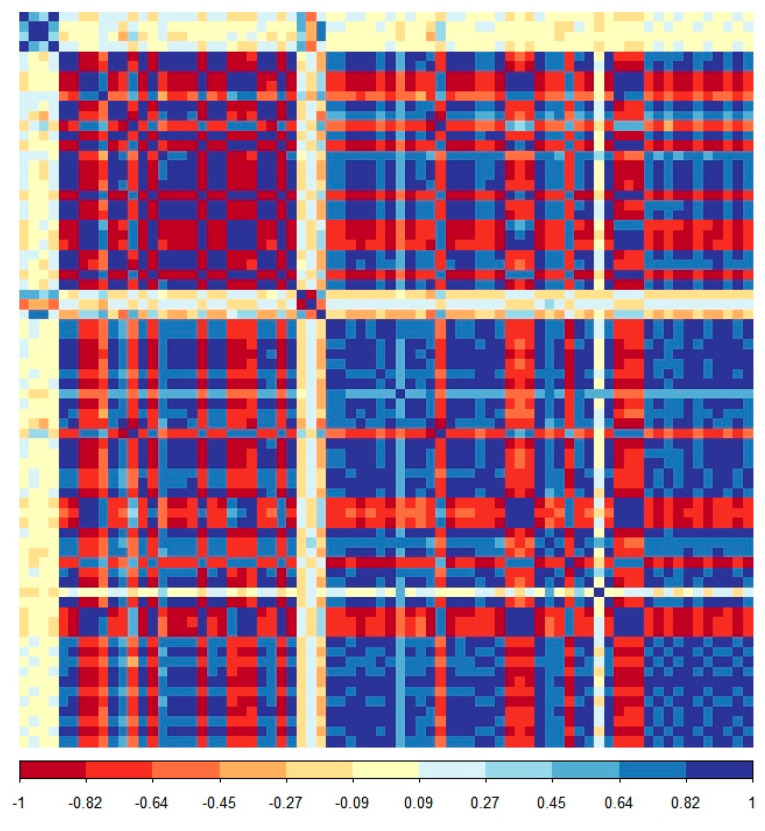
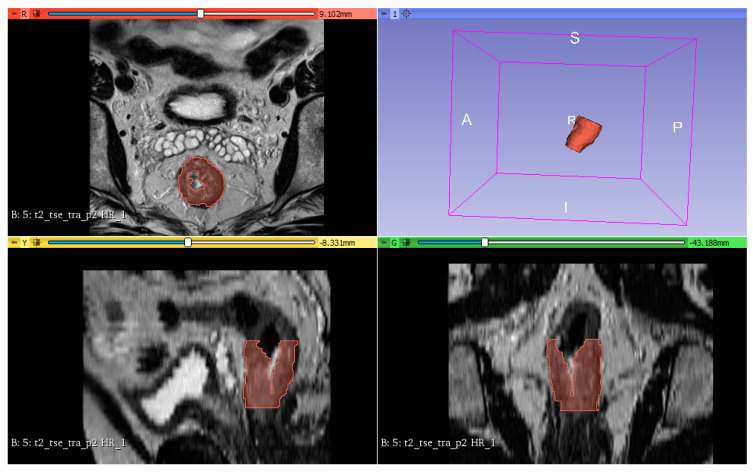
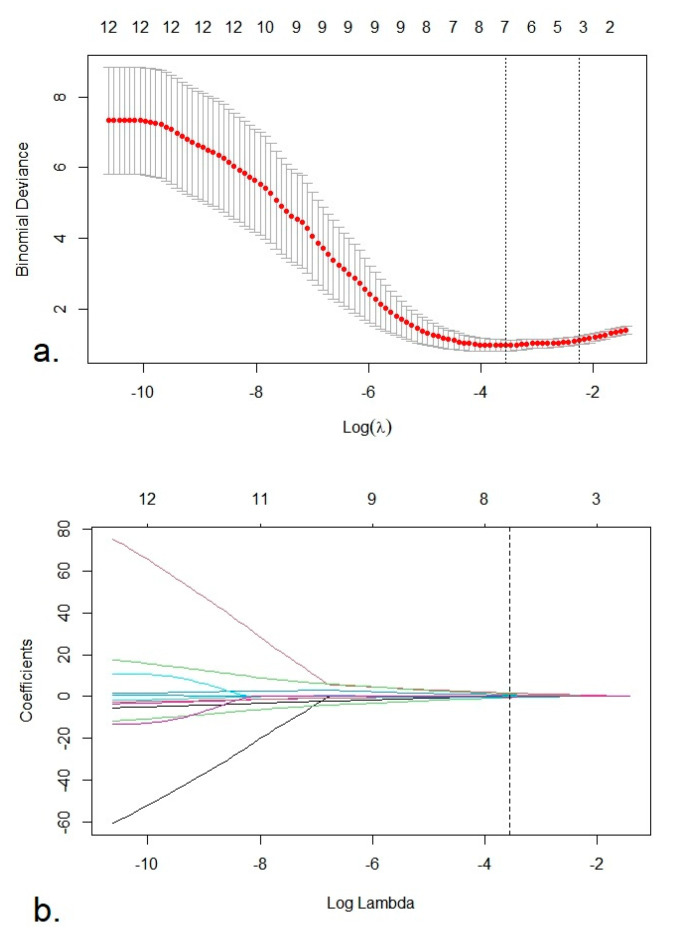
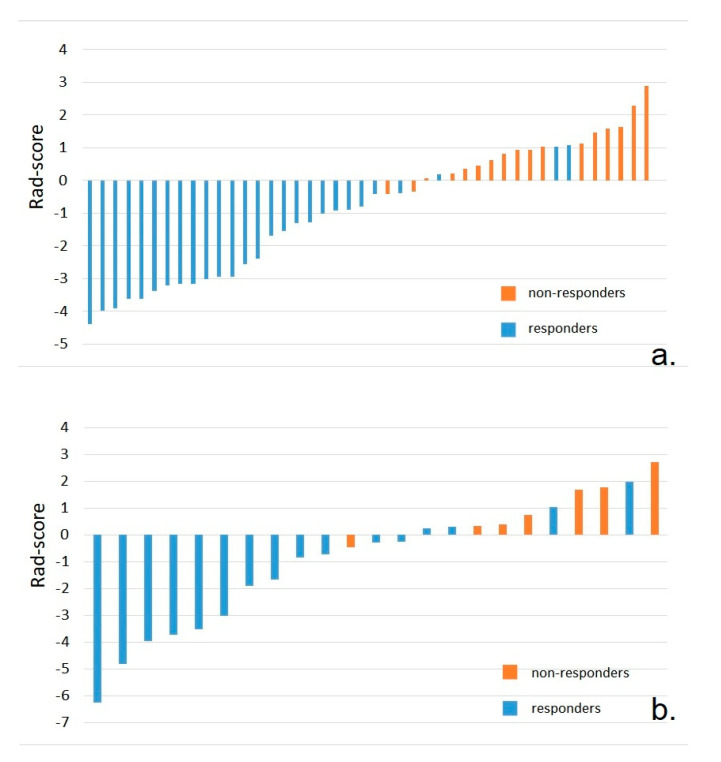
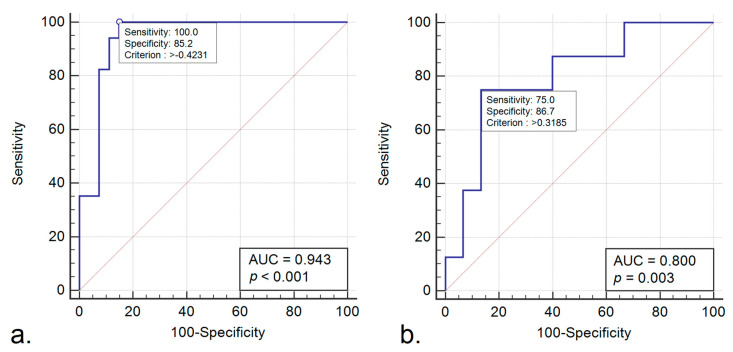
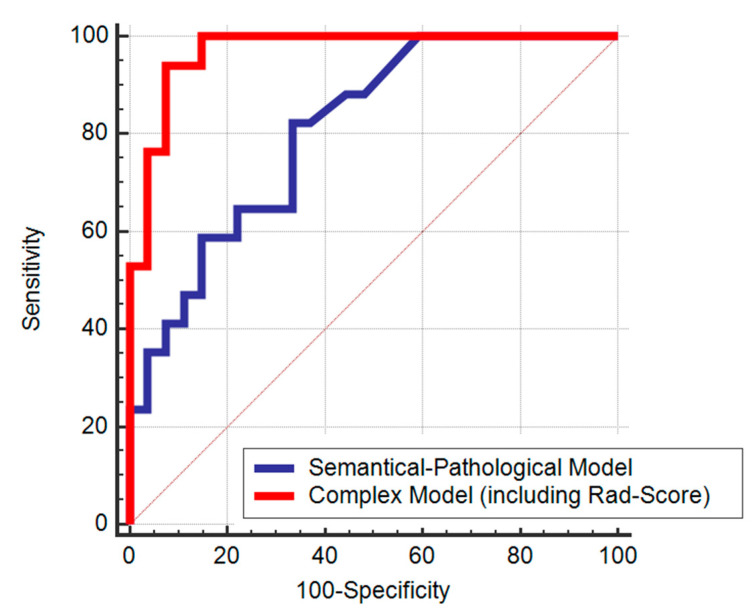
Locally advanced rectal cancer (LARC) response to neoadjuvant chemoradiotherapy (nCRT) is very heterogeneous and up to 30% of patients are considered non-responders, presenting no tumor regression after nCRT. This study aimed to determine the ability of pre-treatment T2-weighted based radiomics features to predict LARC non-responders. A total of 67 LARC patients who underwent a pre-treatment MRI followed by nCRT and total mesorectal excision were assigned into training ( = 44) and validation ( = 23) groups. In both datasets, the patients were categorized according to the Ryan tumor regression grade (TRG) system into non-responders (TRG = 3) and responders (TRG 1 and 2). We extracted 960 radiomic features/patient from pre-treatment T2-weighted images. After a three-step feature selection process, including LASSO regression analysis, we built a radiomics score with seven radiomics features. This score was significantly higher among non-responders in both training and validation sets ( < 0.001 and = 0.03) and it showed good predictive performance for LARC non-response, achieving an area under the curve (AUC) = 0.94 (95% CI: 0.82-0.99) in the training set and AUC = 0.80 (95% CI: 0.58-0.94) in the validation group. The multivariate analysis identified the radiomics score as an independent predictor for the tumor non-response (OR = 6.52, 95% CI: 1.87-22.72). Our results indicate that MRI radiomics features could be considered as potential imaging biomarkers for early prediction of LARC non-response to neoadjuvant treatment.
局部晚期直肠癌(LARC)对新辅助放化疗(nCRT)的反应非常异质,高达30%的患者被认为是无反应者,在nCRT后无肿瘤消退。本研究旨在确定基于治疗前T2加权的放射组学特征预测LARC无反应者的能力。共有67例接受了治疗前MRI检查,随后进行nCRT和全直肠系膜切除术的LARC患者被分为训练组(n = 44)和验证组(n = 23)。在两个数据集中,患者根据Ryan肿瘤消退分级(TRG)系统分为无反应者(TRG = 3)和反应者(TRG 1和2)。我们从治疗前T2加权图像中提取了960个放射组学特征/患者。经过包括LASSO回归分析在内的三步特征选择过程,我们用七个放射组学特征构建了一个放射组学评分。该评分在训练集和验证集的无反应者中均显著更高(P < 0.001和P = 0.03),并且它对LARC无反应具有良好的预测性能,在训练集中曲线下面积(AUC)= 0.94(95% CI:0.82 - 0.99),在验证组中AUC = 0.80(95% CI:0.58 - 0.94)。多变量分析确定放射组学评分是肿瘤无反应的独立预测因子(OR = 6.52,95% CI:1.87 - 22.72)。我们的结果表明,MRI放射组学特征可被视为早期预测LARC对新辅助治疗无反应的潜在影像生物标志物。