Tyagi Swati, Jung Jae-A, Kim Jung Sun, Won So Youn
Genomics Division, National Institute of Agricultural Sciences, Rural Development Administration, Jeonju, Republic of Korea.
Floriculture Research Division, National Institute of Horticultural and Herbal Science, Rural Development Administration, Wanju, Republic of Korea.
PeerJ. 2020 Jul 3;8:e9448. doi: 10.7717/peerj.9448. eCollection 2020.
Makino (Anthemideae, Asteraceae) is a plant of economic, ornamental and medicinal importance. We characterized and compared the chloroplast genomes of three strains. These were collected from different geographic regions of Korea and varied in floral morphology.
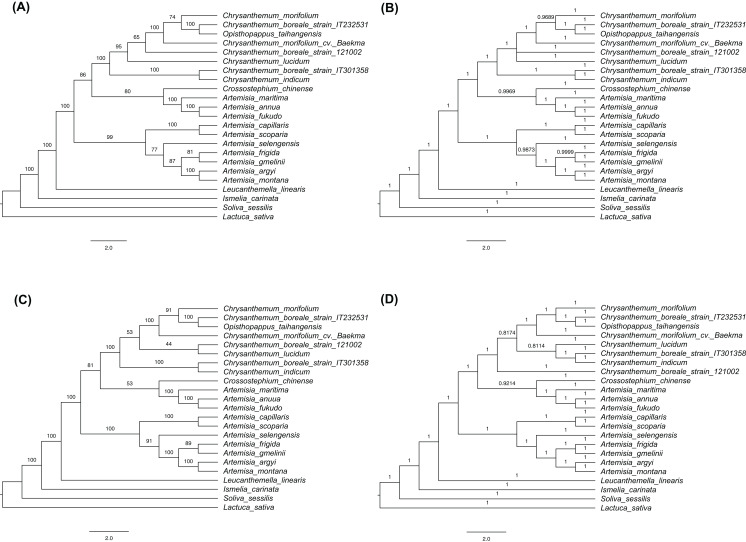
The chloroplast genomes were obtained by next-generation sequencing techniques, assembled de novo, annotated, and compared with one another. Phylogenetic analysis placed them within the Anthemideae tribe.
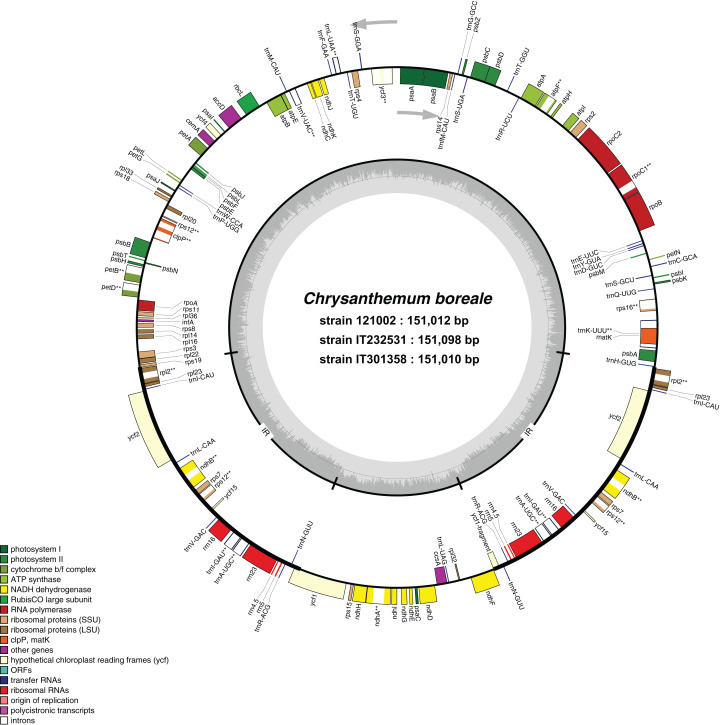
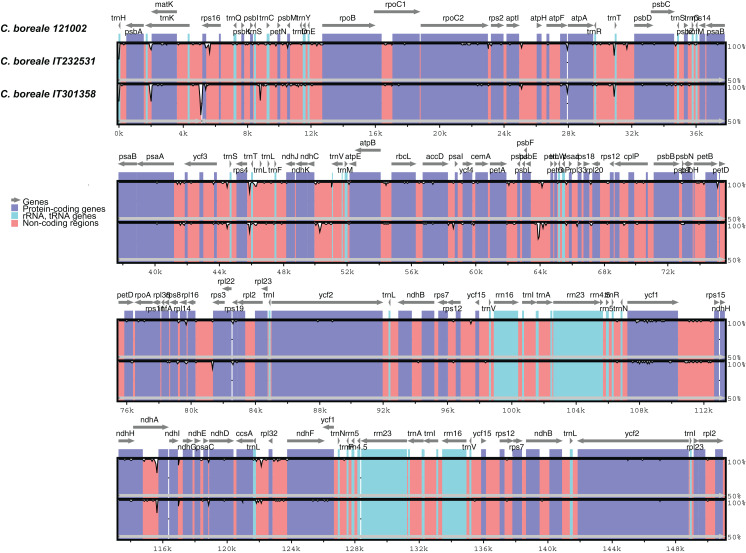
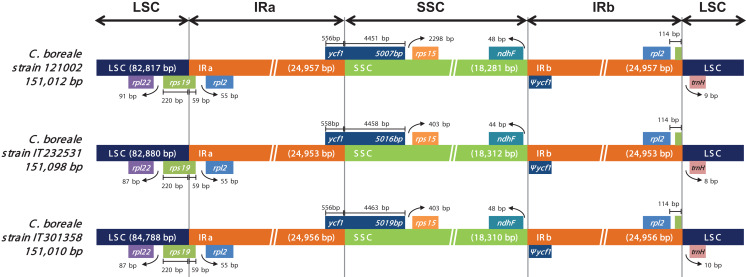
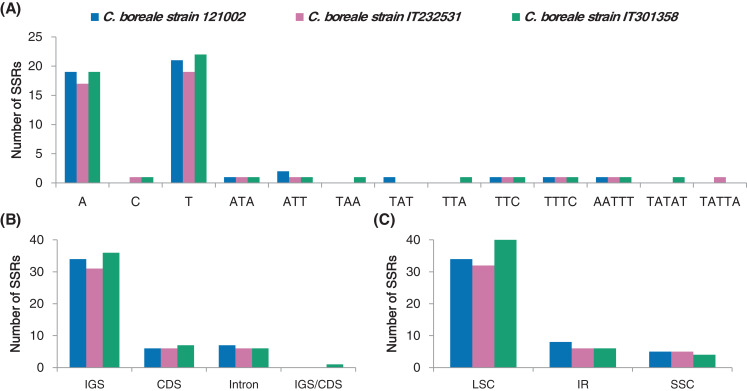
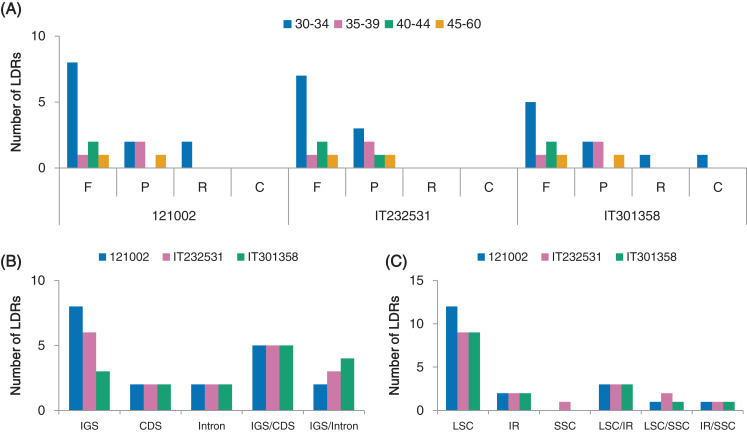
The sizes of the complete chloroplast genomes of the strains were 151,012 bp (strain 121002), 151,098 bp (strain IT232531) and 151,010 bp (strain IT301358). Each genome contained 80 unique protein-coding genes, 4 rRNA genes and 29 tRNA genes. Comparative analyses revealed a high degree of conservation in the overall sequence, gene content, gene order and GC content among the strains. We identified 298 single nucleotide polymorphisms (SNPs) and 106 insertions/deletions (indels) in the chloroplast genomes. These variations were more abundant in non-coding regions than in coding regions. Long dispersed repeats and simple sequence repeats were present in both coding and noncoding regions, with greater frequency in the latter. Regardless of their location, these repeats can be used for molecular marker development. Phylogenetic analysis revealed the evolutionary relationship of the species in the Anthemideae tribe. The three complete chloroplast genomes will be valuable genetic resources for studying the population genetics and evolutionary relationships of Asteraceae species.
牧野菊属(菊科春黄菊族)是一种具有经济、观赏和药用价值的植物。我们对三个菌株的叶绿体基因组进行了特征分析和比较。这些菌株采集自韩国不同地理区域,花形态各异。
通过下一代测序技术获得叶绿体基因组,进行从头组装、注释,并相互比较。系统发育分析将它们置于春黄菊族内。
这些菌株完整叶绿体基因组的大小分别为151,012 bp(菌株121002)、151,098 bp(菌株IT232531)和151,010 bp(菌株IT301358)。每个基因组包含80个独特的蛋白质编码基因、4个rRNA基因和29个tRNA基因。比较分析表明,这些菌株在总体序列、基因含量、基因顺序和GC含量方面具有高度保守性。我们在叶绿体基因组中鉴定出298个单核苷酸多态性(SNP)和106个插入/缺失(indel)。这些变异在非编码区比在编码区更为丰富。编码区和非编码区均存在长散在重复序列和简单序列重复,后者的频率更高。无论其位置如何,这些重复序列均可用于分子标记开发。系统发育分析揭示了春黄菊族物种的进化关系。这三个完整的叶绿体基因组将成为研究菊科物种群体遗传学和进化关系的宝贵遗传资源。