Universidade Federal de Pernambuco, School of Dentistry Department of Clinical and Preventive Dentistry, Oral Pathology Section 4ª Travessa Professor Artur de Sá, s/n. Cidade Universitária 50740-521. Recife, Pernambuco, Brazil
Med Oral Patol Oral Cir Bucal. 2021 Jan 1;26(1):e56-e63. doi: 10.4317/medoral.23962.
Tobacco, alcohol consumption, and HPV infection are the most common risk factors for head and neck cancer (HNC). Despite of this, recent evidences are growing on the association between long-term exposure to pesticides and the risk of chronic diseases, including different types of cancer. The present review evaluated in current literature evidence of an association between exposure to pesticides and the occurrence of HNCs.
A literature search of the case-control studies was conducted in the PubMed, Web of science and Cochrane databases. Methodological quality of each study was rated with the Scottish Intercollegiate Guidelines Network (SIGN 50) checklist.
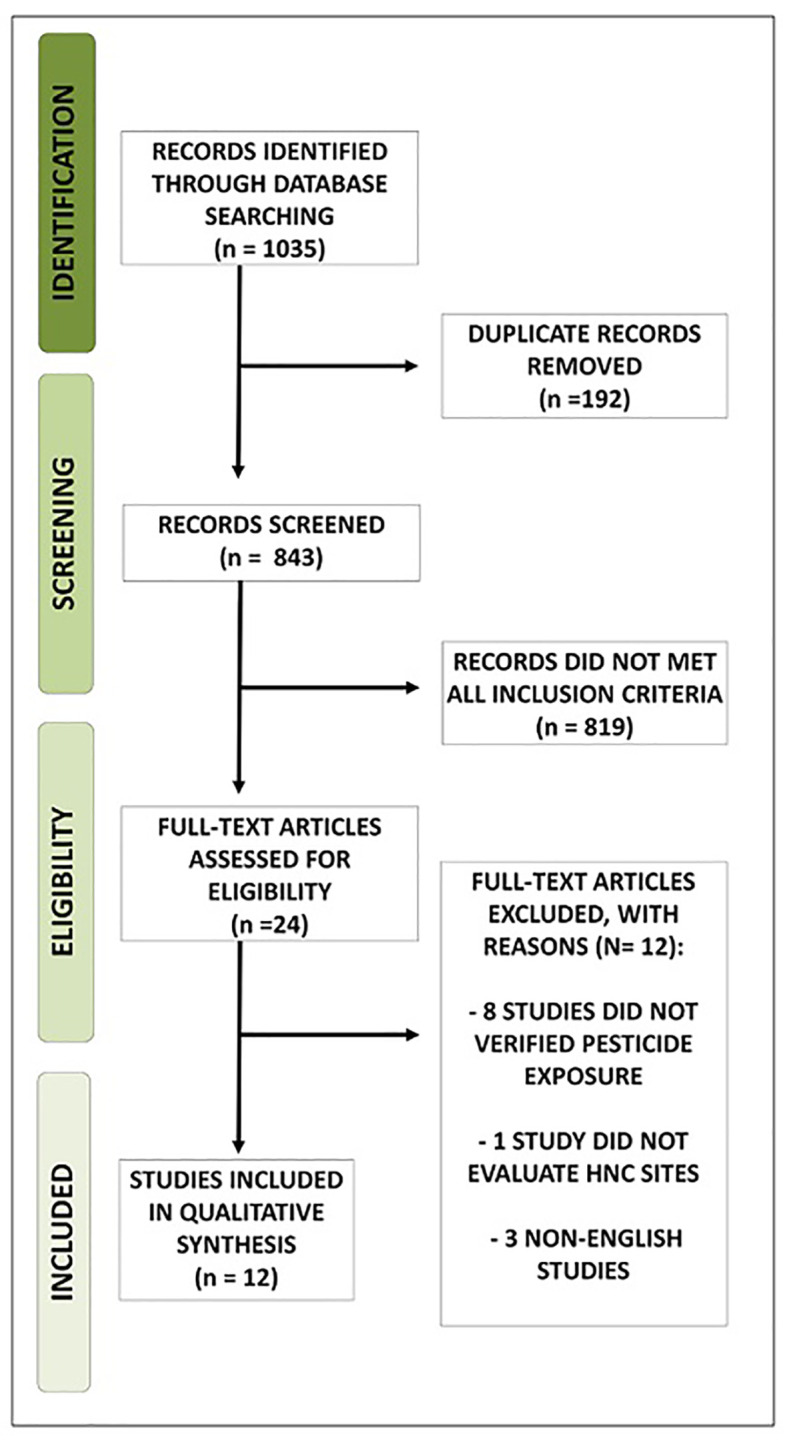
One thousand and thirty-five studies were identified and twelve met all criteria and, therefore, considered for quality assessment and data extraction. According to SIGN 50 criteria, six studies received an overall high-quality. All the studies considered of high quality found a positive association between exposure to pesticides and different HNC sites, including larynx, pharynx and nasal cavity. In addition, the increased risk was associated with the frequency of exposure.
Finally, improving pesticide users' awareness of their risks and proper handling, as well as adopting protective measures such as the use of personal protective equipment, appear to be effective in reducing human health damage.
烟草、酒精消费和 HPV 感染是头颈部癌症(HNC)的最常见危险因素。尽管如此,最近的证据越来越多表明,长期接触农药与慢性病(包括不同类型的癌症)的风险之间存在关联。本综述评估了目前文献中关于接触农药与 HNC 发生之间关联的证据。
在 PubMed、Web of science 和 Cochrane 数据库中进行了病例对照研究的文献检索。使用苏格兰校际指南网络(SIGN 50)检查表对每项研究的方法学质量进行了评分。
共确定了 135 项研究,其中 12 项符合所有标准,因此被认为具有高质量,并进行了质量评估和数据提取。根据 SIGN 50 标准,有 6 项研究总体上被评为高质量。所有被认为高质量的研究都发现接触农药与不同的 HNC 部位(包括喉、咽和鼻腔)之间存在正相关关系。此外,这种风险增加与接触频率有关。
最后,提高农药使用者对其风险的认识和妥善处理,以及采取适当的保护措施,如使用个人防护设备,似乎可以有效减少对人类健康的损害。