Maximum Containment Laboratory, Pune, Maharashtra, India.
ICMR-National Institute of Virology, Pune, Maharashtra, India.
Indian J Med Res. 2020 Jun;151(6):571-577. doi: 10.4103/ijmr.IJMR_1195_18.
BACKGROUND & OBJECTIVES: The presence of Cat Que virus (CQV) in Culex mosquitoes and pigs has been reported in China and Vietnam. Due to the spread of similar species of the Culex mosquitoes in India, there is a need to understand the replication kinetics of this virus in mosquito models. As a part of preparedness and to identify the presence of this CQV in humans and swine, this study was carried out to develop diagnostic tests.
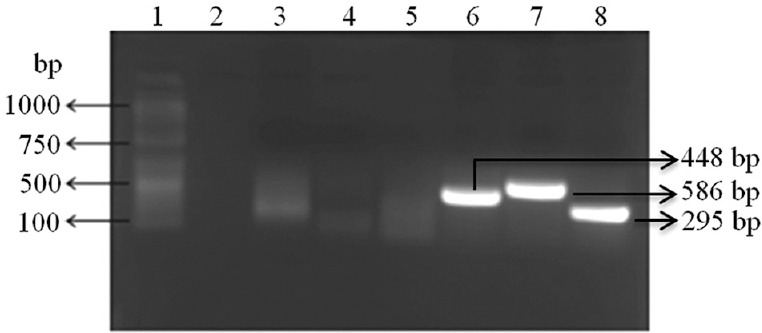
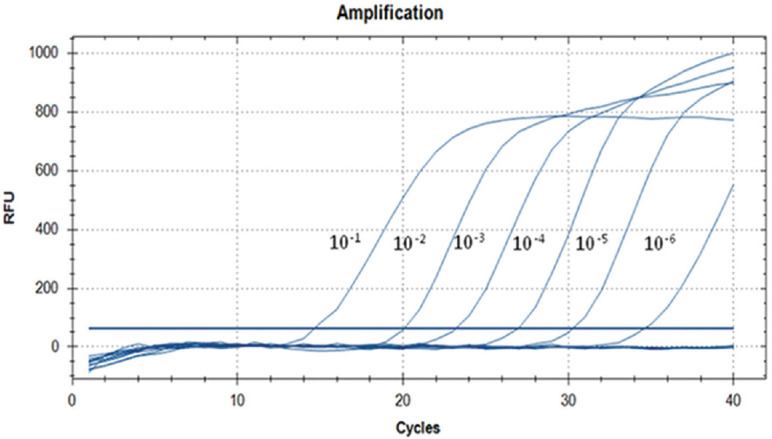
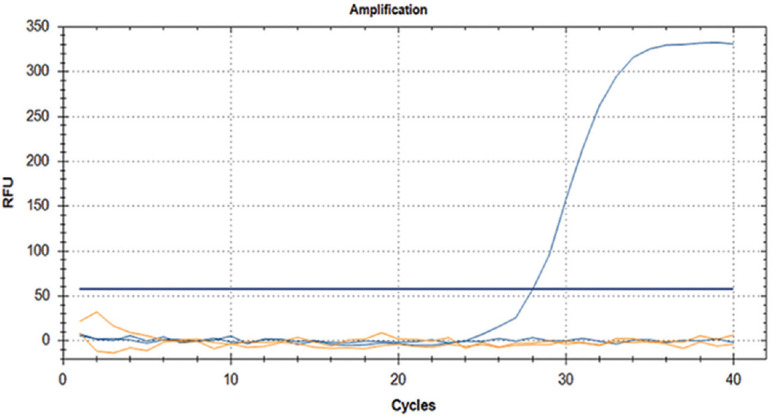
Serological and molecular diagnostic assays were developed for testing the mosquito population, human and swine serum samples. In this line, RNA-dependent RNA polymerase (L), glycoprotein (M) and nucleocapsid (S) genes-based reverse transcription-polymerase chain reaction (RT-PCR) assays were developed for CQV. Real-time RT-PCR was used for screening of retrospectively collected human serum samples (n=1020) with acute febrile illness during 2014-2017. Simultaneously, an in-house anti-CQV swine and human IgG ELISAs were also developed to detect anti-CQV IgG antibody. Human serum samples (n=883) with post-onset of disease (POD) >4 days and swine serum samples (n=459) were tested for the presence of anti-CQV IgG antibodies. CQV NIV 612,045 isolate was used for susceptibility and replication kinetics experiment using three different species of mosquitoes to understand its behaviour in Indian mosquitoes.
All human serum samples (n=1020) screened for the presence of CQV using real-time RT-PCR were found to be negative. Anti-CQV IgG antibody positivity was recorded in two of 883 human serum samples tested. Virus susceptibility experiments indicated that three species of mosquito, namely Aedes aegypti, Culex quinquefasciatus and Cx. tritaeniorhynchus supported multiplication of CQV by intrathoracic as well as artificial membrane/oral feeding routes.
INTERPRETATION & CONCLUSIONS: Anti-CQV IgG antibody positivity in human serum samples tested and the replication capability of CQV in mosquitoes indicated a possible disease causing potential of CQV in Indian scenario. Screening of more human and swine serum samples using these assays is required as a proactive measure for understanding the prevalence of this neglected tropical virus.
在中国和越南,已经有报道称库蚊和猪体内存在猫杯状病毒(CQV)。由于印度存在类似的库蚊物种,因此需要了解该病毒在蚊子模型中的复制动力学。作为准备工作的一部分,并为了在人类和猪中识别这种 CQV 的存在,进行了这项研究以开发诊断测试。
开发了针对蚊子种群、人类和猪血清样本的血清学和分子诊断检测方法。在此基础上,基于 RNA 依赖性 RNA 聚合酶(L)、糖蛋白(M)和核衣壳(S)基因的逆转录-聚合酶链反应(RT-PCR)检测方法被开发用于 CQV。使用实时 RT-PCR 对 2014 年至 2017 年期间患有急性发热性疾病的 1020 份回顾性收集的人类血清样本进行了筛查。同时,还开发了内部抗 CQV 猪和人 IgG ELISA 来检测抗 CQV IgG 抗体。对发病后 4 天以上的 883 份人类血清样本和 459 份猪血清样本进行了抗 CQV IgG 抗体检测。使用 NIV 612,045 分离株进行了易感性和复制动力学实验,使用三种不同的蚊子物种来了解其在印度蚊子中的行为。
使用实时 RT-PCR 对所有 1020 份人类血清样本进行的 CQV 检测均为阴性。在 883 份检测的人类血清样本中,有两份样本检测出抗 CQV IgG 抗体阳性。病毒易感性实验表明,三种蚊子,即埃及伊蚊、三斑库蚊和淡色库蚊,通过胸内和人工膜/口服途径支持 CQV 的增殖。
检测到人类血清样本中存在抗 CQV IgG 抗体,以及 CQV 在蚊子中的复制能力,表明 CQV 在印度可能具有致病潜力。需要使用这些检测方法对更多的人类和猪血清样本进行筛查,作为了解这种被忽视的热带病毒流行情况的主动措施。