Center for Research in Molecular Medicine and Chronic Diseases (CIMUS), IDIS Research Institute, Universidade de Santiago de Compostela, Santiago de Compostela, Spain.
Department of Pharmacology, Pharmacy and Pharmaceutical Technology, School of Pharmacy, Universidade de Santiago de Compostela, Santiago de Compostela, Spain.
Front Immunol. 2020 Jul 7;11:1412. doi: 10.3389/fimmu.2020.01412. eCollection 2020.
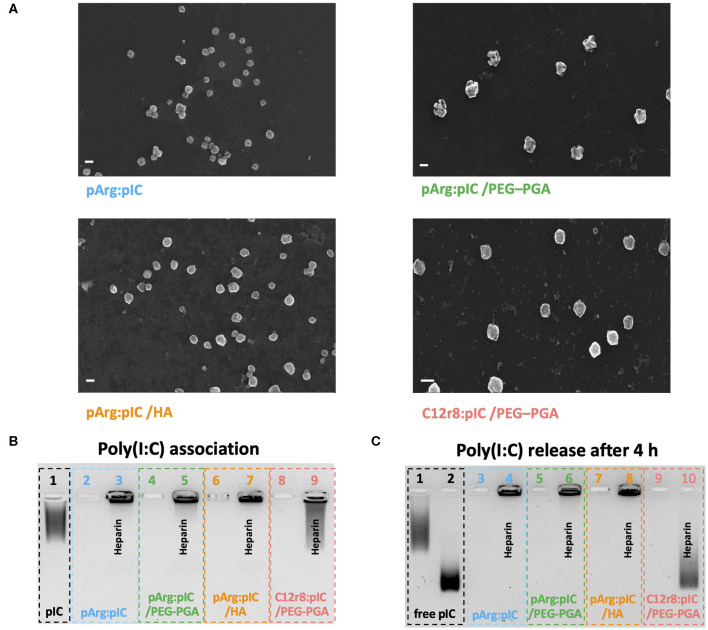
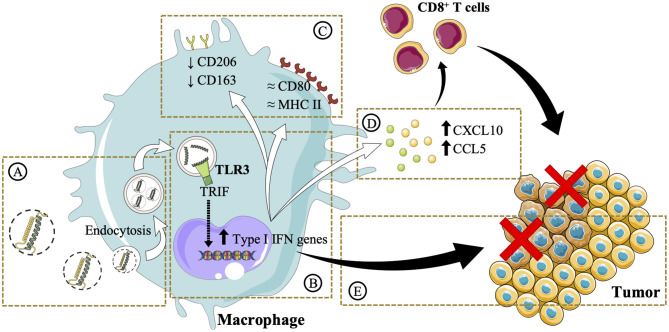
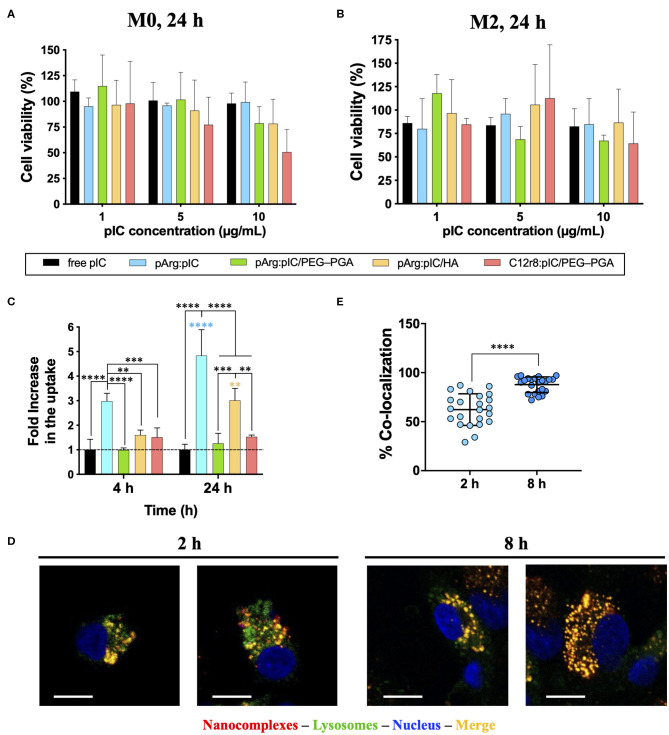
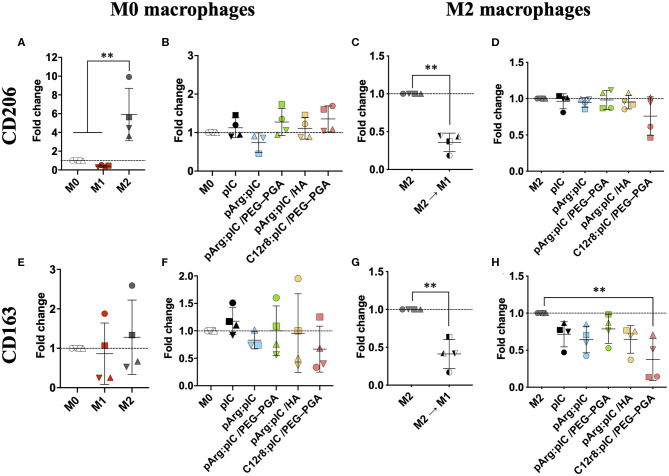
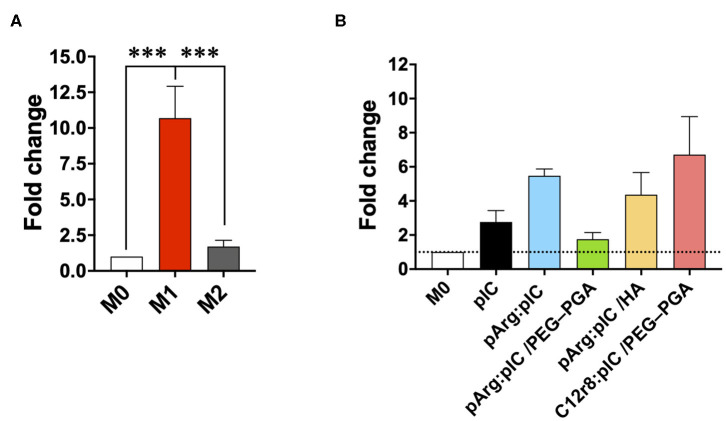
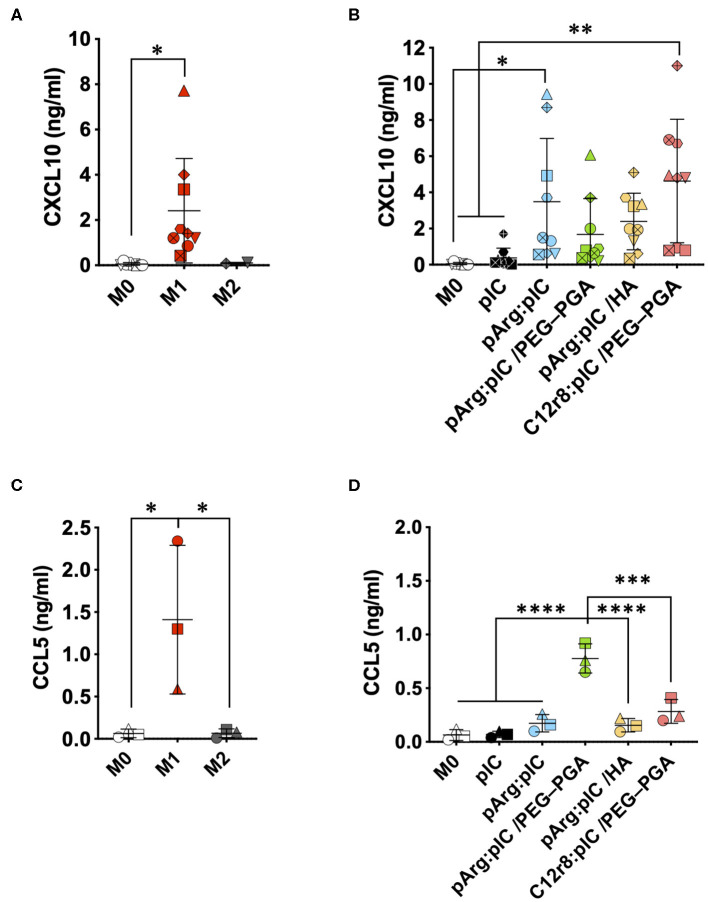
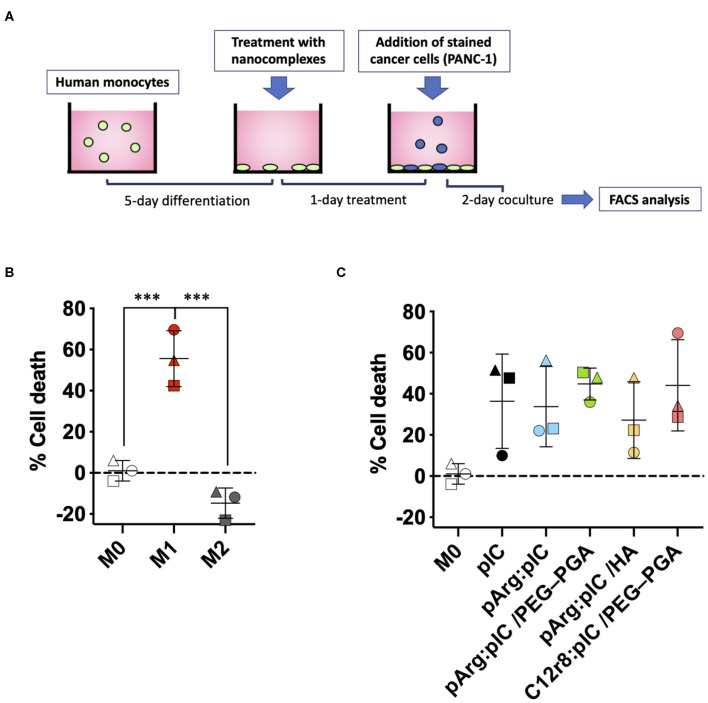
Tumor-associated macrophages (TAMs), with M2-like immunosuppressive profiles, are key players in the development and dissemination of tumors. Hence, the induction of M1 pro-inflammatory and anti-tumoral states is critical to fight against cancer cells. The activation of the endosomal toll-like receptor 3 by its agonist poly(I:C) has shown to efficiently drive this polarization process. Unfortunately, poly(I:C) presents significant systemic toxicity, and its clinical use is restricted to a local administration. Therefore, the objective of this work has been to facilitate the delivery of poly(I:C) to macrophages through the use of nanotechnology, that will ultimately drive their phenotype toward pro-inflammatory states. Poly(I:C) was complexed to arginine-rich polypeptides, and then further enveloped with an anionic polymeric layer either by film hydration or incubation. Physicochemical characterization of the nanocomplexes was conducted by dynamic light scattering and transmission electron microscopy, and poly(I:C) association efficiency by gel electrophoresis. Primary human-derived macrophages were used as relevant cell model. Alamar Blue assay, ELISA, PCR and flow cytometry were used to determine macrophage viability, polarization, chemokine secretion and uptake of nanocomplexes. The cytotoxic activity of pre-treated macrophages against PANC-1 cancer cells was assessed by flow cytometry. The final poly(I:C) nanocomplexes presented sizes lower than 200 nm, with surface charges ranging from +40 to -20 mV, depending on the envelopment. They all presented high poly(I:C) loading values, from 12 to 50%, and great stability in cell culture media. , poly(I:C) nanocomplexes were highly taken up by macrophages, in comparison to the free molecule. Macrophage treatment with these nanocomplexes did not reduce their viability and efficiently stimulated the secretion of the T-cell recruiter chemokines CXCL10 and CCL5, of great importance for an effective anti-tumor immune response. Finally, poly(I:C) nanocomplexes significantly increased the ability of treated macrophages to directly kill cancer cells. Overall, these enveloped poly(I:C) nanocomplexes might represent a therapeutic option to fight cancer through the induction of cytotoxic M1-polarized macrophages.
肿瘤相关巨噬细胞(TAMs)具有 M2 样免疫抑制表型,是肿瘤发生和扩散的关键因素。因此,诱导 M1 促炎和抗肿瘤状态对于对抗癌细胞至关重要。其激动剂聚肌苷酸(poly(I:C))激活内体 Toll 样受体 3 已被证明能有效地促进这种极化过程。不幸的是,poly(I:C)具有显著的全身毒性,其临床应用仅限于局部给药。因此,本工作的目的是通过使用纳米技术将 poly(I:C)递送到巨噬细胞中,从而最终将其表型驱动为促炎状态。poly(I:C)与精氨酸丰富的多肽复合,然后通过薄膜水化或孵育进一步用阴离子聚合物层包被。通过动态光散射和透射电子显微镜对纳米复合物进行理化特性表征,通过凝胶电泳测定 poly(I:C)的结合效率。原代人源巨噬细胞作为相关细胞模型。使用阿尔玛蓝测定法、ELISA、PCR 和流式细胞术来确定巨噬细胞的活力、极化、趋化因子分泌和纳米复合物的摄取。通过流式细胞术评估预处理巨噬细胞对 PANC-1 癌细胞的细胞毒性活性。最终的 poly(I:C)纳米复合物的粒径小于 200nm,表面电荷范围为+40 至-20mV,具体取决于包被。它们都具有高载药量,从 12%到 50%,并且在细胞培养基中具有很好的稳定性。与游离分子相比,poly(I:C)纳米复合物被巨噬细胞大量摄取。用这些纳米复合物处理巨噬细胞不会降低其活力,并能有效地刺激 T 细胞募集趋化因子 CXCL10 和 CCL5 的分泌,这对于有效的抗肿瘤免疫反应非常重要。最后,poly(I:C)纳米复合物显著提高了处理后的巨噬细胞直接杀死癌细胞的能力。总的来说,这些包被的 poly(I:C)纳米复合物可能代表了通过诱导细胞毒性 M1 极化巨噬细胞来治疗癌症的一种治疗选择。