Nguyen Don V, Malau-Aduli Bunmi S, Cavalieri John, Nichols Peter D, Malau-Aduli Aduli E O
Animal Genetics and Nutrition, Veterinary Science Discipline, College of Public Health, Medical and Veterinary Sciences, Division of Tropical Health and Medicine, James Cook University, Townsville, QLD 4811, Australia.
National Institute of Animal Science, Hanoi 129909, Viet Nam.
Vet Anim Sci. 2018 Aug 2;6:29-40. doi: 10.1016/j.vas.2018.08.001. eCollection 2018 Dec.
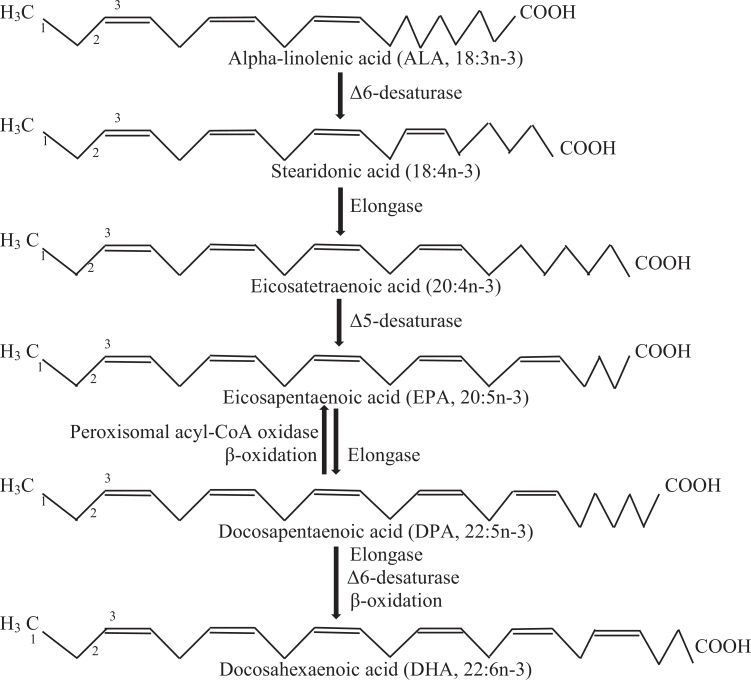
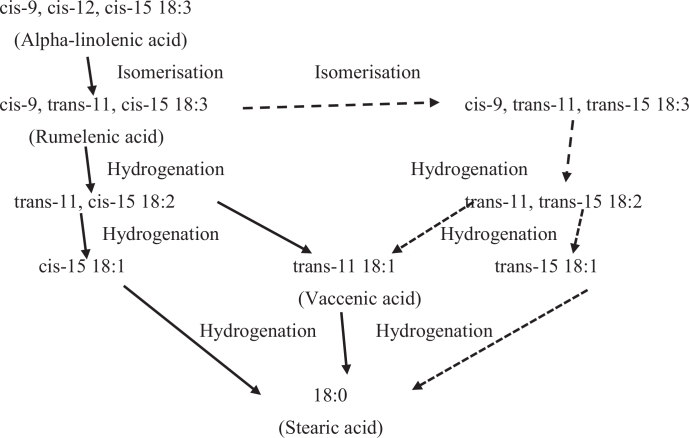
In this report, an overview of the health benefits of omega-3 long-chain (≥C) polyunsaturated fatty acids (n-3 LC-PUFA) and recent progress in using alpha linolenic acid (ALA) rich sources derived from oilseeds to enhance productive performance, n-3 PUFA profiles and sensory properties of lamb for human consumption is reviewed. Omega-3 LC-PUFA can prevent mental health issues and chronic human disorders including cancer, cardiovascular and inflammatory diseases. The median amount of n-3 LC-PUFA consumption is generally lacking in Western diets. More attention is now being paid to the use of innovative nutritional strategies to improve PUFA content in ruminants, which could subsequently increase the content of health-benefitting n-3 LC-PUFA for human consumption. The richest sources of dietary n-3 LC-PUFA are derived from marine products, while forage and oilseeds such as flaxseed, canola, and their oils are abundant in ALA. Numerous studies have shown that dietary ALA increases n-3 LC-PUFA levels of edible tissues. However, other studies concluded that ALA rich supplementation led to no differences in tissue FA profiles because of extensive biohydrogenation of dietary ALA, limited conversion from ALA to n-3 LC-PUFA and low incorporation of n-3 LC-PUFA into edible tissues. Generally, the inclusion of ALA rich sources in lamb diets potentially increases ALA content in lamb. It is proposed that supplementing ruminants with ALA-rich sources at or below 6% can promote n-3 PUFA profiles in lamb and is unlikely to have negative effects on feed intake, growth, carcass and sensory properties.
本报告综述了ω-3长链(≥C)多不饱和脂肪酸(n-3 LC-PUFA)对健康的益处,以及利用富含α-亚麻酸(ALA)的油籽来源提高用于人类消费的羊肉生产性能、n-3多不饱和脂肪酸含量和感官特性的最新进展。ω-3长链多不饱和脂肪酸可预防心理健康问题和慢性人类疾病,包括癌症、心血管疾病和炎症性疾病。西方饮食中通常缺乏n-3长链多不饱和脂肪酸的中位摄入量。现在人们越来越关注使用创新的营养策略来提高反刍动物体内的多不饱和脂肪酸含量,这随后可能会增加供人类消费的有益健康的n-3长链多不饱和脂肪酸的含量。膳食中n-3长链多不饱和脂肪酸的最丰富来源是海产品,而牧草和油籽,如亚麻籽、油菜籽及其油中富含α-亚麻酸。大量研究表明,膳食中的α-亚麻酸会增加可食用组织中n-3长链多不饱和脂肪酸的水平。然而,其他研究得出结论,由于膳食中α-亚麻酸的广泛生物氢化、从α-亚麻酸到n-3长链多不饱和脂肪酸的转化有限以及n-3长链多不饱和脂肪酸在可食用组织中的掺入率低,富含α-亚麻酸的补充剂不会导致组织脂肪酸谱的差异。一般来说,在羔羊日粮中添加富含α-亚麻酸的来源可能会增加羊肉中的α-亚麻酸含量。有人提出,以6%或更低的比例用富含α-亚麻酸的来源补充反刍动物,可以促进羊肉中的n-3多不饱和脂肪酸谱,并且不太可能对采食量、生长、胴体和感官特性产生负面影响。