Lin Xu, Wu Jing-Fang, Wang Dong-Mei, Zhang Jing, Zhang Wen-Jing, Xue Gang
Department of Histology and Embryology, Hebei North University, Zhangjiakou, 075000, China.
Department of Otorhinolaryngology Head and Neck Surgery, Hebei North University, Zhangjiakou, 075000, China.
J Cancer. 2020 Jun 29;11(17):5162-5176. doi: 10.7150/jca.45604. eCollection 2020.
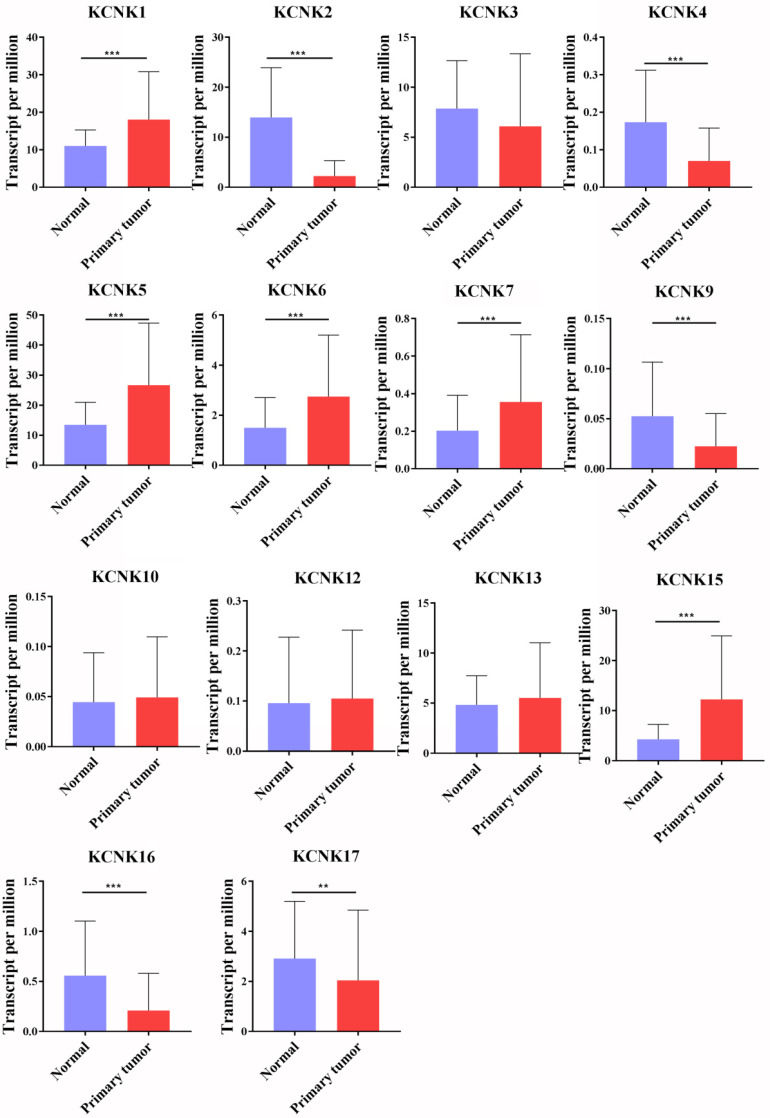
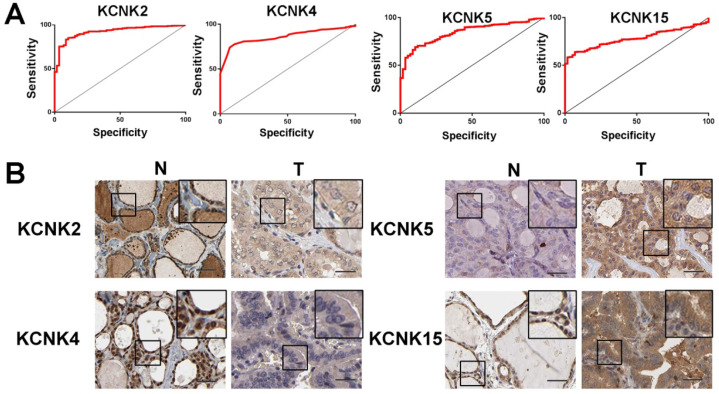
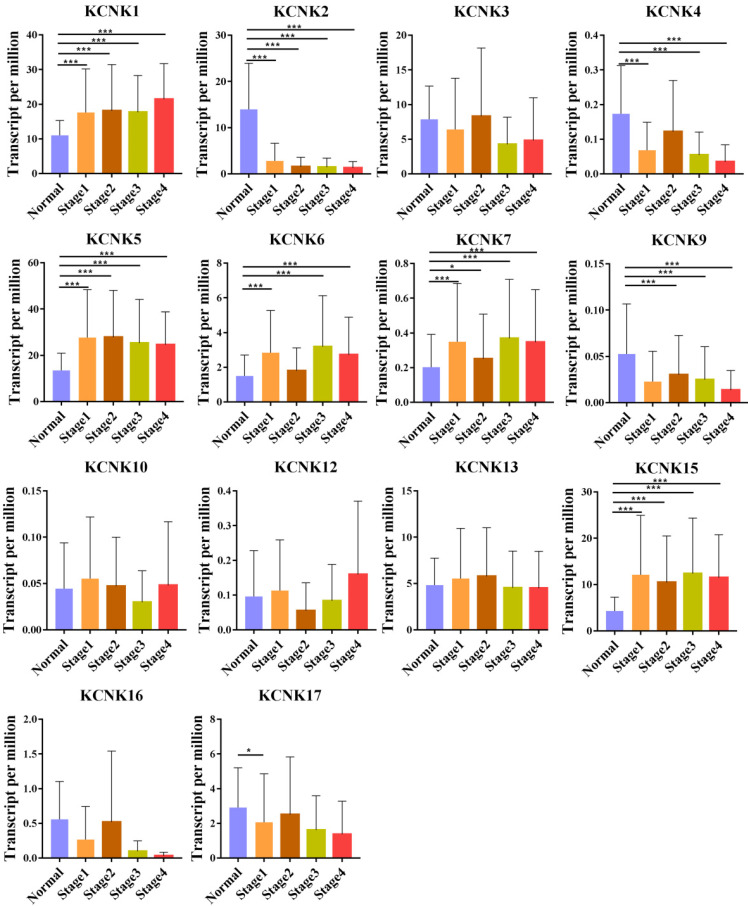
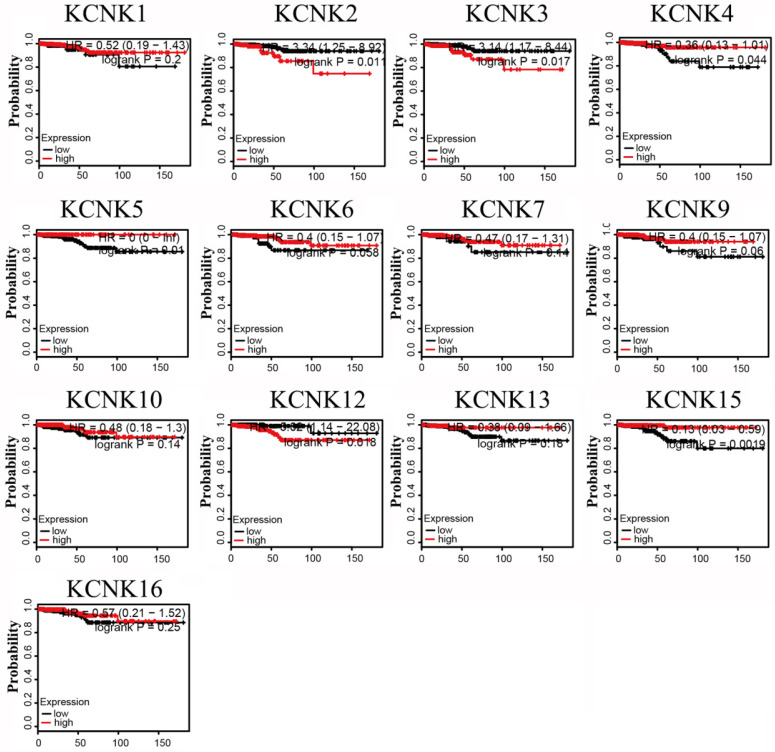
KCNKs, potassium two pore domain channel family K members, can maintain the resting potential, regulate the amplitude and duration of the plateau of the action potential, and change the membrane potential and membrane excitability. Evidence from many studies indicates that KCNKs is abnormally expressed in many solid tumors and plays a regulatory role in the development and malignant progression of cancer. However, the expression pattern and prognostic value of KCNK factors in papillary thyroid carcinoma have not been reported. In this study, we used the data from databases such as ONCOMINE, GEPIA, Kaplan-Meier Plotter, and cBioPortal to perform bioinformatics analysis of KCNK factors in patients with thyroid cancer. We found that the mRNA expression of KCNK1, KCNK5, KCNK6, KCNK7, and KCNK15 were significantly higher in thyroid cancer tissues than that in normal tissues, while KCNK2, KCNK4, KCNK9, KCNK16 and KCNK17 mRNA levels were decreased compared to normal tissues. And the expression levels of KCNK1/2/4/5/6/7/15 were correlated with the tumor stage. Survival analysis using the Kaplan-Meier Plotter database revealed that KCNK2/3/4/5/12/15 were associated with overall survival (OS) in patients with thyroid cancer. Finally, the results of ROC curves, immunohistochemical staining, immune cell infiltration and kinase / miRNA / transcription factor regulation showed that KCNK2, KCNK4, KCNK5 and KCNK15 levels could be used as biomarkers for PTC diagnosis. This study implied that KCNK2, KCNK4, KCNK5 and KCNK15 are potential targets of precision therapy for patients with thyroid cancer and these genes are new biomarkers for the therapeutic target for thyroid cancer.
钾离子双孔域通道家族K成员(KCNKs)可维持静息电位,调节动作电位平台期的幅度和持续时间,并改变膜电位和膜兴奋性。许多研究的证据表明,KCNKs在许多实体瘤中异常表达,并在癌症的发生发展和恶性进展中发挥调节作用。然而,KCNK因子在甲状腺乳头状癌中的表达模式和预后价值尚未见报道。在本研究中,我们利用ONCOMINE、GEPIA、Kaplan-Meier Plotter和cBioPortal等数据库的数据,对甲状腺癌患者的KCNK因子进行了生物信息学分析。我们发现,甲状腺癌组织中KCNK1、KCNK5、KCNK6、KCNK7和KCNK15的mRNA表达明显高于正常组织,而KCNK2、KCNK4、KCNK9、KCNK16和KCNK17的mRNA水平与正常组织相比有所降低。并且KCNK1/2/4/5/6/7/15的表达水平与肿瘤分期相关。使用Kaplan-Meier Plotter数据库进行的生存分析显示,KCNK2/3/4/5/12/15与甲状腺癌患者的总生存期(OS)相关。最后,ROC曲线、免疫组化染色、免疫细胞浸润以及激酶/miRNA/转录因子调控的结果表明,KCNK2、KCNK4、KCNK5和KCNK15水平可作为甲状腺乳头状癌诊断的生物标志物。本研究表明,KCNK2、KCNK4、KCNK5和KCNK15是甲状腺癌患者精准治疗的潜在靶点,这些基因是甲状腺癌治疗靶点的新生物标志物。