Kumar Ashish, Arora Anil, Sharma Praveen, Anikhindi Shrihari Anil, Bansal Naresh, Singla Vikas, Khare Shivam, Srivastava Abhishyant
Institute of Liver, Gastroenterology, and Pancreatico-Biliary Sciences, Sir Ganga Ram Hospital, Rajinder Nagar, New Delhi, 110 060, India.
Dr. Baba Saheb Ambedkar Medical College and Hospital, Rohini, New Delhi, 110 085, India.
Indian J Gastroenterol. 2020 Jun;39(3):268-284. doi: 10.1007/s12664-020-01058-3. Epub 2020 Aug 4.
Many case series on Corona Virus Disease (COVID-19) have reported gastrointestinal (GI) and hepatic manifestations in a proportion of cases; however, the data is conflicting. The relationship of GI and hepatic involvement with severe clinical course of COVID-19 has also not been explored.
The main objectives were to determine the frequency of GI and hepatic manifestations of COVID-19 and to explore their relationship with severe clinical course.
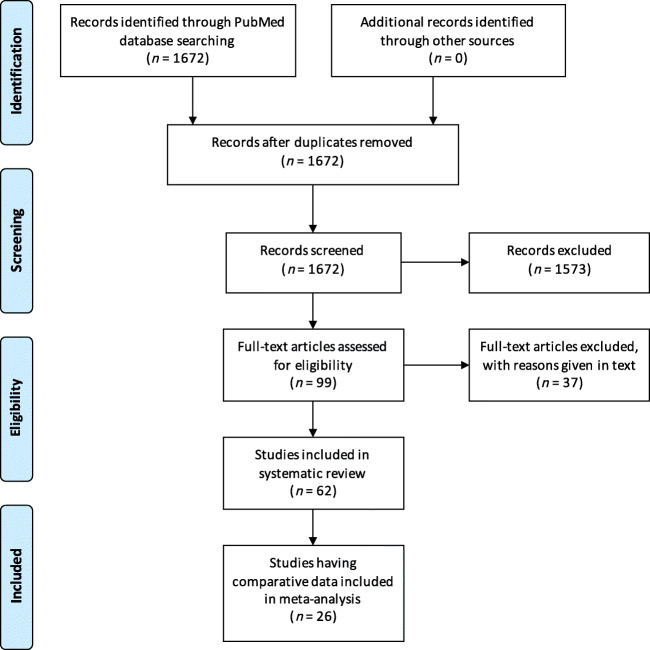
We searched PubMed for studies published between January 1, 2020, and March 25, 2020, with data on GI and hepatic manifestations in adult patients with COVID-19. These data were compared between patients with severe and good clinical course using the random-effects model and odds ratio (OR) as the effect size. If the heterogeneity among studies was high, sensitivity analysis was performed for each outcome.
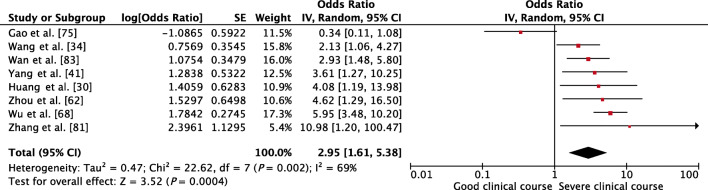
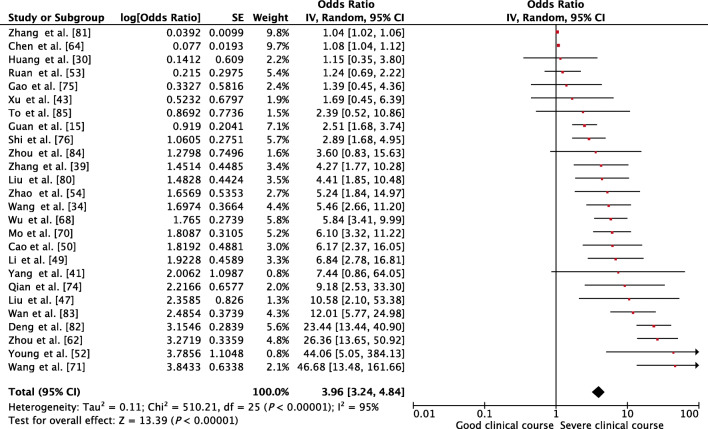
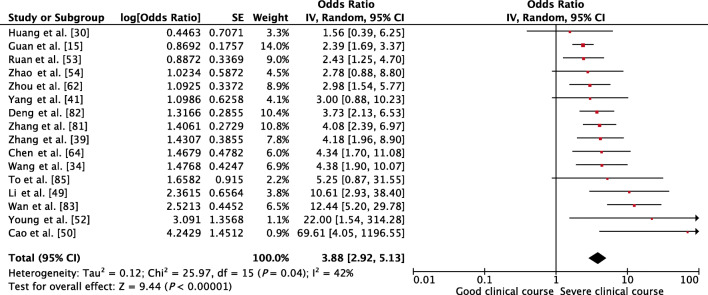
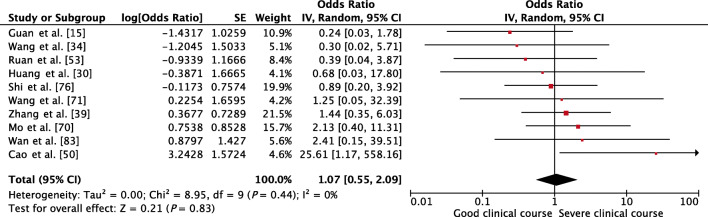
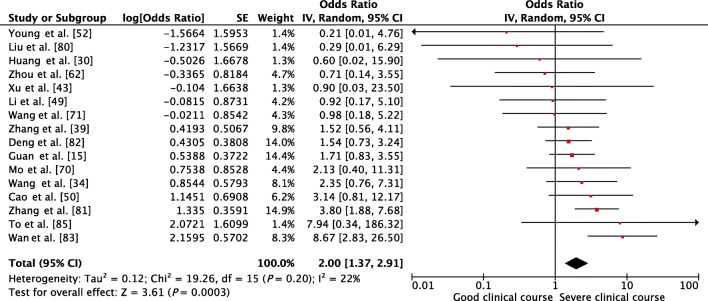
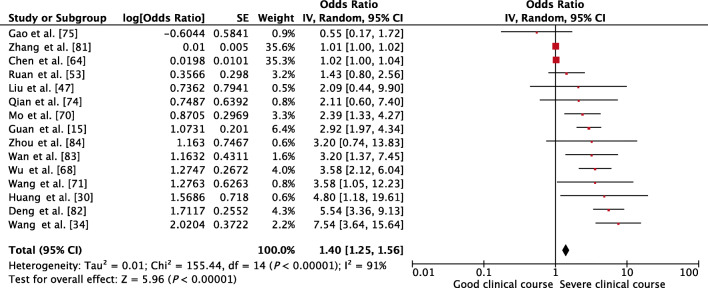
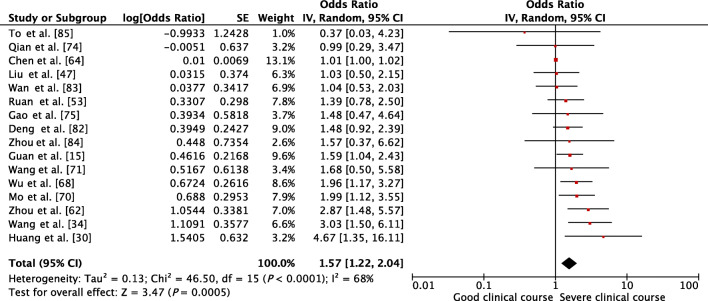
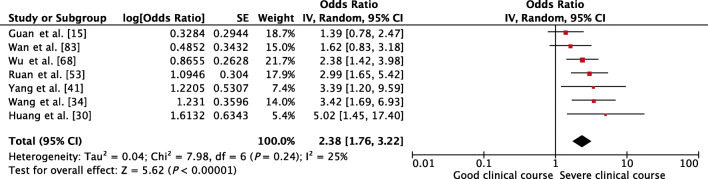
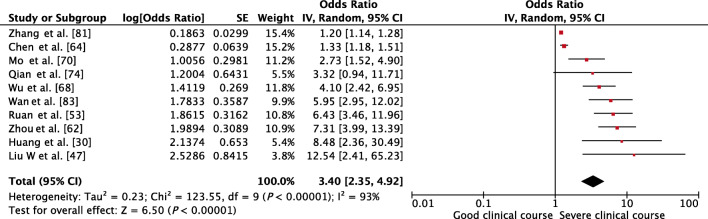
We included 62 studies (8301 patients) in the systematic review and 26 studies (4676 patients) in the meta-analysis. Diarrhea was the most common GI symptom (9%), followed by nausea/vomiting (5%) and abdominal pain (4%). Transaminases were abnormal in approximately 25%, bilirubin in 9%, prothrombin time (PT) in 7%, and low albumin in 60%. Up to 20% patients developed severe clinical course, and GI and hepatic factors associated with severe clinical course were as follows: diarrhea (OR 2), high aspartate aminotransferase (OR 1.4), high alanine aminotransferase (OR 1.6), high bilirubin (OR 2.4), low albumin (OR 3.4), and high PT (OR 3).
GI and hepatic involvement should be sought in patients with COVID-19 since it portends severe clinical course. The pathogenesis of GI and hepatic involvement needs to be explored in future studies.
许多关于冠状病毒病(COVID-19)的病例系列报道了部分病例出现胃肠道(GI)和肝脏表现;然而,数据存在矛盾。胃肠道和肝脏受累与COVID-19严重临床病程之间的关系也尚未得到探讨。
主要目的是确定COVID-19胃肠道和肝脏表现的发生率,并探讨它们与严重临床病程的关系。
我们在PubMed上搜索了2020年1月1日至2020年3月25日期间发表的研究,这些研究包含成年COVID-19患者胃肠道和肝脏表现的数据。使用随机效应模型和比值比(OR)作为效应量,对临床病程严重和良好的患者之间的这些数据进行比较。如果研究之间的异质性较高,则对每个结果进行敏感性分析。
我们在系统评价中纳入了62项研究(8301例患者),在荟萃分析中纳入了26项研究(4676例患者)。腹泻是最常见的胃肠道症状(9%),其次是恶心/呕吐(5%)和腹痛(4%)。约25%的患者转氨酶异常,9%胆红素异常,7%凝血酶原时间(PT)异常,60%白蛋白降低。高达20%的患者出现严重临床病程,与严重临床病程相关的胃肠道和肝脏因素如下:腹泻(OR 2)、高天冬氨酸转氨酶(OR 1.4)、高丙氨酸转氨酶(OR 1.6)、高胆红素(OR 2.4)、低白蛋白(OR 3.4)和高PT(OR 3)。
COVID-19患者应检查是否存在胃肠道和肝脏受累情况,因为这预示着严重的临床病程。未来研究需要探索胃肠道和肝脏受累的发病机制。