Azoulay Elie, De Waele Jan, Ferrer Ricard, Staudinger Thomas, Borkowska Marta, Povoa Pedro, Iliopoulou Katerina, Artigas Antonio, Schaller Stefan J, Hari Manu Shankar, Pellegrini Mariangela, Darmon Michael, Kesecioglu Jozef, Cecconi Maurizio
Médecine Intensive et Réanimation, PHP, Hôpital Saint-Louis, Paris University, Paris, France.
Department of Critical Care Medicine, Ghent University Hospital, 9000, Gent, The Netherlands.
Ann Intensive Care. 2020 Aug 8;10(1):110. doi: 10.1186/s13613-020-00722-3.
The COVID-19 pandemic has resulted in an unprecedented healthcare crisis with a high prevalence of psychological distress in healthcare providers. We sought to document the prevalence of burnout syndrome amongst intensivists facing the COVID-19 outbreak.
Cross-sectional survey among intensivists part of the European Society of Intensive Care Medicine. Symptoms of severe burnout, anxiety and depression were collected. Factors independently associated with severe burnout were assessed using Cox model.
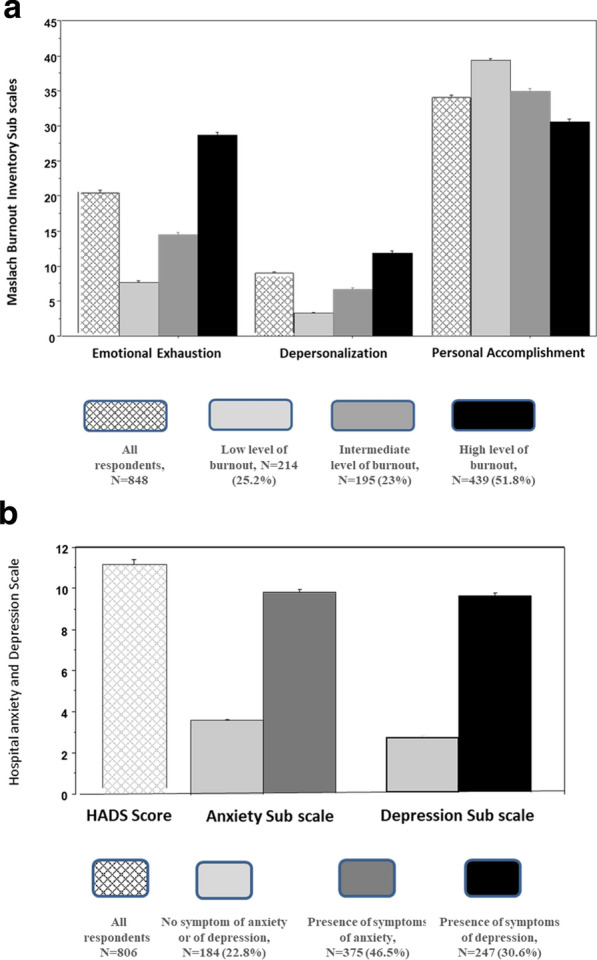
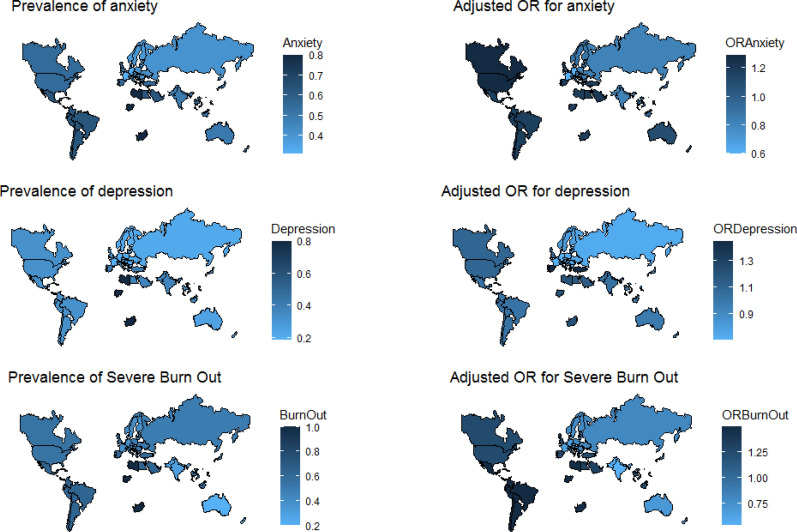
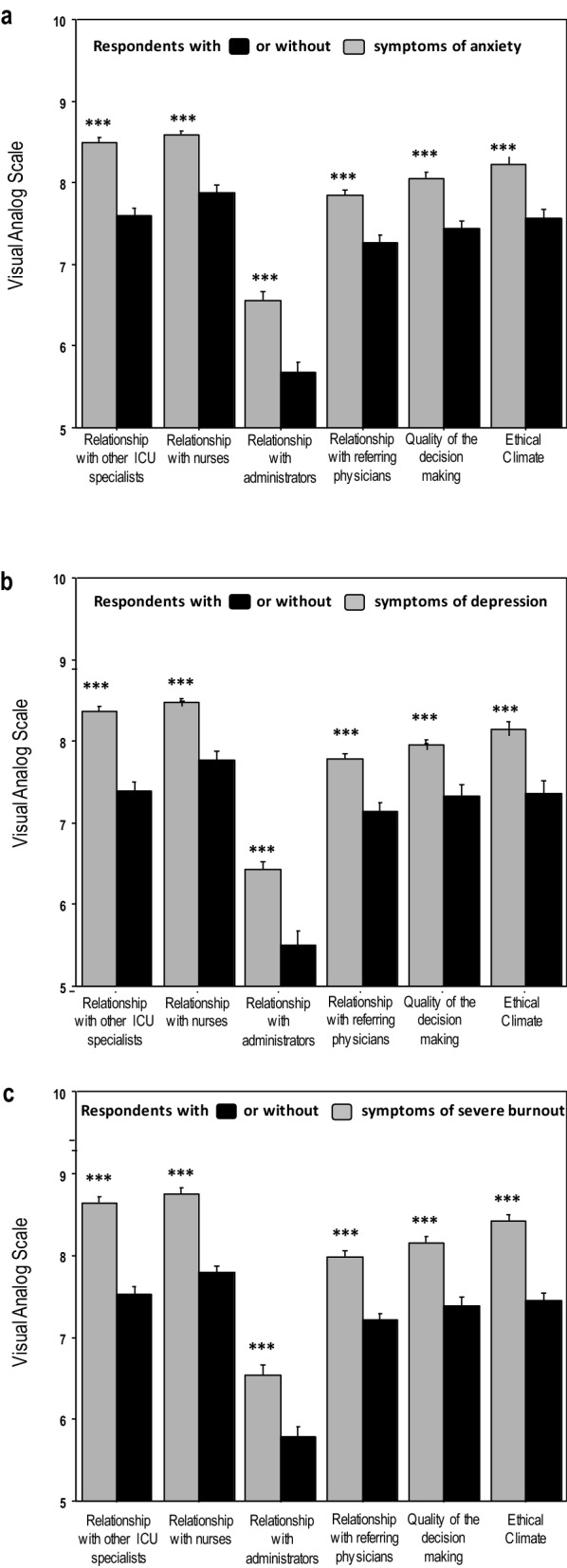
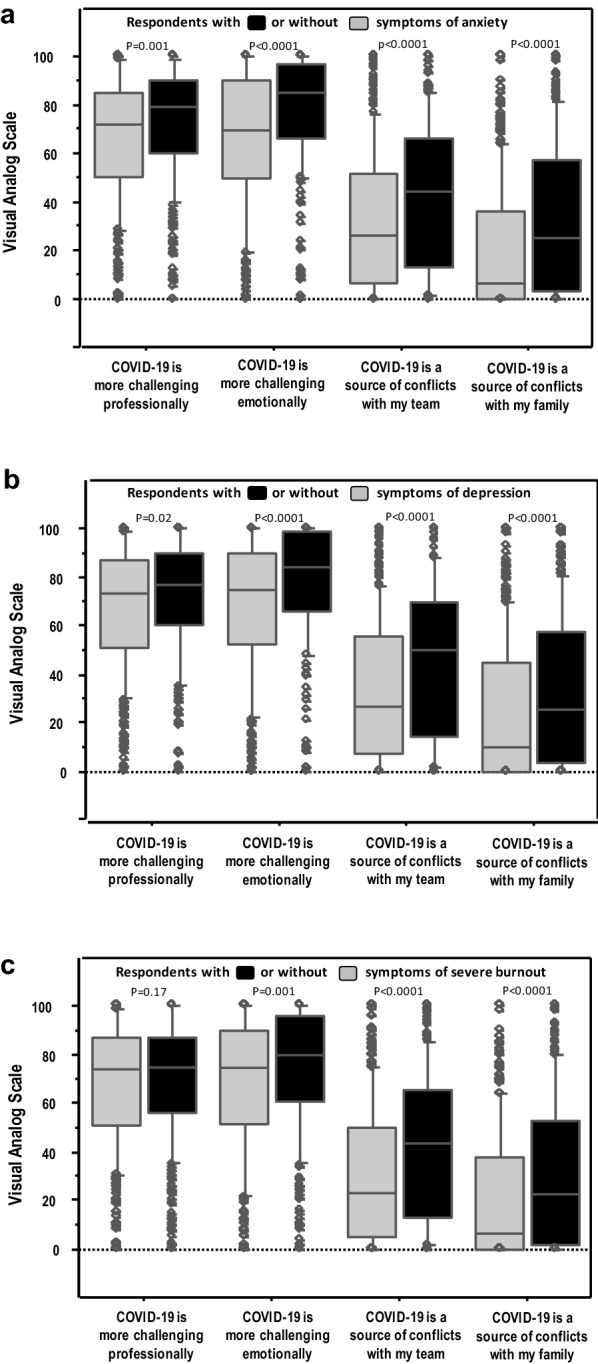
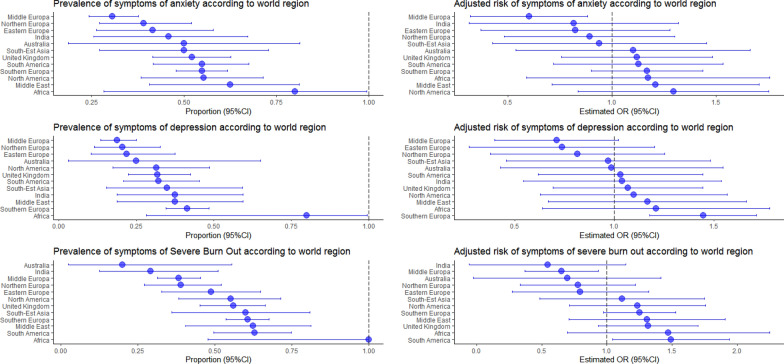
Response rate was 20% (1001 completed questionnaires were returned, 45 years [39-53], 34% women, from 85 countries, 12 regions, 50% university-affiliated hospitals). The prevalence of symptoms of anxiety and depression or severe burnout was 46.5%, 30.2%, and 51%, respectively, and varied significantly across regions. Rating of the relationship between intensivists and other ICU stakeholders differed significantly according to the presence of anxiety, depression, or burnout. Similar figures were reported for their rating of the ethical climate or the quality of the decision-making. Factors independently associated with anxiety were female gender (HR 1.85 [1.33-2.55]), working in a university-affiliated hospital (HR 0.58 [0.42-0.80]), living in a city of > 1 million inhabitants (HR 1.40 [1.01-1.94]), and clinician's rating of the ethical climate (HR 0.83 [0.77-0.90]). Independent determinants of depression included female gender (HR 1.63 [1.15-2.31]) and clinician's rating of the ethical climate (HR 0.84 [0.78-0.92]). Factors independently associated with symptoms of severe burnout included age (HR 0.98/year [0.97-0.99]) and clinician's rating of the ethical climate (HR 0.76 [0.69-0.82]).
The COVID-19 pandemic has had an overwhelming psychological impact on intensivists. Follow-up, and management are warranted to assess long-term psychological outcomes and alleviate the psychological burden of the pandemic on frontline personnel.
新冠疫情引发了一场前所未有的医疗危机,医护人员中出现心理困扰的比例很高。我们试图记录在应对新冠疫情爆发的重症监护医生中职业倦怠综合征的患病率。
对欧洲重症监护医学学会的重症监护医生进行横断面调查。收集严重职业倦怠、焦虑和抑郁的症状。使用Cox模型评估与严重职业倦怠独立相关的因素。
回复率为20%(共收回1001份完整问卷,年龄45岁[39 - 53岁],女性占34%,来自85个国家、12个地区,50%来自大学附属医院)。焦虑、抑郁或严重职业倦怠症状的患病率分别为46.5%、30.2%和51%,且各地区差异显著。根据是否存在焦虑、抑郁或职业倦怠,重症监护医生与其他重症监护病房利益相关者之间关系的评分差异显著。他们对道德氛围或决策质量的评分也有类似情况。与焦虑独立相关的因素包括女性(风险比1.85[1.33 - 2.55])、在大学附属医院工作(风险比0.58[0.42 - 0.80])、居住在人口超过100万的城市(风险比1.40[1.01 - 1.94])以及临床医生对道德氛围的评分(风险比0.83[0.77 - 0.90])。抑郁的独立决定因素包括女性(风险比1.63[1.15 - 2.31])和临床医生对道德氛围的评分(风险比0.84[0.78 - 0.92])。与严重职业倦怠症状独立相关的因素包括年龄(每年风险比0.98[0.97 - 0.99])和临床医生对道德氛围的评分(风险比0.76[0.69 - 0.82])。
新冠疫情对重症监护医生产生了巨大的心理影响。有必要进行随访和管理,以评估长期心理结果,并减轻疫情对一线人员的心理负担。