Graduate School of Medicine, University of Tokyo, Tokyo, Japan.
Center for Public Health Sciences, National Cancer Center, Tokyo, Japan.
Bull World Health Organ. 2020 Aug 1;98(8):518-529. doi: 10.2471/BLT.20.255679. Epub 2020 May 28.
To estimate the effect of airline travel restrictions on the risk of severe acute respiratory syndrome coronavirus 2 (SARS-CoV-2) importation.
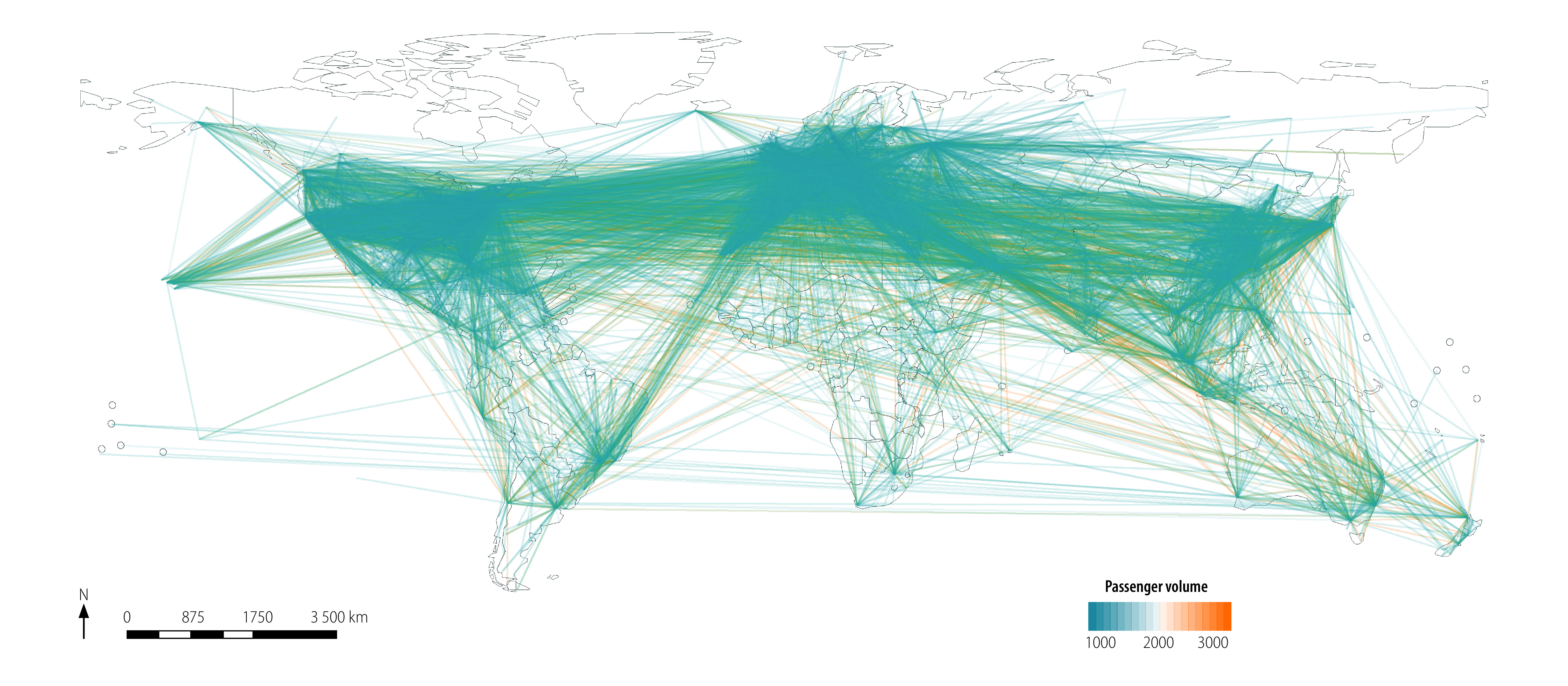
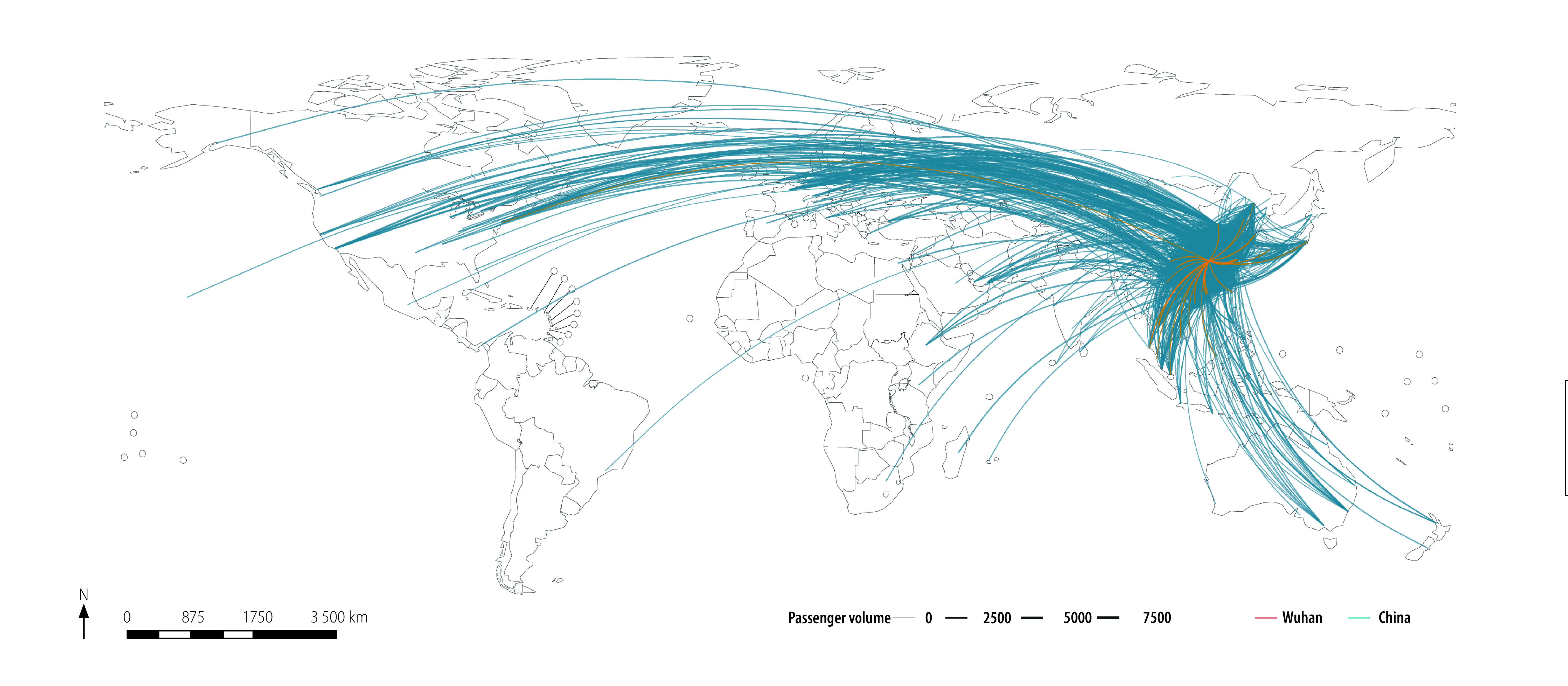
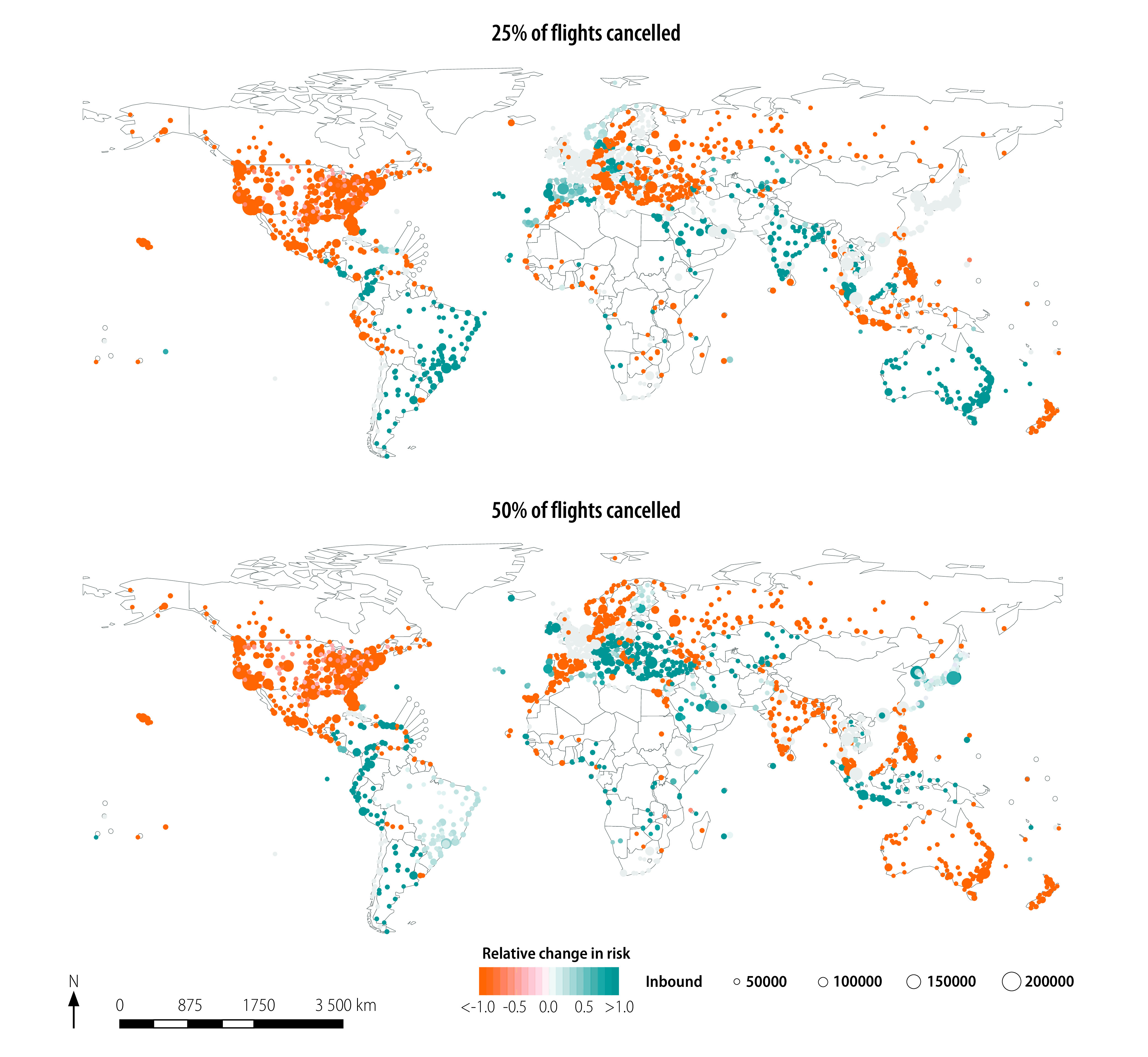
We extracted passenger volume data for the entire global airline network, as well as the dates of the implementation of travel restrictions and the observation of the first case of coronavirus disease (COVID-19) in each country or territory, from publicly available sources. We calculated effective distance between every airport and the city of Wuhan, China. We modelled the risk of SARS-CoV-2 importation by estimating survival probability, expressing median time of importation as a function of effective distance. We calculated the relative change in importation risk under three different hypothetical scenarios that all resulted in different passenger volumes.
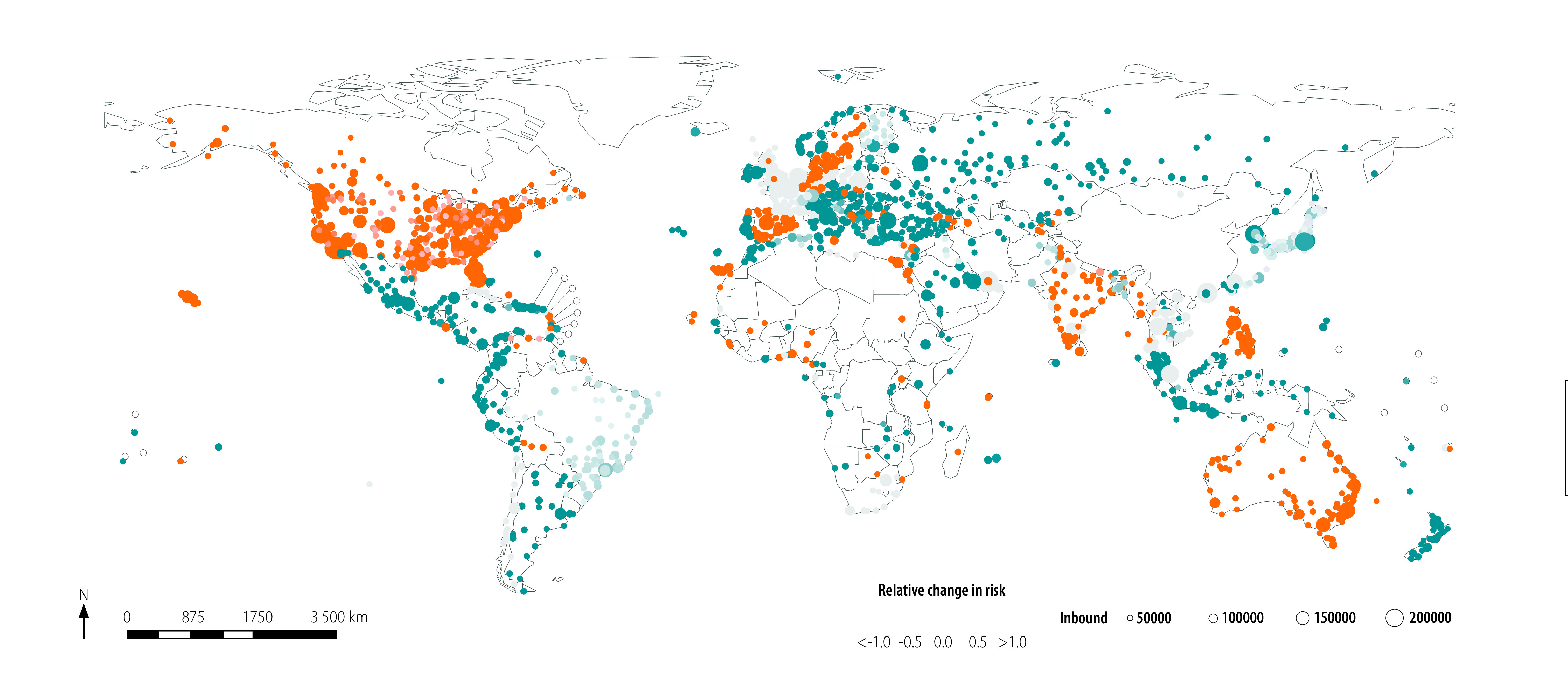
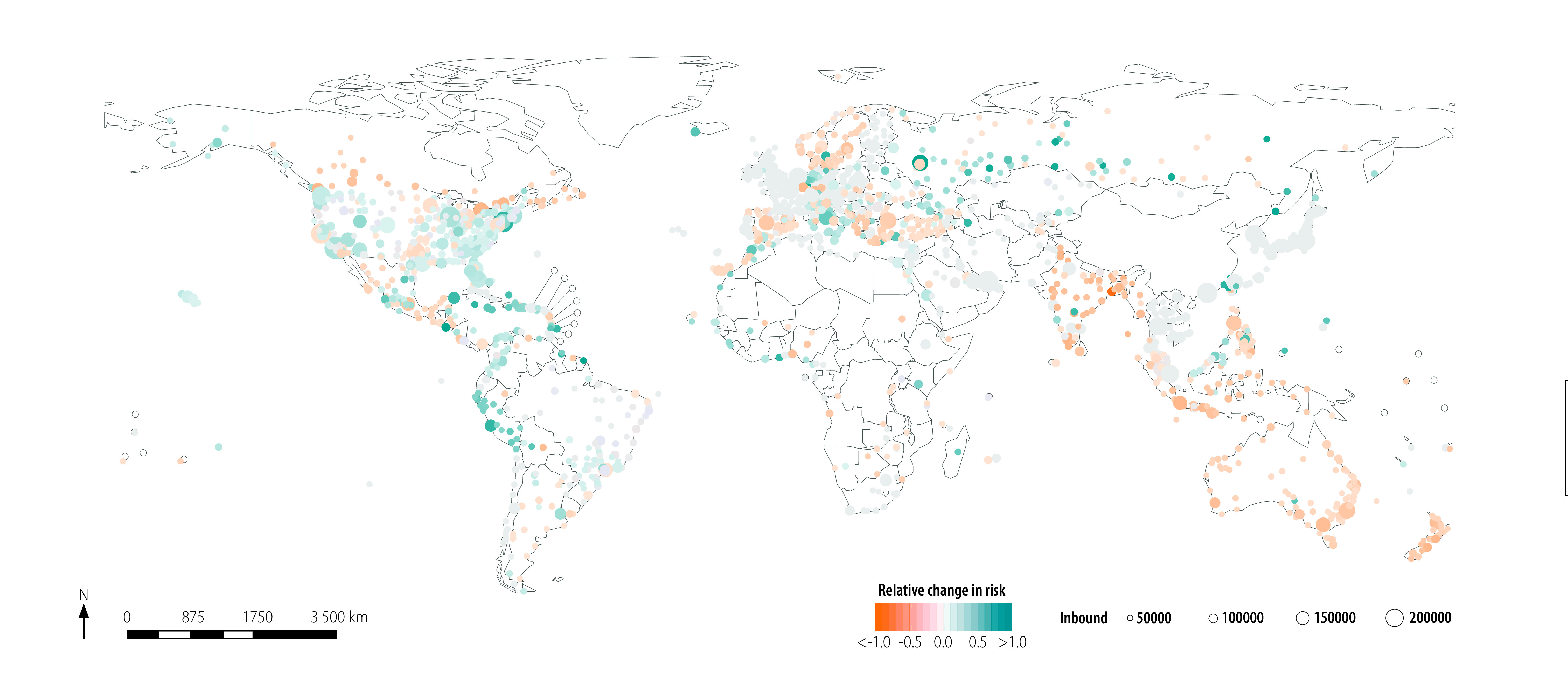
We identified 28 countries with imported cases of COVID-19 as at 26 February 2020. The arrival time of the virus at these countries ranged from 39 to 80 days since identification of the first case in Wuhan. Our analysis of relative change in risk indicated that strategies of reducing global passenger volume and imposing travel restrictions at a further 10 hub airports would be equally effective in reducing the risk of importation of SARS-CoV-2; however, this reduction is very limited with a close-to-zero median relative change in risk.
The hypothetical variations in observed travel restrictions were not sufficient to prevent the global spread of SARS-CoV-2; further research should also consider travel by land and sea. Our study highlights the importance of strengthening local capacities for disease monitoring and control.
评估航空旅行限制对严重急性呼吸综合征冠状病毒 2(SARS-CoV-2)输入风险的影响。
我们从公开来源中提取了整个全球航空网络的客流量数据,以及每个国家或地区实施旅行限制和观察到冠状病毒病(COVID-19)首例病例的日期。我们计算了每个机场与中国武汉市之间的有效距离。我们通过估计生存概率来模拟 SARS-CoV-2 输入的风险,将输入的中位数时间表示为有效距离的函数。我们计算了三种不同假设情景下输入风险的相对变化,这些情景都导致了不同的客流量。
截至 2020 年 2 月 26 日,我们确定了 28 个有 COVID-19 输入病例的国家。这些国家病毒到达的时间范围为武汉首例病例确诊后 39 至 80 天。我们对风险相对变化的分析表明,减少全球客流量和在另外 10 个枢纽机场实施旅行限制的策略同样有效,可以降低 SARS-CoV-2 的输入风险;然而,风险的中位数相对变化非常有限,接近于零,这种减少非常有限。
所观察到的旅行限制的假设变化不足以阻止 SARS-CoV-2 的全球传播;进一步的研究还应考虑陆地和海上旅行。我们的研究强调了加强地方疾病监测和控制能力的重要性。