Nettleford Shaneice K, Zhao Luming, Qian Fenghua, Herold Morgan, Arner Brooke, Desai Dhimant, Amin Shantu, Xiong Na, Singh Vishal, Carlson Bradley A, Prabhu K Sandeep
Department of Veterinary and Biomedical Sciences, Center for Molecular Immunology and Infectious Disease, The Pennsylvania State University, State College, PA, United States.
Department of Pharmacology, Organic Synthesis Core Laboratory, Penn State Cancer Institute, Penn State College of Medicine, Hershey, PA, United States.
Front Nutr. 2020 Jul 8;7:96. doi: 10.3389/fnut.2020.00096. eCollection 2020.
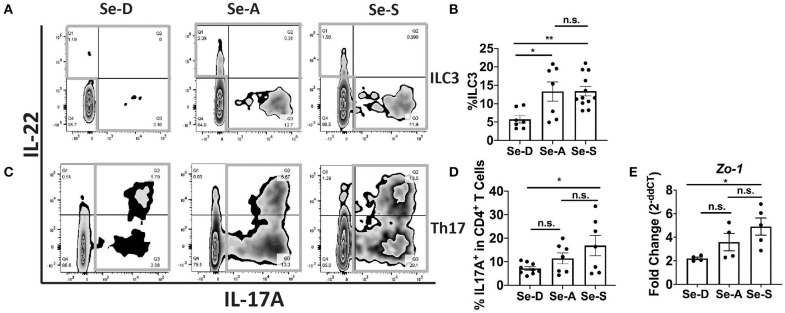
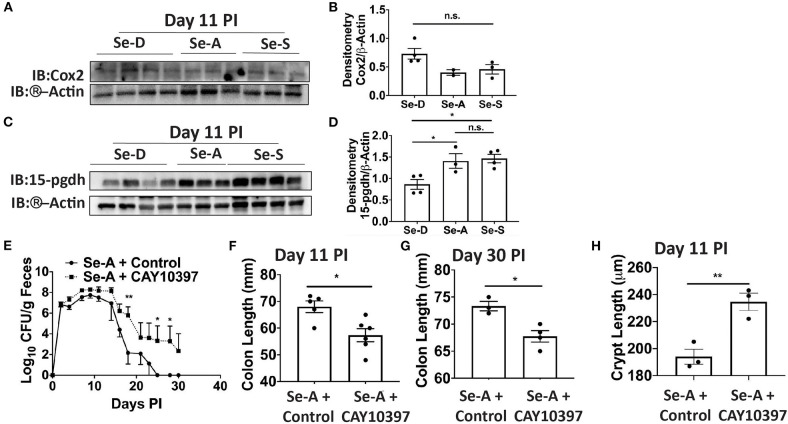
Enteropathogenic (EPEC) leads to adverse colonic inflammation associated with poor resolution of inflammation and loss of epithelial integrity. Micronutrient trace element selenium (Se) is incorporated into selenoproteins as the 21st amino acid, selenocysteine (Sec). Previous studies have shown that such an incorporation of Sec into the selenoproteome is key for the anti-inflammatory functions of Se in macrophages and other immune cells. An intriguing mechanism underlying the anti-inflammatory and pro-resolving effects of Se stems from the ability of selenoproteins to skew arachidonic acid metabolism from pro-inflammatory mediators, prostaglandin E (PGE) toward anti-inflammatory mediators derived from PGD, such as 15-deoxy-Δ- prostaglandin J (15d-PGJ), via eicosanoid class switching of bioactive lipids. The impact of Se and such an eicosanoid-class switching mechanism was tested in an enteric infection model of gut inflammation by , a murine equivalent of EPEC. C57BL/6 mice deficient in Se (Se-D) experienced higher mortality when compared to those on Se adequate (0.08 ppm Se) and Se supplemented (0.4 ppm Se) diets following infection. Decreased survival was associated with decreased group 3 innate lymphoid cells (ILC3s) and T helper 17 (Th17) cells in colonic lamina propria of Se-D mice along with deceased expression of epithelial barrier protein Zo-1. Inhibition of metabolic inactivation of PGE by 15-prostaglandin dehydrogenase blocked the Se-dependent increase in ILC3 and Th17 cells in addition to reducing epithelial barrier integrity, as seen by increased systemic levels of FITC-dextran following oral administration; while 15d-PGJ administration in Se-D mice alleviated the effects by increasing ILC3 and Th17 cells. Mice lacking selenoproteins in monocyte/macrophages via the conditional deletion of the tRNA showed increased mortality post infection. Our studies indicate a crucial role for dietary Se in the protection against inflammation following enteric infection via immune mechanisms involving epithelial barrier integrity.
肠道致病性大肠杆菌(EPEC)会引发不良的结肠炎症,伴有炎症消退不佳和上皮完整性丧失。微量营养素微量元素硒(Se)作为第21种氨基酸硒代半胱氨酸(Sec)被纳入硒蛋白。先前的研究表明,Sec纳入硒蛋白组是Se在巨噬细胞和其他免疫细胞中发挥抗炎功能的关键。Se抗炎和促炎症消退作用的一个有趣机制源于硒蛋白能够通过生物活性脂质的类花生酸类转换,使花生四烯酸代谢从促炎介质前列腺素E(PGE)转向源自PGD的抗炎介质,如15-脱氧-Δ-前列腺素J(15d-PGJ)。通过一种相当于EPEC的鼠模型,在肠道炎症的肠道感染模型中测试了Se和这种类花生酸类转换机制的影响。与感染后食用硒充足(0.08 ppm Se)和补充硒(0.4 ppm Se)饮食的小鼠相比,缺乏硒(Se-D)的C57BL/6小鼠死亡率更高。生存率降低与Se-D小鼠结肠固有层中第3组固有淋巴细胞(ILC3s)和辅助性T细胞17(Th17)细胞减少以及上皮屏障蛋白Zo-1表达降低有关。15-前列腺素脱氢酶对PGE代谢失活的抑制作用除了降低上皮屏障完整性外,还阻断了Se依赖的ILC3和Th17细胞增加,口服给药后FITC-葡聚糖的全身水平升高就表明了这一点;而在Se-D小鼠中给予15d-PGJ可通过增加ILC3和Th17细胞来减轻这些影响。通过条件性缺失tRNA在单核细胞/巨噬细胞中缺乏硒蛋白的小鼠在感染后死亡率增加。我们的研究表明,膳食硒通过涉及上皮屏障完整性的免疫机制在预防肠道感染后的炎症中起关键作用。