Department of Radiological Sciences, UT Health San Antonio, San Antonio, TX, 78229, USA.
J Appl Clin Med Phys. 2020 Sep;21(9):187-192. doi: 10.1002/acm2.12995. Epub 2020 Aug 13.
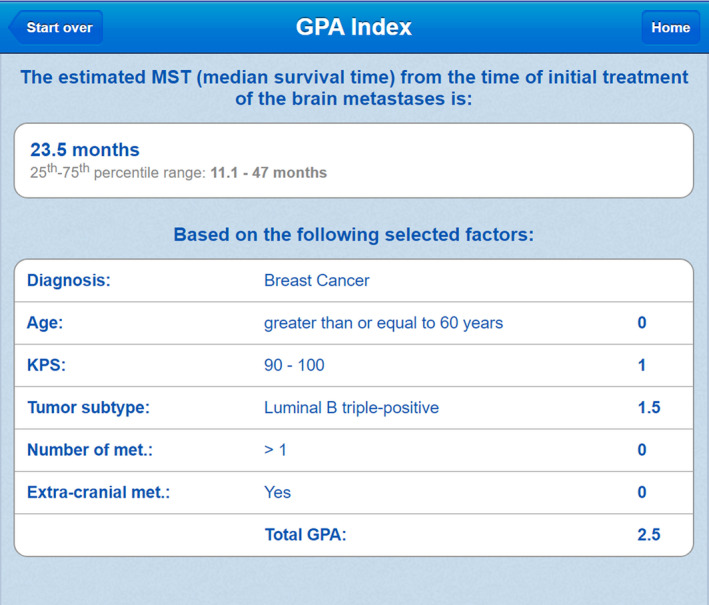
Prognostic indices such as the Brain Metastasis Graded Prognostic Assessment have been used in clinical settings to aid physicians and patients in determining an appropriate treatment regimen. These indices are derivative of traditional survival analysis techniques such as Cox proportional hazards (CPH) and recursive partitioning analysis (RPA). Previous studies have shown that by evaluating CPH risk with a nonlinear deep neural network, DeepSurv, patient survival can be modeled more accurately. In this work, we apply DeepSurv to a test case: breast cancer patients with brain metastases who have received stereotactic radiosurgery.
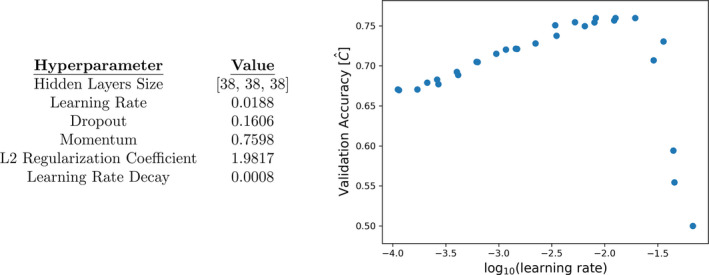
Survival times, censorship status, and 27 covariates including age, staging information, and hormone receptor status were provided for 1673 patients by the NCDB. Monte Carlo cross-validation with 50 samples of 1400 patients was used to train and validate the DeepSurv, CPH, and RPA models independently. DeepSurv was implemented with L2 regularization, batch normalization, dropout, Nesterov momentum, and learning rate decay. RPA was implemented as a random survival forest (RSF). Concordance indices of test sets of 140 patients were used for each sample to assess the generalizable predictive capacity of each model.
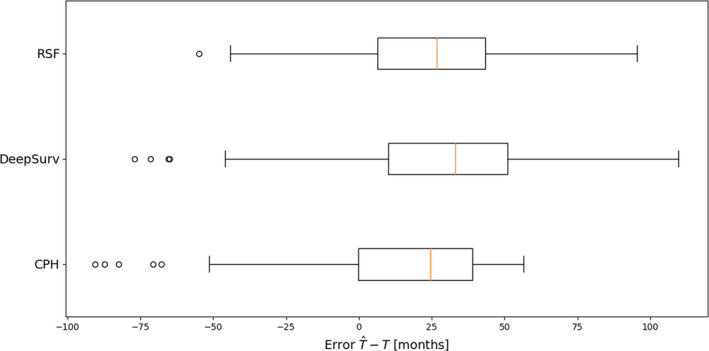
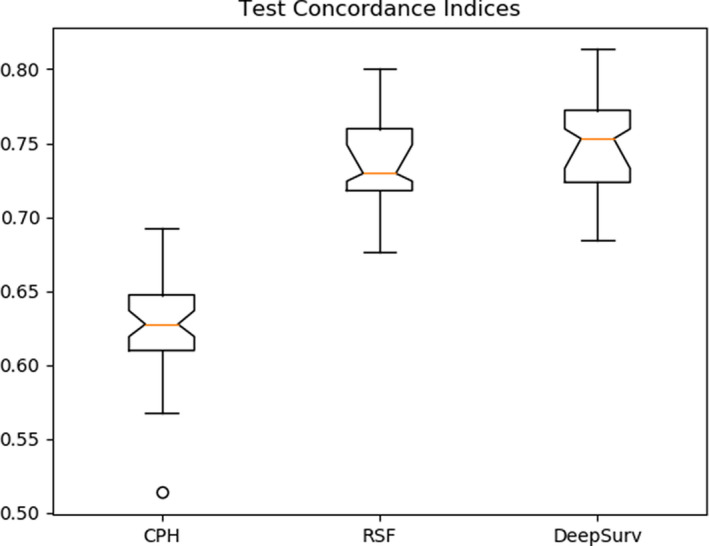
Following hyperparameter tuning, DeepSurv was trained at 32 min per sample on a 1.33 GHz quad-core CPU. Test set concordance indices of 0.7488 ± 0.0049, 0.6251 ± 0.0047, and 0.7368 ± 0.0047, were found for DeepSurv, CPH, and RSF, respectively. A Tukey HSD test demonstrates a statistically significant difference between the mean concordance indices of the three models.
Our results suggest that deep learning-based survival prediction can outperform traditional models, specifically in a case where an accurate prognosis is highly clinically relevant. We recommend that where appropriate data are available, deep learning-based prognostic indicators should be used to supplement classical statistics.
脑转移分级预后评估等预后指标已在临床实践中用于帮助医生和患者确定适当的治疗方案。这些指标是基于传统生存分析技术(如 Cox 比例风险(CPH)和递归分区分析(RPA))衍生而来的。先前的研究表明,通过用非线性深度神经网络评估 CPH 风险,DeepSurv 可以更准确地对患者的生存进行建模。在这项工作中,我们将 DeepSurv 应用于一个测试案例:接受立体定向放射外科治疗的脑转移乳腺癌患者。
NCDB 为 1673 名患者提供了生存时间、删失状态以及 27 个协变量,包括年龄、分期信息和激素受体状态。使用 50 个 1400 个患者样本的蒙特卡罗交叉验证来分别独立地训练和验证 DeepSurv、CPH 和 RPA 模型。DeepSurv 实现中使用了 L2 正则化、批量归一化、随机失活、Nesterov 动量和学习率衰减。RPA 实现为随机生存森林(RSF)。对每个样本的 140 名患者的测试集的一致性指数进行评估,以评估每个模型的可推广预测能力。
在超参数调整后,DeepSurv 每个样本的训练时间为 32 分钟,使用 1.33GHz 四核 CPU。在测试集中,DeepSurv、CPH 和 RSF 的一致性指数分别为 0.7488±0.0049、0.6251±0.0047 和 0.7368±0.0047。Tukey HSD 检验表明,三个模型的平均一致性指数之间存在统计学显著差异。
我们的结果表明,基于深度学习的生存预测可以优于传统模型,特别是在预后高度与临床相关的情况下。我们建议,在适当的数据可用的情况下,应使用基于深度学习的预后指标来补充经典统计学。