• 文献检索
  • 文档翻译
  • 深度研究
  • 学术资讯
  • Suppr Zotero 插件Zotero 插件
  • 邀请有礼
  • 套餐&价格
  • 历史记录
应用&插件
Suppr Zotero 插件Zotero 插件浏览器插件Mac 客户端Windows 客户端微信小程序
定价
高级版会员购买积分包购买API积分包
服务
文献检索文档翻译深度研究API 文档MCP 服务
关于我们
关于 Suppr公司介绍联系我们用户协议隐私条款
关注我们

Suppr 超能文献

核心技术专利:CN118964589B侵权必究
粤ICP备2023148730 号-1Suppr @ 2026

文献检索

告别复杂PubMed语法,用中文像聊天一样搜索,搜遍4000万医学文献。AI智能推荐,让科研检索更轻松。

立即免费搜索

文件翻译

保留排版,准确专业,支持PDF/Word/PPT等文件格式,支持 12+语言互译。

免费翻译文档

深度研究

AI帮你快速写综述,25分钟生成高质量综述,智能提取关键信息,辅助科研写作。

立即免费体验

使用混沌-Jaya 混合极限学习机模型诊断孕妇糖尿病。

Diagnosis of diabetes in pregnant woman using a Chaotic-Jaya hybridized extreme learning machine model.

机构信息

Department of Computer Science and Engineering, International Institute of Information Technology, Bhubaneswar, Odisha, India.

出版信息

J Integr Bioinform. 2020 Aug 13;18(1):81-99. doi: 10.1515/jib-2019-0097.

DOI:10.1515/jib-2019-0097
PMID:32790643
原文链接:https://pmc.ncbi.nlm.nih.gov/articles/PMC8035966/
Abstract

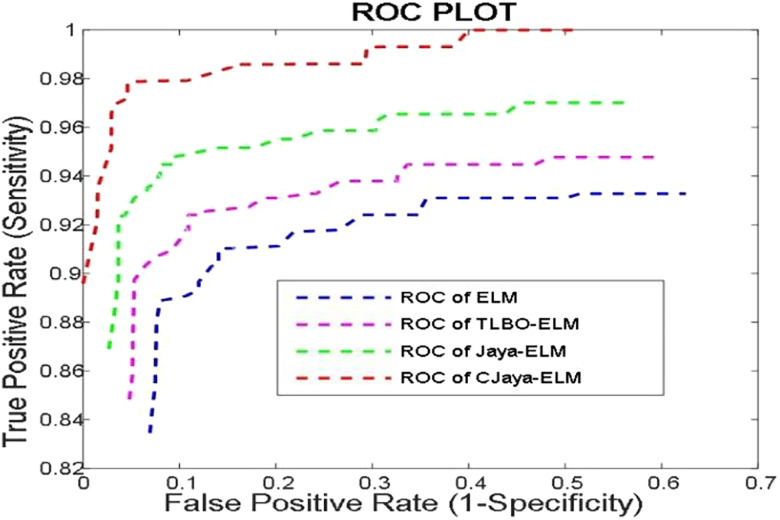
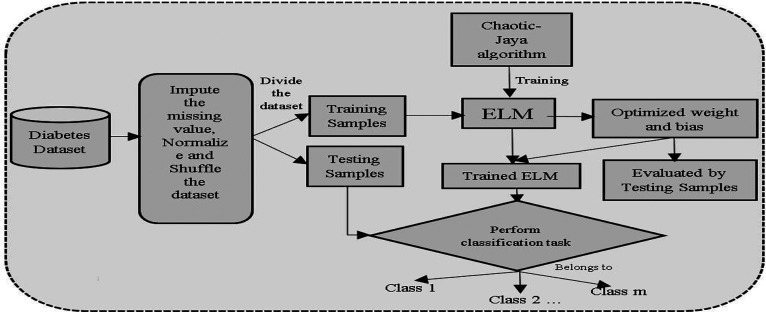
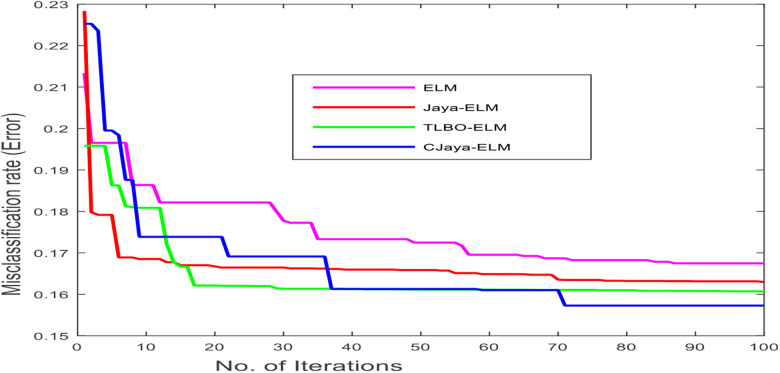
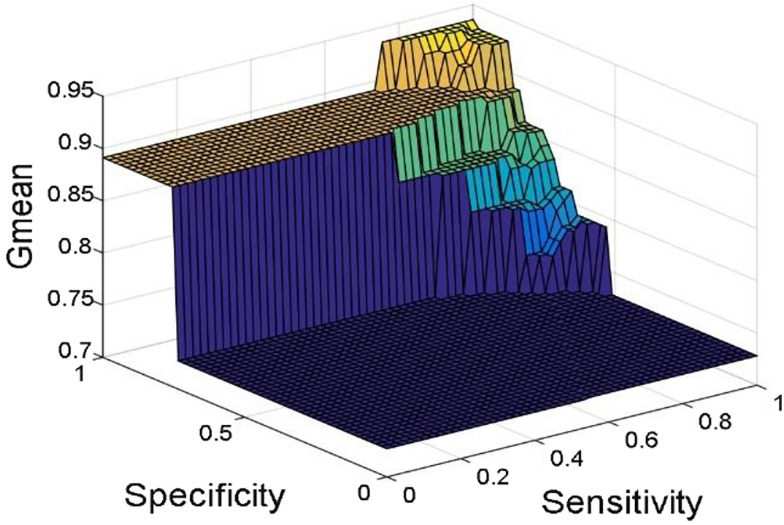
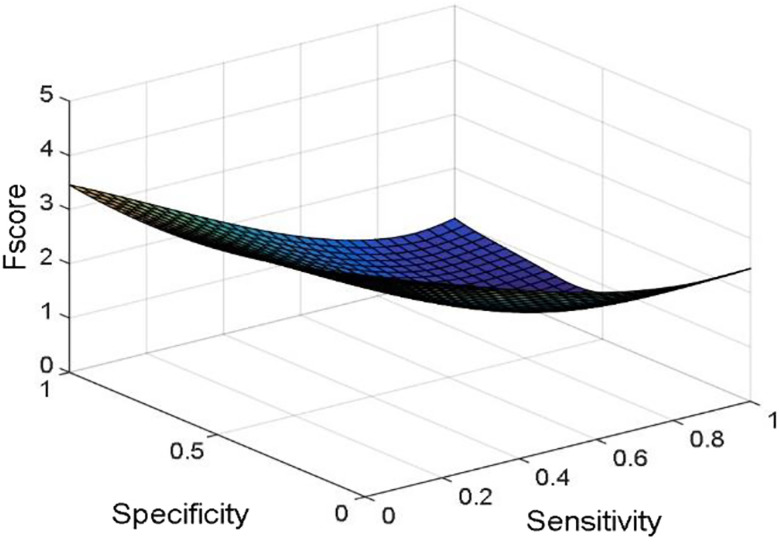
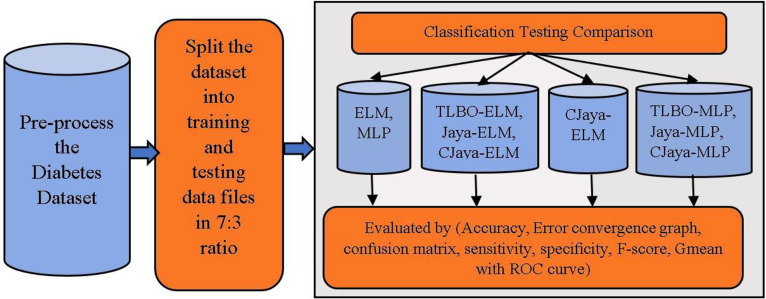
As stated by World Health Organization (WHO) report, 246 million individuals have suffered with diabetes disease over worldwide and it is anticipated that by 2025 this estimation can cross 380 million. So, the proper and quick diagnosis of this disease is turned into a significant challenge for the machine learning researchers. This paper aims to design a robust model for diagnosis of diabetes using a hybrid approach of Chaotic-Jaya (CJaya) algorithm with Extreme Learning Machine (ELM), which is named as CJaya-ELM. In this paper, Jaya algorithm with Chaotic learning approach is used to optimize the random parameters of ELM classifier. Here, to assess the efficacy of the designed model, Pima Indian diabetes dataset is considered. Here, the designed model CJaya-ELM, has been compared with basic ELM, Teaching Learning Based Optimization algorithm (TLBO) optimized ELM (TLBO-ELM), Multi-Layer Perceptron (MLP), Jaya algorithm optimized MLP (Jaya-MLP), TLBO algorithm optimized MLP (TLBO-MLP) and CJaya algorithm optimized MLP models. CJaya-ELM model resulted in the highest testing accuracy of 0.9687, sensitivity of 1, specificity of 0.9688 with 0.9782 area under curve (AUC) value. Results reveal that CJaya-ELM model effectively classifies both the positive and negative samples of Pima and outperforms the competitors.

摘要

世界卫生组织(WHO)报告称,全球有 2.46 亿人患有糖尿病,预计到 2025 年,这一数字将超过 3.8 亿。因此,对这种疾病进行正确和快速的诊断成为机器学习研究人员的一项重大挑战。本文旨在设计一种使用混沌 Jaya(CJaya)算法与极限学习机(ELM)的混合方法诊断糖尿病的稳健模型,该模型命名为 CJaya-ELM。在本文中,使用具有混沌学习方法的 Jaya 算法来优化 ELM 分类器的随机参数。这里,为了评估设计模型的效果,考虑了皮马印第安人糖尿病数据集。在这里,所设计的模型 CJaya-ELM 与基本的 ELM、基于教学的优化算法(TLBO)优化的 ELM(TLBO-ELM)、多层感知器(MLP)、Jaya 算法优化的 MLP(Jaya-MLP)、TLBO 算法优化的 MLP(TLBO-MLP)和 CJaya 算法优化的 MLP 模型进行了比较。CJaya-ELM 模型的测试准确率最高,为 0.9687,灵敏度为 1,特异性为 0.9688,曲线下面积(AUC)值为 0.9782。结果表明,CJaya-ELM 模型能够有效地对皮马的阳性和阴性样本进行分类,并且优于竞争对手。
https://cdn.ncbi.nlm.nih.gov/pmc/blobs/05f4/8035966/d550d8c22077/jib-18-20190097-g023.jpg
https://cdn.ncbi.nlm.nih.gov/pmc/blobs/05f4/8035966/01aa64401beb/jib-18-20190097-g001.jpg
https://cdn.ncbi.nlm.nih.gov/pmc/blobs/05f4/8035966/4d92aba89b39/jib-18-20190097-g002.jpg
https://cdn.ncbi.nlm.nih.gov/pmc/blobs/05f4/8035966/de27389ebe7e/jib-18-20190097-g003.jpg
https://cdn.ncbi.nlm.nih.gov/pmc/blobs/05f4/8035966/c8e6c066105d/jib-18-20190097-g004.jpg
https://cdn.ncbi.nlm.nih.gov/pmc/blobs/05f4/8035966/a48820e3df4b/jib-18-20190097-g005.jpg
https://cdn.ncbi.nlm.nih.gov/pmc/blobs/05f4/8035966/cf54ca9e25ab/jib-18-20190097-g006.jpg
https://cdn.ncbi.nlm.nih.gov/pmc/blobs/05f4/8035966/38213d39a174/jib-18-20190097-g007.jpg
https://cdn.ncbi.nlm.nih.gov/pmc/blobs/05f4/8035966/a8cd0251b642/jib-18-20190097-g008.jpg
https://cdn.ncbi.nlm.nih.gov/pmc/blobs/05f4/8035966/4fd555d69386/jib-18-20190097-g009.jpg
https://cdn.ncbi.nlm.nih.gov/pmc/blobs/05f4/8035966/b2240ec1d77c/jib-18-20190097-g010.jpg
https://cdn.ncbi.nlm.nih.gov/pmc/blobs/05f4/8035966/41c3bc68194d/jib-18-20190097-g011.jpg
https://cdn.ncbi.nlm.nih.gov/pmc/blobs/05f4/8035966/0bfd3efcf5ff/jib-18-20190097-g012.jpg
https://cdn.ncbi.nlm.nih.gov/pmc/blobs/05f4/8035966/9f48ab7b1cc8/jib-18-20190097-g013.jpg
https://cdn.ncbi.nlm.nih.gov/pmc/blobs/05f4/8035966/da0078b2a47c/jib-18-20190097-g014.jpg
https://cdn.ncbi.nlm.nih.gov/pmc/blobs/05f4/8035966/95385f473933/jib-18-20190097-g015.jpg
https://cdn.ncbi.nlm.nih.gov/pmc/blobs/05f4/8035966/f641696d57ed/jib-18-20190097-g016.jpg
https://cdn.ncbi.nlm.nih.gov/pmc/blobs/05f4/8035966/1ca88730b779/jib-18-20190097-g017.jpg
https://cdn.ncbi.nlm.nih.gov/pmc/blobs/05f4/8035966/33d262eae182/jib-18-20190097-g018.jpg
https://cdn.ncbi.nlm.nih.gov/pmc/blobs/05f4/8035966/4f47a3f09c28/jib-18-20190097-g019.jpg
https://cdn.ncbi.nlm.nih.gov/pmc/blobs/05f4/8035966/949ab6f9a47c/jib-18-20190097-g020.jpg
https://cdn.ncbi.nlm.nih.gov/pmc/blobs/05f4/8035966/598c60bb7eb4/jib-18-20190097-g021.jpg
https://cdn.ncbi.nlm.nih.gov/pmc/blobs/05f4/8035966/a025e7f21a34/jib-18-20190097-g022.jpg
https://cdn.ncbi.nlm.nih.gov/pmc/blobs/05f4/8035966/d550d8c22077/jib-18-20190097-g023.jpg
https://cdn.ncbi.nlm.nih.gov/pmc/blobs/05f4/8035966/01aa64401beb/jib-18-20190097-g001.jpg
https://cdn.ncbi.nlm.nih.gov/pmc/blobs/05f4/8035966/4d92aba89b39/jib-18-20190097-g002.jpg
https://cdn.ncbi.nlm.nih.gov/pmc/blobs/05f4/8035966/de27389ebe7e/jib-18-20190097-g003.jpg
https://cdn.ncbi.nlm.nih.gov/pmc/blobs/05f4/8035966/c8e6c066105d/jib-18-20190097-g004.jpg
https://cdn.ncbi.nlm.nih.gov/pmc/blobs/05f4/8035966/a48820e3df4b/jib-18-20190097-g005.jpg
https://cdn.ncbi.nlm.nih.gov/pmc/blobs/05f4/8035966/cf54ca9e25ab/jib-18-20190097-g006.jpg
https://cdn.ncbi.nlm.nih.gov/pmc/blobs/05f4/8035966/38213d39a174/jib-18-20190097-g007.jpg
https://cdn.ncbi.nlm.nih.gov/pmc/blobs/05f4/8035966/a8cd0251b642/jib-18-20190097-g008.jpg
https://cdn.ncbi.nlm.nih.gov/pmc/blobs/05f4/8035966/4fd555d69386/jib-18-20190097-g009.jpg
https://cdn.ncbi.nlm.nih.gov/pmc/blobs/05f4/8035966/b2240ec1d77c/jib-18-20190097-g010.jpg
https://cdn.ncbi.nlm.nih.gov/pmc/blobs/05f4/8035966/41c3bc68194d/jib-18-20190097-g011.jpg
https://cdn.ncbi.nlm.nih.gov/pmc/blobs/05f4/8035966/0bfd3efcf5ff/jib-18-20190097-g012.jpg
https://cdn.ncbi.nlm.nih.gov/pmc/blobs/05f4/8035966/9f48ab7b1cc8/jib-18-20190097-g013.jpg
https://cdn.ncbi.nlm.nih.gov/pmc/blobs/05f4/8035966/da0078b2a47c/jib-18-20190097-g014.jpg
https://cdn.ncbi.nlm.nih.gov/pmc/blobs/05f4/8035966/95385f473933/jib-18-20190097-g015.jpg
https://cdn.ncbi.nlm.nih.gov/pmc/blobs/05f4/8035966/f641696d57ed/jib-18-20190097-g016.jpg
https://cdn.ncbi.nlm.nih.gov/pmc/blobs/05f4/8035966/1ca88730b779/jib-18-20190097-g017.jpg
https://cdn.ncbi.nlm.nih.gov/pmc/blobs/05f4/8035966/33d262eae182/jib-18-20190097-g018.jpg
https://cdn.ncbi.nlm.nih.gov/pmc/blobs/05f4/8035966/4f47a3f09c28/jib-18-20190097-g019.jpg
https://cdn.ncbi.nlm.nih.gov/pmc/blobs/05f4/8035966/949ab6f9a47c/jib-18-20190097-g020.jpg
https://cdn.ncbi.nlm.nih.gov/pmc/blobs/05f4/8035966/598c60bb7eb4/jib-18-20190097-g021.jpg
https://cdn.ncbi.nlm.nih.gov/pmc/blobs/05f4/8035966/a025e7f21a34/jib-18-20190097-g022.jpg
https://cdn.ncbi.nlm.nih.gov/pmc/blobs/05f4/8035966/d550d8c22077/jib-18-20190097-g023.jpg

相似文献

1
Diagnosis of diabetes in pregnant woman using a Chaotic-Jaya hybridized extreme learning machine model.使用混沌-Jaya 混合极限学习机模型诊断孕妇糖尿病。
J Integr Bioinform. 2020 Aug 13;18(1):81-99. doi: 10.1515/jib-2019-0097.
2
Improved lung nodule diagnosis accuracy using lung CT images with uncertain class.利用不确定类别的肺部 CT 图像提高肺结节诊断准确性。
Comput Methods Programs Biomed. 2018 Aug;162:197-209. doi: 10.1016/j.cmpb.2018.05.028. Epub 2018 May 18.
3
Gray wolf optimization-extreme learning machine approach for diabetic retinopathy detection.基于灰狼优化-极限学习机的糖尿病视网膜病变检测方法。
Front Public Health. 2022 Aug 1;10:925901. doi: 10.3389/fpubh.2022.925901. eCollection 2022.
4
EAGA-MLP-An Enhanced and Adaptive Hybrid Classification Model for Diabetes Diagnosis.EAGA-MLP:一种用于糖尿病诊断的增强型自适应混合分类模型。
Sensors (Basel). 2020 Jul 20;20(14):4036. doi: 10.3390/s20144036.
5
Distributed semi-supervised learning algorithm based on extreme learning machine over networks using event-triggered communication scheme.基于事件触发通信方案的网络极端学习机分布式半监督学习算法。
Neural Netw. 2019 Nov;119:261-272. doi: 10.1016/j.neunet.2019.08.013. Epub 2019 Aug 17.
6
DCS-ELM: a novel method for extreme learning machine for regression problems and a new approach for the SFRSCC.DCS-ELM:一种用于回归问题的极限学习机新方法以及一种针对SFRSCC的新途径。
PeerJ Comput Sci. 2021 Mar 12;7:e411. doi: 10.7717/peerj-cs.411. eCollection 2021.
7
A Novel Extreme Learning Machine Classification Model for e-Nose Application Based on the Multiple Kernel Approach.一种基于多核方法的用于电子鼻应用的新型极限学习机分类模型。
Sensors (Basel). 2017 Jun 19;17(6):1434. doi: 10.3390/s17061434.
8
Online sequential, outlier robust, and parallel layer perceptron extreme learning machine models for sediment transport in sewer pipes.用于污水管道泥沙输送的在线序列、抗异常值稳健和平行层感知器极限学习机模型
Environ Sci Pollut Res Int. 2023 Mar;30(14):39637-39652. doi: 10.1007/s11356-022-24989-0. Epub 2023 Jan 4.
9
Sparse Ensemble Machine Learning to Improve Robustness of Long-Term Decoding in iBMIs.稀疏集成机器学习提高 iBMIs 中长期解码的稳健性。
IEEE Trans Neural Syst Rehabil Eng. 2020 Feb;28(2):380-389. doi: 10.1109/TNSRE.2019.2962708. Epub 2019 Dec 27.
10
Optimizing neural networks for medical data sets: A case study on neonatal apnea prediction.优化神经网络在医学数据集上的应用:以新生儿呼吸暂停预测为例的研究
Artif Intell Med. 2019 Jul;98:59-76. doi: 10.1016/j.artmed.2019.07.008. Epub 2019 Jul 25.

引用本文的文献

1
Utilizing Gamification, Artificial Intelligence, and mHealth for the Professional Development of Maternal Care Providers: Exploratory Pilot Cross-Sectional Study Assessing Providers' Satisfaction in Primary Health Care Centers in Lebanon.利用游戏化、人工智能和移动健康促进孕产妇护理提供者的专业发展:在黎巴嫩初级卫生保健中心评估提供者满意度的探索性试点横断面研究
JMIR Serious Games. 2025 Sep 10;13:e53735. doi: 10.2196/53735.
2
Artificial Intelligence in Gestational Diabetes Care: A Systematic Review.人工智能在妊娠期糖尿病护理中的应用:一项系统综述。
J Diabetes Sci Technol. 2025 Aug 25:19322968251355967. doi: 10.1177/19322968251355967.
3

本文引用的文献

1
Deep-learning-based automatic computer-aided diagnosis system for diabetic retinopathy.基于深度学习的糖尿病视网膜病变自动计算机辅助诊断系统。
Biomed Eng Lett. 2017 Aug 31;8(1):41-57. doi: 10.1007/s13534-017-0047-y. eCollection 2018 Feb.
2
Comparative approaches for classification of diabetes mellitus data: Machine learning paradigm.糖尿病数据分类的比较方法:机器学习范例。
Comput Methods Programs Biomed. 2017 Dec;152:23-34. doi: 10.1016/j.cmpb.2017.09.004. Epub 2017 Sep 8.
3
Automated Identification of Diabetic Retinopathy Using Deep Learning.
On AI Approaches for Promoting Maternal and Neonatal Health in Low Resource Settings: A Review.
人工智能在促进资源匮乏环境下母婴健康中的应用:综述。
Front Public Health. 2022 Sep 30;10:880034. doi: 10.3389/fpubh.2022.880034. eCollection 2022.
4
Microvascular Changes After Conbercept Intravitreal Injection of PDR With or Without Center-Involved Diabetic Macular Edema Analyzed by OCTA.通过光学相干断层扫描血管造影(OCTA)分析康柏西普玻璃体腔注射治疗增殖性糖尿病视网膜病变伴或不伴累及黄斑中心的糖尿病性黄斑水肿后的微血管变化。
Front Med (Lausanne). 2022 Mar 22;9:797087. doi: 10.3389/fmed.2022.797087. eCollection 2022.
基于深度学习的糖尿病视网膜病变自动识别。
Ophthalmology. 2017 Jul;124(7):962-969. doi: 10.1016/j.ophtha.2017.02.008. Epub 2017 Mar 27.
4
Machine Learning and Data Mining Methods in Diabetes Research.糖尿病研究中的机器学习与数据挖掘方法
Comput Struct Biotechnol J. 2017 Jan 8;15:104-116. doi: 10.1016/j.csbj.2016.12.005. eCollection 2017.
5
Extreme learning machine for regression and multiclass classification.用于回归和多类分类的极限学习机。
IEEE Trans Syst Man Cybern B Cybern. 2012 Apr;42(2):513-29. doi: 10.1109/TSMCB.2011.2168604. Epub 2011 Oct 6.