Zemková Erika, Kováčiková Zuzana, Zapletalová Ludmila
Department of Biological and Medical Sciences, Faculty of Physical Education and Sports, Comenius University in Bratislava, Bratislava, Slovakia.
Sports Technology Institute, Faculty of Electrical Engineering and Information Technology, Slovak University of Technology, Bratislava, Slovakia.
Front Physiol. 2020 Jul 24;11:894. doi: 10.3389/fphys.2020.00894. eCollection 2020.
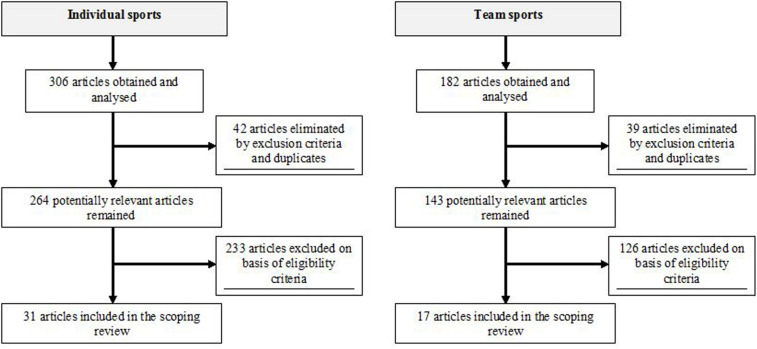
The back is subjected to a great deal of strain in many sports. Up to 20% of all sports injuries involve an injury to the lower back or neck. Repetitive or high impact loads (e.g., running, gymnastics, skiing) and weight loading (e.g., weightlifting) affect the lower back. Rotation of the torso (e.g., golf, tennis) causes damage to both, the lumbar and thoracic spine. The cervical spine is most commonly injured in contact sports (e.g., boxing, football). One of the factors that increases the odds of injuries in athletes is excessive and rapid increases in training loads. In spite of currently emerging evidence on this issue, little is known about the balance between physiological loading on the spine and athletic performance, versus overloading and back pain and/or injury in athletes. This scoping review aims (i) to map the literature that addresses the association between the training load and the occurrence of back pain and/or injury, especially between the Acute:Chronic Workload Ratio (ACWR) and back problems in athletes of individual and team sports, and (ii) to identify gaps in existing literature and propose future research on this topic. A literature search of six electronic databases (i.e., MEDLINE, PubMed, Web of Science, SCOPUS, SportDiscus, and CINAHL) was conducted. A total of 48 research articles met the inclusion criteria. Findings identified that fatigue of the trunk muscles induced by excessive loading of the spine is one of the sources of back problems in athletes. In particular, high training volume and repetitive motions are responsible for the high prevalence rates. The most influential are biomechanical and physiological variations underlying the spine, though stress-related psychological factors should also be considered. However, limited evidence exists on the relationship between the ACWR and back pain or non-contact back injuries in athletes from individual and team sports. This may be due to insufficiently specified the acute and chronic time window that varies according to sport-specific schedule of competition and training. More research is therefore warranted to elucidate whether ACWR, among other factors, is able to identify workloads that could increase the risk of back problems in athletes.
在许多运动中,背部承受着巨大的压力。所有运动损伤中,高达20%涉及下背部或颈部损伤。重复性或高强度冲击负荷(如跑步、体操、滑雪)以及重量负荷(如举重)会影响下背部。躯干的旋转(如高尔夫、网球)会对腰椎和胸椎造成损伤。颈椎在接触性运动(如拳击、足球)中最常受伤。运动员受伤几率增加的因素之一是训练负荷过度且快速增加。尽管目前关于这个问题有新出现的证据,但对于脊柱生理负荷与运动表现之间的平衡,以及运动员的超负荷与背痛和/或损伤之间的关系,人们了解甚少。本综述旨在:(i)梳理涉及训练负荷与背痛和/或损伤发生之间关联的文献,特别是个体和团体运动项目运动员中急性:慢性工作量比值(ACWR)与背部问题之间的关联;(ii)找出现有文献中的空白,并提出关于该主题的未来研究方向。我们对六个电子数据库(即医学文献数据库、PubMed、科学引文索引、Scopus、体育文献数据库和护理学与健康领域数据库)进行了文献检索。共有48篇研究文章符合纳入标准。研究结果表明,脊柱过度负荷引起的躯干肌肉疲劳是运动员背部问题的根源之一。特别是,高训练量和重复性动作导致了高患病率。虽然与压力相关心理因素也应予以考虑,但脊柱相关的生物力学和生理变化影响最大。然而,关于个体和团体运动项目运动员中ACWR与背痛或非接触性背部损伤之间的关系,现有证据有限。这可能是由于急性和慢性时间窗口的界定不够明确,其会因具体运动项目的比赛和训练日程安排而有所不同。因此,需要更多研究来阐明ACWR以及其他因素是否能够识别出可能增加运动员背部问题风险的工作量。