Yuda Emi, Shibata Muneichi, Ogata Yuki, Ueda Norihiro, Yambe Tomoyuki, Yoshizawa Makoto, Hayano Junichiro
Department of Electrical Engineering, Graduate School of Engineering, Tohoku University, Sendai, Japan.
Cardiology, Mackay Base Hospital, Mackay, Australia.
J Physiol Anthropol. 2020 Aug 18;39(1):21. doi: 10.1186/s40101-020-00233-x.
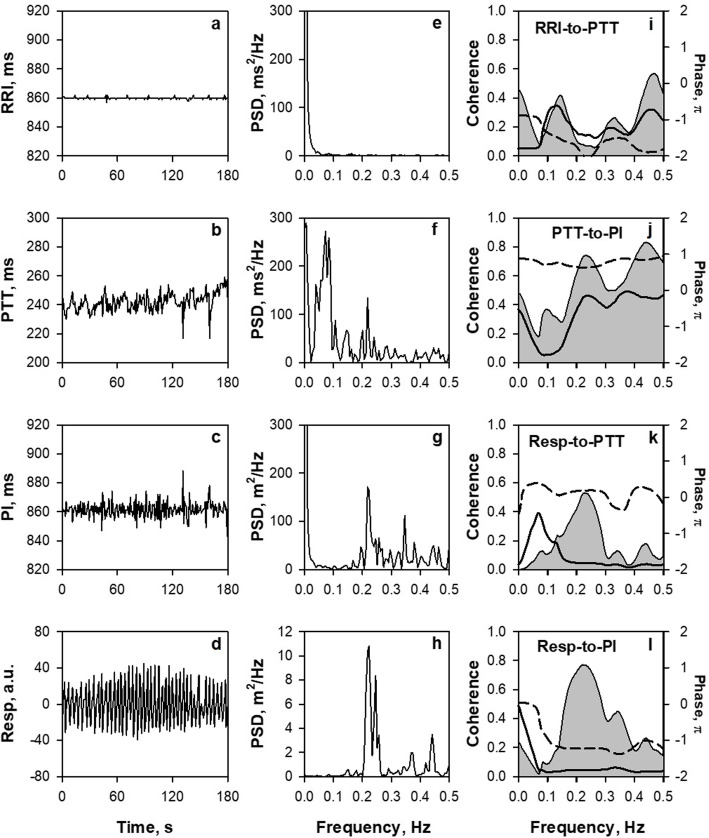
With the popularization of pulse wave signals by the spread of wearable watch devices incorporating photoplethysmography (PPG) sensors, many studies are reporting the accuracy of pulse rate variability (PRV) as a surrogate of heart rate variability (HRV). However, the authors are concerned about their research paradigm based on the assumption that PRV is a biomarker that reflects the same biological properties as HRV. Because PPG pulse wave and ECG R wave both reflect the periodic beating of the heart, pulse rate and heart rate should be equal, but it does not guarantee that the respective variabilities are also the same. The process from ECG R wave to PPG pulse wave involves several transformation steps of physical properties, such as those of electromechanical coupling and conversions from force to volume, volume to pressure, pressure impulse to wave, pressure wave to volume, and volume to light intensity. In fact, there is concreate evidence that shows discrepancy between PRV and HRV, such as that demonstrating the presence of PRV in the absence of HRV, differences in PRV with measurement sites, and differing effects of body posture and exercise between them. Our observations in adult patients with an implanted cardiac pacemaker also indicate that fluctuations in R-R intervals, pulse transit time, and pulse intervals are modulated differently by autonomic functions, respiration, and other factors. The authors suggest that it is more appropriate to recognize PRV as a different biomarker than HRV. Although HRV is a major determinant of PRV, PRV is caused by many other sources of variability, which could contain useful biomedical information that is neither error nor noise.
随着可穿戴手表设备中光电容积脉搏波描记法(PPG)传感器的普及,脉搏波信号得到推广,许多研究报告了脉搏率变异性(PRV)作为心率变异性(HRV)替代指标的准确性。然而,作者们对基于PRV是反映与HRV相同生物学特性的生物标志物这一假设的研究范式表示担忧。由于PPG脉搏波和心电图R波都反映心脏的周期性跳动,脉搏率和心率应该相等,但这并不能保证各自的变异性也相同。从心电图R波到PPG脉搏波的过程涉及多个物理特性的转换步骤,如机电耦合以及从力到体积、从体积到压力、从压力脉冲到波、从压力波到体积以及从体积到光强度的转换。事实上,有确凿证据表明PRV和HRV之间存在差异,例如在没有HRV的情况下存在PRV、PRV随测量部位不同而不同以及它们在身体姿势和运动方面的不同影响。我们对植入心脏起搏器的成年患者的观察也表明,RR间期、脉搏传输时间和脉搏间期的波动受自主神经功能、呼吸和其他因素的调节方式不同。作者建议,将PRV视为与HRV不同的生物标志物更为合适。虽然HRV是PRV的主要决定因素,但PRV还由许多其他变异性来源引起,这些来源可能包含既不是误差也不是噪声的有用生物医学信息。