Marsola Camila de Mello, Cunha Luís Miguel, Carvalho-Ferreira Joana Pereira de, da Cunha Diogo Thimoteo
Laboratório Multidisciplinar em Alimentos e Saúde, Faculdade de Ciências Aplicadas, Universidade Estadual de Campinas-UNICAMP, R. Pedro Zaccaria, 1300, Limeira SP 13484-350, Brazil.
GreenUPorto, DGAOT, Faculty of Sciences, University of Porto, Campus Agrário de Vairão, R. da Agrária, 747, 4485-646 Vila do Conde, Portugal.
Foods. 2020 Aug 13;9(8):1114. doi: 10.3390/foods9081114.
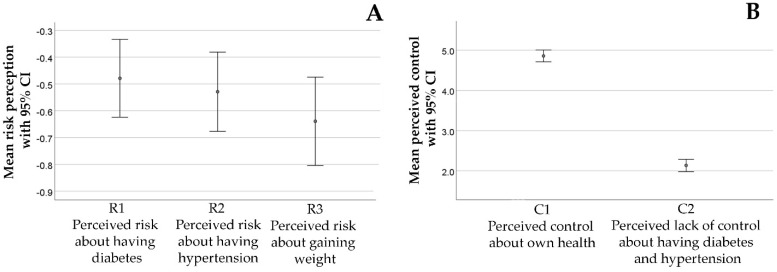
This study aimed to evaluate the food choice motives in a sample in Brazil and to identify how socioeconomic characteristics and risk perceptions about chronic diseases and weight gain affect these motives. The Food Choice Questionnaire (FCQ) is an instrument to analyze the motivations for food choice. The FCQ was completed by 525 adult individuals in Brazil. The participants were asked about their perceived risk of gaining weight, developing diabetes, and hypertension. Confirmatory factor analysis led to the rejection of the original FCQ structure, and, after exploratory factor analysis, 30 items of the FCQ were maintained in eight factors: Nutritional Composition, Preparation Convenience, Purchase Convenience, Mood, Sensory Appeal, Health, Price, and Familiarity. Sensory Appeal and Familiarity were, respectively, the most and the least important factors involved in food choices in this sample. A high education level, high income, age, and female sex positively affected FCQ factors (except for the Price factor). On the basis of FCQ scores, we defined five clusters: Health Driven, Practicality Concerned, Shape Concerned, Food Concerned, and Cooking Enthusiasts. In general, individuals were optimistic regarding the risk of developing diabetes, hypertension, and gaining weight, especially those from the Shape Concerned cluster. The differences in food choice motives presented here reinforce the existence of different niches of food consumption. Different types of products can attract specific target groups at the time of choice.
本研究旨在评估巴西一个样本中的食物选择动机,并确定社会经济特征以及对慢性病和体重增加的风险认知如何影响这些动机。食物选择问卷(FCQ)是一种分析食物选择动机的工具。525名巴西成年人完成了FCQ。参与者被问及他们对体重增加、患糖尿病和高血压的感知风险。验证性因素分析导致拒绝了原始的FCQ结构,经过探索性因素分析后,FCQ的30个项目保留在八个因素中:营养成分、制备便利性、购买便利性、情绪、感官吸引力、健康、价格和熟悉度。在这个样本中,感官吸引力和熟悉度分别是食物选择中最重要和最不重要的因素。高教育水平、高收入、年龄和女性性别对FCQ因素有积极影响(价格因素除外)。根据FCQ得分,我们定义了五个类别:健康驱动型、注重实用性型、关注体型型、关注食物型和烹饪爱好者型。总体而言,个体对患糖尿病、高血压和体重增加的风险持乐观态度,尤其是来自关注体型类别的个体。这里呈现的食物选择动机差异强化了不同食物消费细分市场的存在。不同类型的产品在选择时可以吸引特定的目标群体。