Ahmed Marwa A, Elmahallawy Ehab Kotb, Gareh Ahmed, Abdelbaset Abdelbaset Eweda, El-Gohary Fatma A, Elhawary Nagwa M, Dyab Ahmed K, Elbaz Elzahara, Abushahba Mostafa F N
Department of Pathology, Faculty of Veterinary Medicine, Aswan University, Aswan 24101, Egypt.
Department of Biomedical Sciences, University of León (ULE), 24071 León, Spain.
Animals (Basel). 2020 Aug 24;10(9):1485. doi: 10.3390/ani10091485.
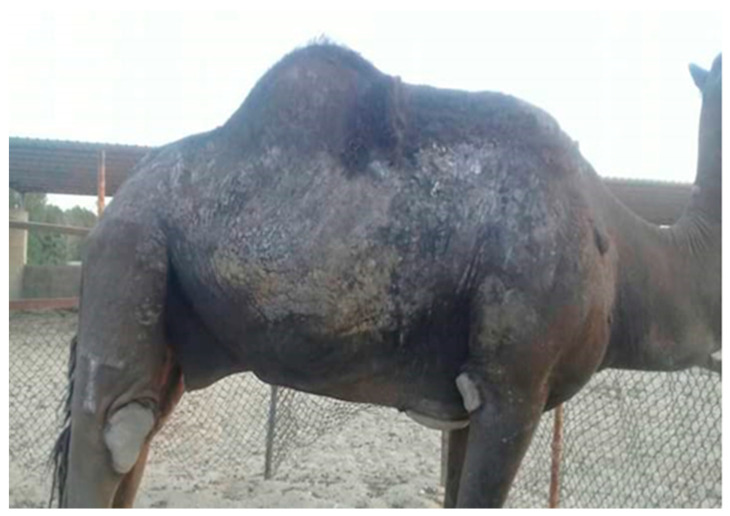
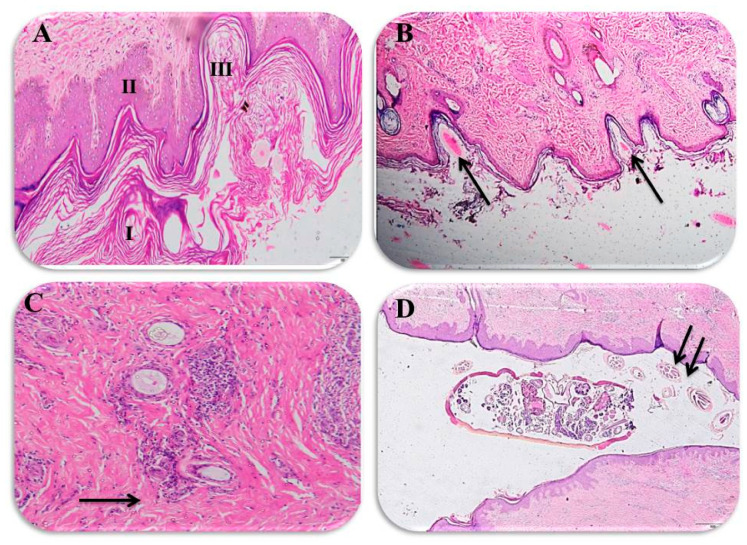
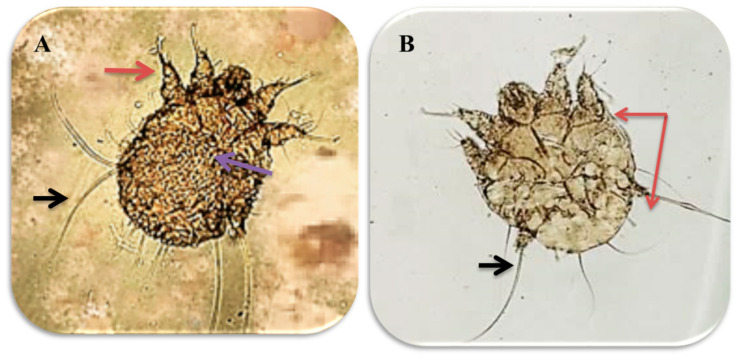
Mange has been considered one of the most common parasitic infestations among camels. It adversely impacts animal productivity and poses a risk to human health. Given the scarcity of available data about mange in camels, the current study focused on the prevalence of camel mange and its associated risk factors in Aswan Governorate, Egypt. Towards this end, a general visual inspection was conducted on camels (N = 210) in different markets and slaughterhouses in Aswan Governorate. Skin scrapings from suspect infected camels were also examined microscopically. Importantly, these findings were further checked and confirmed by histopathology on samples from suspected cases collected post-slaughter in abattoirs. The possible risk-associated factors, which include the camel's age, sex and sampling season, were recorded and statistically analyzed. Interestingly, the data showed that a total of 100 camels (47.6%) were found exclusively infested by sarcoptic mange. Furthermore, the predominant histopathological changes included burrowing tunnel of mites in the skin, hyperkeratosis and acanthosisconsis of the epidermis, while the dermis showed hemorrhage, mononuclear inflammatory cell infiltration around the blood vessels and perifolliculitis. These major histopathological findings are consistent with sarcoptic mange. Furthermore, the statistical analysis of the possible associated risk factors, camel's age ( = 0.006), gender ( = 0.032) and sampling season ( = 0.004), were all found to be significantly affected and related to the disease. In this regard, camels ≥2 years old were found at higher risk of infection (odds ratio (OR) = 2.75; 95% confidence interval (CI), 1.345 to 5.604) versus younger animals (OR = 0.36; 95 CI, 0.1784 to 0.743). Females had higher odds of exposure (OR = 2.02; 95% CI, 1.096 to 3.708) compared to males (OR = 0.50; 95% CI, 0.269 to 0.912). Moreover, the exposure to infection was reported higher in winter (OR = 2.30; 95% CI, 1.297 to 4.098) than in summer (OR = 0.43; 95% CI, 0.244 to 0.771). Collectively, our data provide novel epidemiological and histopathological support for sarcoptic mange being widespread among camels in the studied area. Sarcoptic mange is extremely contagious and zoonotic. Therefore, our baseline investigation indicates an urgent need for additional multicenter-studies to investigate the occurrence of this disease in camels and humans combined with the appropriate control measures of camel importation for combating this disease.
疥癣被认为是骆驼中最常见的寄生虫感染之一。它对动物生产力产生不利影响,并对人类健康构成风险。鉴于关于骆驼疥癣的现有数据稀缺,当前研究聚焦于埃及阿斯旺省骆驼疥癣的流行情况及其相关风险因素。为此,对阿斯旺省不同市场和屠宰场的骆驼(N = 210)进行了一般目视检查。还对疑似感染骆驼的皮肤刮片进行了显微镜检查。重要的是,这些发现通过对屠宰后在屠宰场收集的疑似病例样本进行组织病理学检查得到了进一步核实和确认。记录了包括骆驼年龄、性别和采样季节在内的可能的风险相关因素,并进行了统计分析。有趣的是,数据显示共有100头骆驼(47.6%)被发现仅感染了疥螨。此外,主要的组织病理学变化包括螨虫在皮肤中的挖掘隧道、表皮的角化过度和棘层肥厚,而真皮显示出血、血管周围单核炎性细胞浸润和毛囊周围炎。这些主要的组织病理学发现与疥螨病一致。此外,对可能的相关风险因素骆驼年龄(P = 0.006)、性别(P = 0.032)和采样季节(P = 0.004)的统计分析均发现受到显著影响且与该疾病相关。在这方面,发现2岁及以上的骆驼感染风险更高(优势比(OR)= 2.75;95%置信区间(CI),1.345至5.604),而幼龄动物(OR = 0.36;95%CI,0.1784至0.743)感染风险较低。雌性暴露的几率更高(OR = 2.02;95%CI,1.096至3.708),而雄性(OR = 0.50;95%CI,0.269至0.912)较低。此外,据报告冬季感染暴露率更高(OR = 2.30;95%CI,1.297至4.098),高于夏季(OR = 0.43;95%CI,0.244至0.771)。总体而言,我们的数据为疥螨病在研究区域的骆驼中广泛传播提供了新的流行病学和组织病理学支持。疥螨病极具传染性且是人畜共患病。因此,我们的基线调查表明迫切需要进行更多的多中心研究,以调查这种疾病在骆驼和人类中的发生情况,并结合适当的骆驼进口控制措施来对抗这种疾病。