Esteban-Mendoza María Victoria, Arcila-Quiceno Víctor, Albarracín-Navas Javier, Hernández Isabel, Flechas-Alarcón María Camila, Morchón Rodrigo
Animal Science Research Group (GRICA), School of Veterinary Medicine and Zootechnics, Master's in Animal Health and Production, Universidad Cooperativa de Colombia, Bucaramanga, Colombia.
Animal and Human Dirofilariosis Group, Department of Faculty, Parasitology Area, Universidad de Salamanca, Salamanca, Spain.
Front Vet Sci. 2020 Aug 7;7:488. doi: 10.3389/fvets.2020.00488. eCollection 2020.
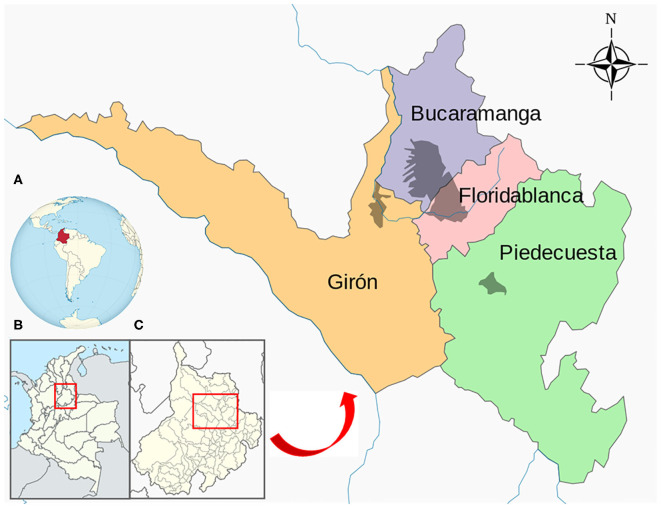
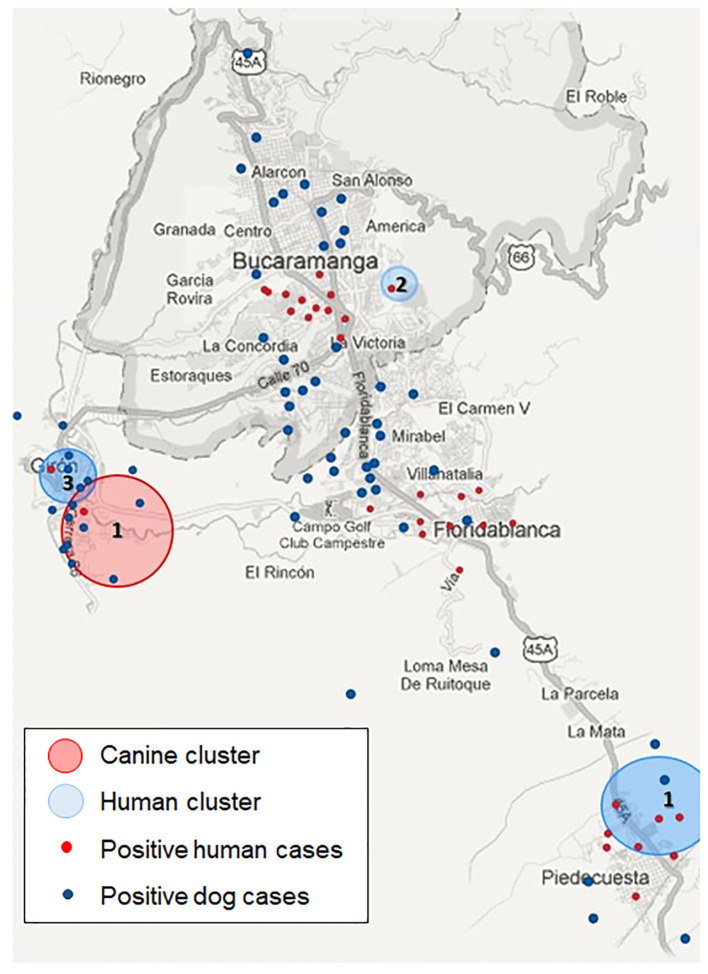
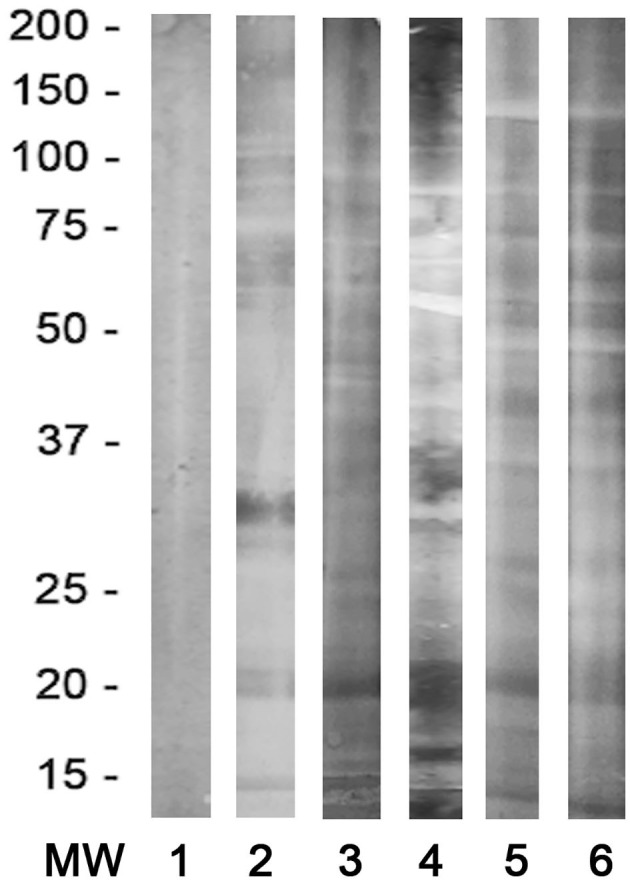
The cardiopulmonary dirofilariosis caused by , is a vector-borne infection, which can be transmitted to humans. The main hosts are both domestic and wild canids. This species mainly occurs in tropical and subtropical climates, and temperature and humidity are the main factors that favor the presence and proliferation of culicid mosquitoes as vectors of the disease. There are few reports of cardiopulmonary dirofilariosis in dogs and humans in Colombia, a region with favorable climatic conditions which favors the presence of mosquitoes that act as vectors of the disease. Therefore, this study aimed to examine its current prevalence in dogs and the risk of human exposure to the disease in Bucaramanga, one of the most populated areas in Colombia located at the center of the country. Furthermore, its demographic and environmental characteristics could be useful as a study model for other similar locations and neighboring countries. Serum samples from 351 dogs and 506 humans from the Bucaramanga Metropolitan area were analyzed. All dog samples were analyzed by Knott's technique and tested with a commercial immunochromatographic to detect the presence of circulating antigens of . Human samples were analyzed using a non-commercial ELISA test kit to detect IgG against the somatic antigens of adult and . Positive results were further confirmed using western blot analysis. Thirty-eight dogs tested positive with a overall prevalence of 10.82%. Of these dogs, 18 showed microfilariae, being 5.12% of the total population. The overall seroprevalence in humans was 6.71%; seroprevalence was significantly higher in individuals aged 16-34 years-old and in women than in men. To our knowledge, this study describes seropositivity to for the first time in a Colombian human population located in the same area as that of dogs infected with , which represents a potential threat to public health. In humans, age and gender can be considered risk factors for exposure to .
由[病原体名称未给出]引起的心肺恶丝虫病是一种虫媒传播感染,可传染给人类。主要宿主包括家养和野生犬科动物。该物种主要发生在热带和亚热带气候地区,温度和湿度是有利于作为该疾病传播媒介的库蚊生存和繁殖的主要因素。在哥伦比亚,一个气候条件有利于作为该疾病传播媒介的蚊子生存的地区,关于犬类和人类心肺恶丝虫病的报道很少。因此,本研究旨在调查哥伦比亚中部人口最密集地区之一布卡拉曼加市犬类中该病的当前流行情况以及人类接触该疾病的风险。此外,其人口统计学和环境特征可作为其他类似地点和邻国的研究模型。对来自布卡拉曼加市大都市区的351只犬和506人的血清样本进行了分析。所有犬类样本均采用诺特氏技术进行分析,并使用商用免疫层析法检测[病原体名称未给出]循环抗原的存在。人类样本使用非商用酶联免疫吸附测定试剂盒进行分析,以检测针对成虫[病原体名称未给出]和[另一种病原体名称未给出]体抗原的IgG。阳性结果通过蛋白质印迹分析进一步确认。38只犬检测呈阳性,总体患病率为10.82%。在这些犬中,18只显示有微丝蚴,占总犬数的5.12%。人类的总体血清阳性率为6.71%;16 - 34岁个体和女性的血清阳性率显著高于男性。据我们所知,本研究首次描述了在与感染[病原体名称未给出]的犬类相同地区的哥伦比亚人群中对[病原体名称未给出]的血清阳性反应,这对公共卫生构成了潜在威胁。在人类中,年龄和性别可被视为接触[病原体名称未给出]的风险因素。