Pérez Pérez Patricia, Rodríguez-Escolar Iván, Carretón Elena, Sánchez Agudo José Ángel, Lorenzo-Morales Jacob, Montoya-Alonso José Alberto, Morchón Rodrigo
Zoonotic Infections and One Health GIR, Laboratory of Parasitology, Faculty of Pharmacy, University of Salamanca, Salamanca, Spain.
Instituto Universitario de Enfermedades Tropicales y Salud Pública de Canarias (IUETSPC), Departamento de Obstetricia y Ginecología, Pediatría, Medicina Preventiva y Salud Pública, Toxicología, Medicina Legal y Forense y Parasitología, Universidad de La Laguna, La Laguna, Tenerife, Spain.
Front Vet Sci. 2021 Dec 6;8:784331. doi: 10.3389/fvets.2021.784331. eCollection 2021.
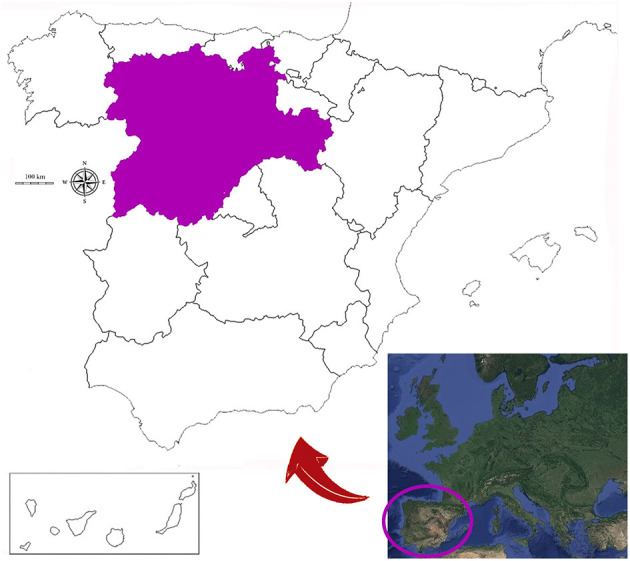
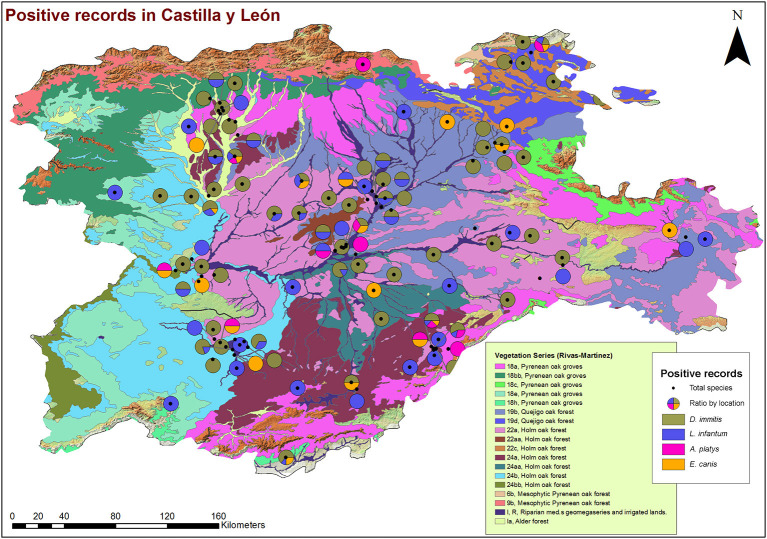
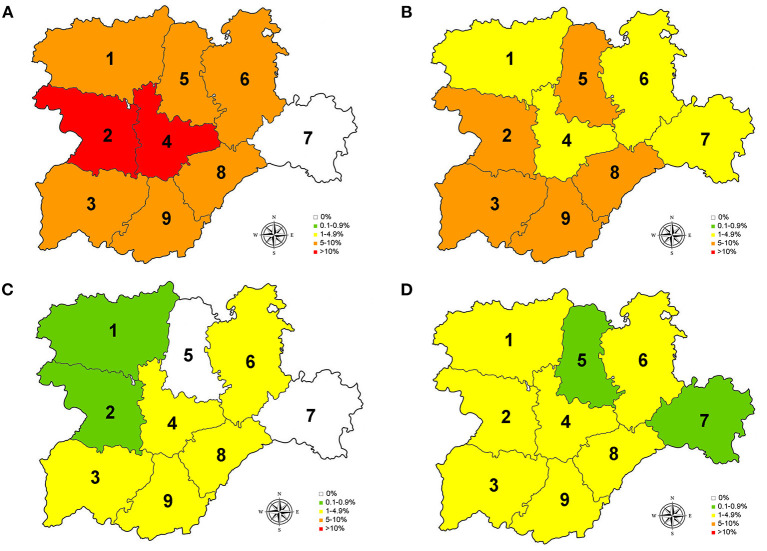
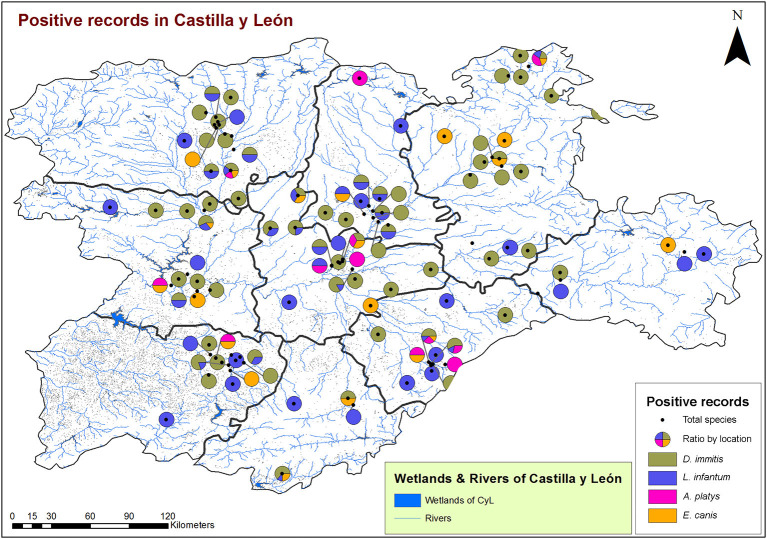
Various factors are currently causing an increase in vector-borne parasitic diseases at a global scale; among them, some stand out, such as climatic disturbances derived from global change, the increase in movements of reservoir animals, or changes in land made by human activity. In the European continent, there have been an increasing number of epidemiological studies focused on the detection of these diseases, especially in dogs. In Spain, there are few epidemiological studies focused on the evaluation of the biotic and abiotic factors that may influence the distribution, such as climatic zones, orography, or presence of water reservoirs. The aim of this study was to analyze the prevalence and distribution of several canine vector-borne diseases caused by , and in the autonomous community of Castilla y León, the largest region of the Iberian Peninsula, providing a geospatial approach based on a geographic information system (GIS) analysis. Blood from a total of 1,475 domestic dogs from the nine provinces of Castilla y León were analyzed. Also, a GIS analysis of the sample locations was carried out, taking into account the most important predictor variables. The prevalence in dogs infected by was 7.19%, and the seroprevalence by was 4.61 and 1.56% for and . Most of the infected animals were located in areas with stagnant water, irrigated agriculture, or riverbanks, always close to forest and woodland vegetation. These results indicate that dogs living in Castilla y León should take prophylactic measures to avoid infections.
目前,多种因素导致全球范围内媒介传播的寄生虫病增多;其中,一些因素尤为突出,比如全球变化引起的气候干扰、储存宿主动物活动的增加,或者人类活动导致的土地变化。在欧洲大陆,针对这些疾病检测的流行病学研究越来越多,尤其是在犬类中。在西班牙,很少有流行病学研究关注可能影响疾病分布的生物和非生物因素,如气候带、地形或水库的存在。本研究的目的是分析由[此处原文缺失具体病原体名称]引起的几种犬类媒介传播疾病在伊比利亚半岛最大的地区卡斯蒂利亚 - 莱昂自治区的流行情况和分布,基于地理信息系统(GIS)分析提供一种地理空间方法。对来自卡斯蒂利亚 - 莱昂九个省份的总共1475只家犬的血液进行了分析。此外,考虑到最重要的预测变量,对样本位置进行了GIS分析。感染[此处原文缺失具体病原体名称]的犬类患病率为7.19%,[此处原文缺失具体病原体名称]的血清阳性率分别为4.61%和1.56%。大多数感染动物位于有积水、灌溉农业区或河岸的地区,且总是靠近森林和林地植被。这些结果表明,生活在卡斯蒂利亚 - 莱昂的犬类应采取预防措施以避免感染。